



Planting and Growing Venus flytrap

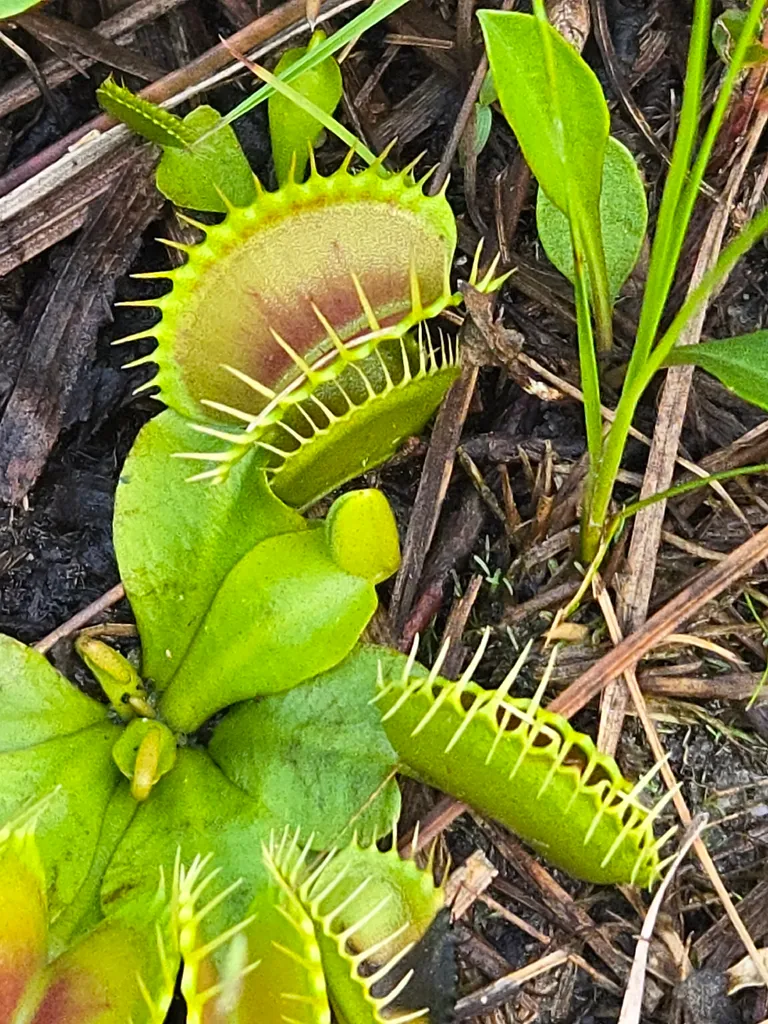
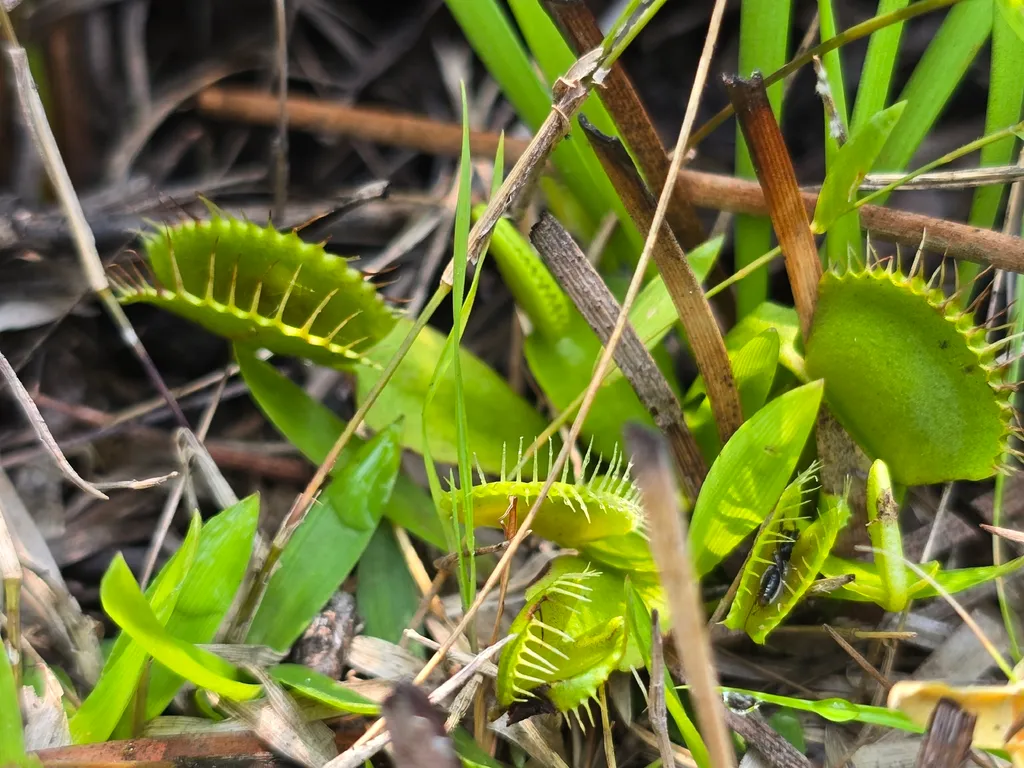
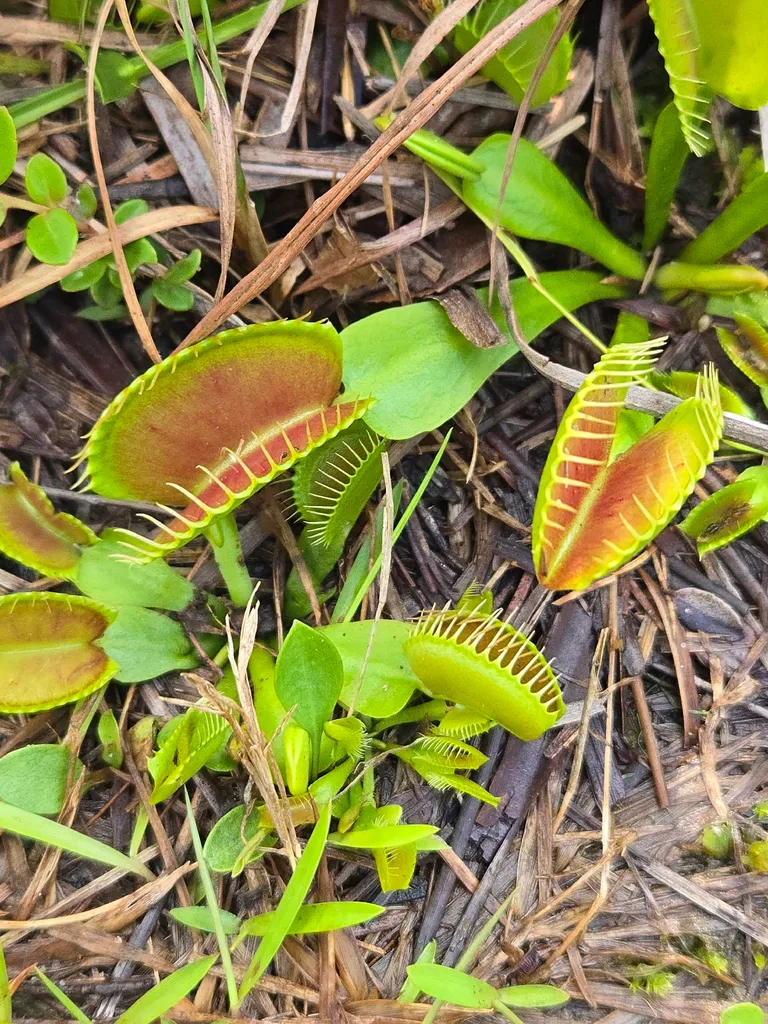
| Care difficulty | 4 / 5 |
|---|---|
| Watering schedule | Keep soil consistently wet with distilled water |
| Sunlight requirements | Full sun · Partial shade |
| Ideal temperature | 15 – 25 °C |
| Soil type | Loam |
| Soil pH | Acid |
| Soil moisture | Moist but well drained |
| Fertilizing | No fertilizer needed; feed insects instead |
| Toxicity | Information to be completed |
How to Water Venus flytrap?
Native to subtropical wetlands, venus flytrap thrives in moist environments with high humidity. This carnivorous plant exhibits a preference for consistent moisture without being waterlogged, reflecting its habitat's balance between wet and dry periods. Watering should align with this balance, equating to twice a week to maintain optimal soil moisture. Cultivated primarily as an intriguing indoor specimen, venus flytrap benefits from the controlled watering that mimics its natural setting, ensuring that the trap mechanisms function properly. In terms of growth cycles, maintaining proper hydration is crucial during venus flytrap's active season to support its unique insect-capturing process.
Learn more →What Are the Sunlight Requirements for Venus flytrap?
Venus flytrap thrives under full sun exposure to ensure robust growth and health. Ideally, venus flytrap should receive direct sunlight for at least six hours daily, fostering the development of its iconic trapping structures and vibrant coloration. While venus flytrap can tolerate partial sun, deviations from full sun may lead to suboptimal growth and reduced vitality. Adaptive to intense light, venus flytrap's leaves may exhibit deeper red hues within the traps, enhancing its efficiency in attracting prey. Typically grown outdoors, venus flytrap should be planted in open spaces where sunlight is abundant, avoiding heavily shaded areas that could impede its natural predatory processes.
Learn more →What Is the Ideal Temperature Range for Venus flytrap?

Venus flytrap demonstrates a notable resilience to temperature variations, tolerating from 0℃ (32℉) to 41℃ (106℉). During colder periods, venus flytrap can survive near-freezing temperatures, although it may show signs of stress, such as wilting or blackened traps. Conversely, in heat extremes, leaf scorching and dehydration can occur. Proper care involves shielding venus flytrap from harsh winter winds and providing ample water during hot spells. Monitoring and maintaining humidity levels can mitigate adverse conditions, ensuring venus flytrap thrives regardless of temperature fluctuations.
Learn more →What Soil Is Best for Venus flytrap?
Venus flytrap requires well-aerated soil with excellent drainage to prevent root rot. A reliable soil mix includes equal parts sphagnum peat moss and perlite. If perlite is unavailable, substitute with washed silica sand. Ensure the pot allows for proper water flow. No additional fertilizers or conditioners are recommended, as venus flytrap naturally thrives in nutrient-poor substrates.
- Soil type
- Loam
- Soil pH
- Acid
What Are the Moisture Requirements for Venus flytrap?
Moist but well drained
Learn more →How to Fertilize Venus flytrap?

No fertilizer needed; feed insects instead
Learn more →How to Prune Venus flytrap?

Known for its carnivorous traps, venus flytrap requires minimal pruning. Key techniques include removing dead leaves and flower stalks to enhance growth and trap efficiency. Prune in early to late spring, aligning with its growth cycle to promote robust development. Benefits include preventing fungal infections and improving air circulation. Maintain careful handling to avoid damaging traps, and ensure tools are sterilized for optimal plant health.
Learn more →How to Propagate Venus flytrap?

Venus flytrap is typically propagated through division during ideal seasons like spring and autumn. It can be moderately challenging to propagate, with signs of success being new growth and roots. Adequate moisture and patience are essential for success.
Learn more →How to Transplant Venus flytrap?
Transplant venus flytrap during the rejuvenating period of early to mid-spring for optimal growth. Choose a location with proper humidity, sunlight, and nutrient-poor soil. Carefully handle the delicate roots while transplanting and maintain damp soil conditions to ensure a thriving venus flytrap.
Learn more →How to Plant Venus flytrap?
Indoors-potted: Give venus flytrap enough space indoors to snap up its natural diet; a cramped pot can hinder its unique hunting method. Outdoors-potted: Outdoor pots accentuate venus flytrap's striking traps, but ensure protection from harsh weather that could damage its sensitive mechanisms. Outdoors-in the ground: Venus flytrap thrives in acidic soil outdoors; their root systems are adapted for nutrient-poor conditions often unsuitable for other plants.
Learn more →How to Repot Venus flytrap?
For the unique 'venus flytrap,' a small-sized, insect-eating plant with a rosette form, repotting every 2-3 years is ideal. Best done in spring to encourage vigorous growth, choose a pot that's slightly larger than the current one, ensuring ample room for root development. Post-repotting, use nutrient-poor soil, maintain high humidity, and provide plenty of sunlight. Avoid overwatering to keep 'venus flytrap' thriving.
Learn more →Common Pests & Diseases

Diseases
Generally trouble free
Pests
Aphids and mealybugs may be a problem
Explore the plant health library →Troubleshooting
Blackening Traps or Weak Small Growth
Venus flytrap (Dionaea muscipula) is a bog carnivore adapted to nutrient-poor acidic peat and mineral-free water; decline usually traces back to water minerals, low light, or lack of seasonal rest.
| What you notice | Possible explanation | What to check next |
|---|---|---|
| Individual older traps/leaves turn black from the tip back while firm green new growth emerges from the center | Normal senescence after a trap closes several times or digests prey | Verify that the central growth point (rosette crown) is bright green and active |
| Entire rosette turns black or brown rapidly and fails to produce healthy new leaves | Tap water mineral toxicity, fertilizer burn, or nutrient-rich potting soil | Review water source and confirm whether peat/perlite or regular soil was used |
| Growth slows and leaves stay small and flat in late autumn and winter | Natural winter dormancy in Dionaea muscipula | Check seasonal temperature and light duration |
- Water exclusively with rainwater, distilled water, or reverse-osmosis water using the tray method during active growth so the acidic peat-perlite/sand mix stays moist.
- Provide abundant direct sunlight (at least 4–6 hours daily) or strong grow lights to support trap coloration and mucilage production.
- Never use standard potting soil, compost, terracotta pots (which leach minerals), or root fertilizers.
- For Venus flytrap, provide a cool winter dormancy (around 0–10°C / 32–50°F) with reduced tray water rather than forcing warm indoor growth year-round.
Discard and replace contaminated potting media immediately if tap water or fertilizer was accidentally applied, flushing roots thoroughly with distilled water.
Avoid poking Venus flytrap leaves just to watch them close, as wasted closures exhaust energy and shorten trap life.
Grey Mould (Botrytis) or Aphid Distortion
Cool, stagnant air combined with dead decaying foliage can invite grey mould, while aphids distort young emerging leaves.
| What you notice | Possible explanation | What to check next |
|---|---|---|
| Fuzzy grey-brown mould growing on dead traps, spent flower stalks, or damp crown | Botrytis grey mould favored by cool, stagnant, overly wet conditions | Inspect dead leaf bases and crown crevices |
| New leaves emerge curled, twisted, or sticky with small green/pale insects | Aphid infestation on tender central growth | Examine the rosette center with a magnifier |
- Snip away dead blackened leaves and spent flower stalks promptly with clean scissors to improve airflow around the crown.
- Move to a brighter, better-ventilated spot and reduce standing tray water slightly during cool weather.
- Submerge the pot briefly in distilled water or pick off aphids carefully if an infestation appears.
Do not apply standard household insect sprays or oil soaps, which can burn delicate carnivorous glands.