
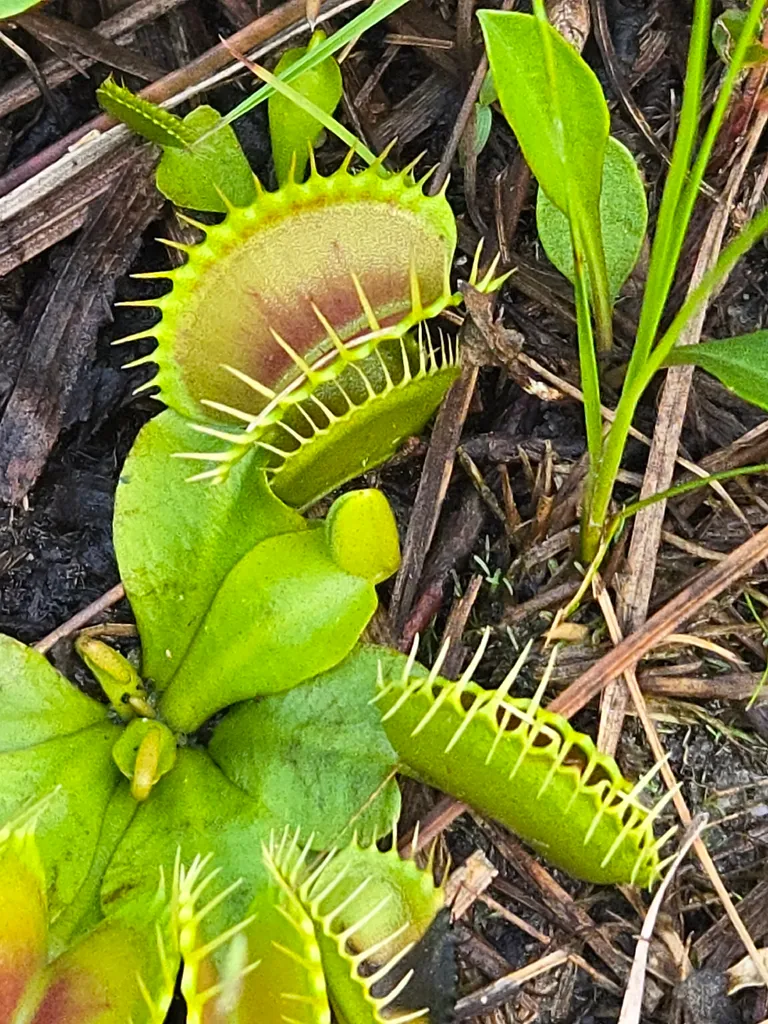



Venus flytrap

Venus flytrap · Watering

Venus flytrap · Dionaea muscipula
Also known as: Venus' fly trap; Venus' mouse trap

Venus flytrap require specifically moist acidic soil and high humidity, mimicking their natural bog habitats. They must be watered with rainwater, distilled water, or reverse osmosis water, as tap water can be harmful. Special care points include avoiding fertilizer and ensuring venus flytrap have a dormancy period in cooler temperatures for proper health and growth.

Watering: Keep soil consistently wet with distilled waterSunlight: Full sun · Partial shadeInformation to be completed

How to Water Venus flytrap?

Native to subtropical wetlands, venus flytrap thrives in moist environments with high humidity. This carnivorous plant exhibits a preference for consistent moisture without being waterlogged, reflecting its habitat's balance between wet and dry periods. Watering should align with this balance, equating to twice a week to maintain optimal soil moisture. Cultivated primarily as an intriguing indoor specimen, venus flytrap benefits from the controlled watering that mimics its natural setting, ensuring that the trap mechanisms function properly. In terms of growth cycles, maintaining proper hydration is crucial during venus flytrap's active season to support its unique insect-capturing process.

PlantCare

Your Ultimate Guide to Plants

Identify, grow and nurture the better way!

PlantCare plant identification and care illustration
PlantCare

Botanist in your pocket

Scan to download PlantCareDownload on the App Store

Scan the QR code with your phone camera to download the app