



Planting and Growing Japanese persimmon

| Care difficulty | 2 / 5 |
|---|---|
| Watering schedule | Water deeply and infrequently, allowing soil to dry slightly |
| Sunlight requirements | Full sun |
| Ideal temperature | 15 – 25 °C |
| Soil type | Loam |
| Soil pH | Acid · Alkaline · Neutral |
| Soil moisture | Well drained |
| Fertilizing | Apply balanced fertilizer in early spring and mid-summer |
| Toxicity | Information to be completed |
How to Water Japanese persimmon?
Japanese persimmon has a preference for moderate water conditions, reflecting its origins in humid subtropical regions. It is relatively balanced in terms of water needs, requiring watering once every 1-2 weeks to thrive. As an evergreen plant often grown outdoors, japanese persimmon benefits from rainfall during its growing season, which aids in maintaining its desired moisture levels.
Learn more →What Are the Sunlight Requirements for Japanese persimmon?
Japanese persimmon's optimal light conditions involve full sun exposure, which promotes vigorous growth and enhances fruit production. While full sun is ideal, japanese persimmon shows a tolerance for partial sun environments, suggesting a degree of adaptability to less intense light. However, extended periods without adequate sunlight may lead to diminished health and reduced yield. Outdoors, japanese persimmon thrives in a position where it can receive unfiltered sunlight for most of the day. It lacks significant adaptive traits for low-light conditions, making the selection of a sunny planting site crucial for its health and productivity.
Learn more →What Is the Ideal Temperature Range for Japanese persimmon?

Japanese persimmon demonstrates considerable resilience to temperature variations, tolerating cold down to -15℃ (5°F) and heat up to 43℃ (109°F). This adaptability makes it suitable for diverse environments, though protective measures are vital during extreme weather. Under cold stress, japanese persimmon may exhibit leaf drop and twig dieback, while excessive heat can cause sunscald and fruit damage. To mitigate these issues, use mulching and frost covers in cold, and provide shade and adequate watering during heatwaves. These measures help maintain plant vitality and productivity.
Learn more →What Soil Is Best for Japanese persimmon?
Japanese persimmon requires well-draining soil to prevent water-logging. A suitable mix includes garden soil, compost, and sand in equal parts. If compost is unavailable, peat moss can be a substitute. Ensure good drainage by adding gravel or broken pottery at the pot's bottom for potted plants. Regularly amend the soil with organic fertilizers during the growing season to promote healthy growth.
- Soil type
- Loam
- Soil pH
- Acid · Alkaline · Neutral
What Are the Moisture Requirements for Japanese persimmon?
Well drained
Learn more →How to Fertilize Japanese persimmon?

Fertilize japanese persimmon with balanced nutrition fertilizers, rich in NPK, during active growth in spring and summer. Apply every 3-4 weeks, adjusting quantity based on size; smaller trees need less. Fertilization promotes robust growth and abundant fruiting. Use caution to prevent root burn by over-fertilizing. In dormant winter months, cease application. Practical tip: Water japanese persimmon before fertilizing to aid nutrient absorption and reduce root stress.
Learn more →How to Prune Japanese persimmon?

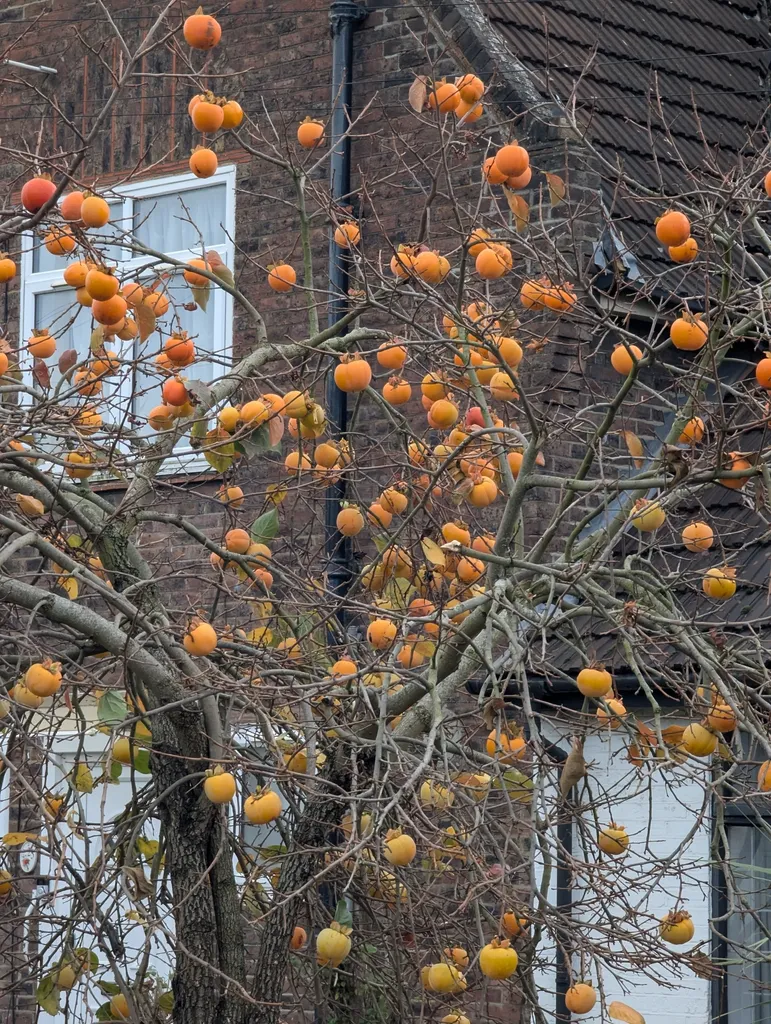
Japanese persimmon features distinctive orange fruits and glossy leaves. Key pruning techniques include removing dead or diseased branches, thinning crowded areas to enhance airflow, and shaping the canopy for balanced growth. Optimal pruning occurs in late winter, before new growth begins. Pruning promotes healthier growth, increases sunlight penetration, and boosts fruit production. Regular pruning helps manage size, reduces disease risk, and improves the overall aesthetics of japanese persimmon.
Learn more →How to Propagate Japanese persimmon?

Renowned for its delicious fruit, japanese persimmon can be propagated effectively through cuttings. To achieve success, gardeners should select healthy, semi-hardwood stems and treat them with a rooting hormone for enhanced root development. Cuttings must be placed in a well-draining soil mix and kept consistently moist in a warm, indirect light environment to encourage growth. Attentive care during the initial growth phase ensures a robust root system, vital for the prospering of young japanese persimmon.
Learn more →How to Transplant Japanese persimmon?
For optimal growth, transplant japanese persimmon during the rejuvenating period of early spring, as this helps prevent transplant shock. Choose a sunny location with well-draining soil. Gently tease the roots when transplanting, to encourage healthy root development.
Learn more →How to Plant Japanese persimmon?
Indoors-potted: When potted indoors, ensure japanese persimmon has enough space to accommodate its growth habit, as it may become large and require pruning. Outdoors-potted: Japanese persimmon, when kept in outdoor pots, should be monitored for root-bound conditions; repotting can encourage continued health and fruiting. Outdoors-in the ground: In-ground planting of japanese persimmon requires attention to spacing, as they need room to expand their canopy and root system for optimal fruit production.
Learn more →How to Repot Japanese persimmon?
For japanese persimmon, a large deciduous tree, repot in early spring every 2-3 years. Choose a wide container to accommodate growth; repot before it becomes root-bound. Post-repotting, provide well-draining soil, consistent watering, and avoid direct sun for a week to prevent stress. Regular pruning post-repotting enhances shape and promotes healthy recovery.
Learn more →How to Harvest Japanese persimmon?

Once the fruit is at the most suitable level of maturity or reaches the inherent color and hardness of its variety, it can be harvested. Begin picking from the outer crown, before moving on to the inner crown. Always start with the lower layer before the upper layer. Cut the entire fruit stem when harvesting, and try to keep the fruit intact.
Learn more →Common Pests & Diseases

Diseases
May be susceptible to honey fungus (rarely)
Pests
Generally pest-free
Explore the plant health library →Troubleshooting
Premature Fruit Drop or Failure to Ripen
Japanese persimmon (Diospyros kaki) depends on full sun, well-drained fertile soil, and steady moisture during active growth and harvest development.
| What you notice | Possible explanation | What to check next |
|---|---|---|
| Young green fruits drop prematurely during heat waves, drought swings, or heavy fruit load | Water stress fluctuations, root restriction shock, or natural self-thinning of heavy fruit set | Check deep soil moisture and evaluate tree age and sunlight exposure |
| Fruits remain hard and astringent late into autumn | Astringent cultivar type (such as 'Hachiya') requiring full soft-ripening on or off the tree | Confirm whether your cultivar is astringent or non-astringent (such as 'Fuyu') |
- Maintain steady deep watering during fruit development (avoiding sudden drought-to-flood swings) and provide full sun in deep, fertile, well-drained loam.
- Water at the base of plants early in the day rather than wetting foliage overhead to reduce fungal diseases.
- Prune in late winter while dormant to remove dead, crossing, or overcrowded branches and maintain an open canopy.
Avoid excessive nitrogen fertilizer in summer, which promotes leafy shoot growth and increases premature fruit drop.
Sap-Sucking Pests, Beetles, or Slugs
Edible crops and fruiting plants attract aphids, spider mites, scale, beetles, or slugs during warm growth.
| What you notice | Possible explanation | What to check next |
|---|---|---|
| Curled new shoots, sticky honeydew, or fine webbing on leaf undersides | Aphids, spider mites, whiteflies, or scale insects | Inspect growing tips and leaf undersides closely |
| Chewed leaves or young shoots near soil level | Slugs, snails, leaf beetles, or caterpillars | Inspect foliage and soil surface early in the morning |
- Rinse aphids and spider mites off sturdy foliage with a firm spray of water, and hand-pick beetles or slugs.
- Encourage beneficial predators and keep garden beds free of decaying plant debris.
- If needed, apply food-crop-approved insecticidal soap or horticultural oil strictly according to label directions and pre-harvest intervals.
Always wash harvested fruits, herbs, and vegetables thoroughly before eating, and avoid spraying open blossoms.