



Planting and Growing trumpet lily


| Care difficulty | 2 / 5 |
|---|---|
| Watering schedule | Keep soil lightly and evenly moist during active stem and bud growth |
| Sunlight requirements | Full sun |
| Ideal temperature | 15 – 25 °C |
| Soil type | Loam · Sand |
| Soil pH | Acid · Alkaline · Neutral |
| Soil moisture | Well drained |
| Fertilizing | Lily bulb feed every three weeks during spring and summer growth |
| Toxicity | Ornamental bulbs - not to be eaten. Wear gloves and other protective equipment when handling |
How to Water trumpet lily?
Originating from the Ryukyu Islands of Japan, easter lily thrives in moderately moist soil conditions and displays a preference for consistent moisture without being waterlogged. It is drought-sensitive and requires a delicate balance of hydration. Watering should occur once every 1-2 weeks, ensuring the soil remains evenly damp but not saturated. Typically grown indoors due to its ornamental value, easter lily enters a period of dormancy after flowering where reduced watering aids in its rest phase, reflecting its adaptation to seasonal changes in water availability.
Learn more →What Are the Sunlight Requirements for trumpet lily?
Easter lily thrives in conditions where it can receive full sunlight, as this intensity and quality of light are paramount for its robust growth and prolific flowering. However, easter lily can also adapt well to partial sun environments, albeit with possible repercussions on its health and blooming potential. In locations receiving less than optimal light, easter lily may exhibit leggy growth or reduced flowering. When cultivated indoors, a south-facing window is ideal, ensuring ample light. Outdoors, easter lily should be planted where daylight is abundant but protection from the harsh midday sun is available to prevent scorching.
Learn more →What Is the Ideal Temperature Range for trumpet lily?

Easter lily demonstrates notable resilience to temperature variations, enduring cold extremes down to -25°C (-13°F) and heat up to 38°C (100°F). This adaptability necessitates protective measures during severe weather, like mulching in winter and shading in summer. Symptoms of distress include leaf yellowing or scorching from heat and wilting from cold exposure. Preventive care involves insulating potted plants for cold and ensuring sufficient hydration and ventilation for heat. These practices ensure easter lily thrives in diverse environments, enhancing its overall care.
Learn more →What Soil Is Best for trumpet lily?
For easter lily, ensure well-aerated soil with excellent drainage to prevent water-logging. A suitable mix includes equal parts garden soil, peat moss, and perlite. If perlite is unavailable, coarse sand can be substituted. To further enhance growth, mix in a slow-release, balanced fertilizer at planting time. Maintain consistent moisture without overwatering, which is crucial for avoiding root rot.
- Soil type
- Loam · Sand
- Soil pH
- Acid · Alkaline · Neutral
What Are the Moisture Requirements for trumpet lily?
Well drained
Learn more →How to Fertilize trumpet lily?

For optimal health, easter lily benefits from balanced nutrition fertilizers in its growing season, transitioning to high phosphorus fertilizers pre-bloom to bolster flower production. Fertilize every 2-3 weeks with a half-strength solution, mindful of root sensitivity to prevent burn. Seasonal adjustments are crucial: reduce frequency in fall and withhold in winter. Novices should start modestly with quantities and frequencies, while ensuring even soil coverage. Experienced gardeners will appreciate easter lily's responsiveness to accurate feeding, promoting plant vigor and luscious blooms.
Learn more →How to Prune trumpet lily?

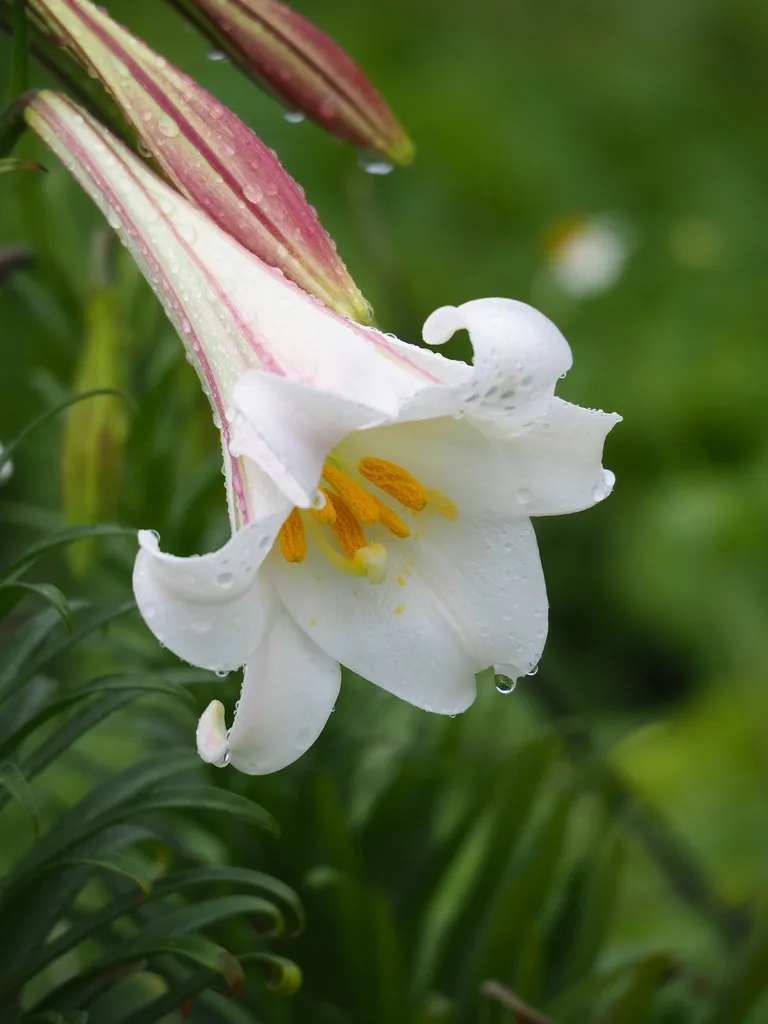
Easter lily is a popular flowering plant known for its trumpet-shaped white blooms and pleasant fragrance. For optimal care, prune dead or yellowing leaves and spent flowers to encourage new growth. Pruning is best done from early to later spring, aligning with the plant's active growth period. This timing helps prevent disease and promotes better blooming. Always use clean, sharp tools to avoid damaging the plant and ensure healthy regrowth, improving overall plant health and aesthetics.
Learn more →How to Propagate trumpet lily?

Spring is the ideal season to propagate easter lily. It can be easily propagated by replanting the tubers from one location to another, which promotes vigorous growth. Look for developing shoots as a sign of successful propagation. Ensure well-draining soil and full sun for best results.
Learn more →How to Transplant trumpet lily?
Transplanting easter lily is best during the pleasant window between mid-spring and early summer, as it offers ideal growing conditions. Choose a location with well-drained soil, partial to full sun exposure, and remember to provide ample space for proper growth.
Learn more →How to Care for trumpet lily in Winter?

Information to be completed
Learn more →How to Plant trumpet lily?
Indoors-potted: Thriving indoors, easter lily requires a stable environment; rotate the pot for even growth and to prevent leaning towards light sources. Outdoors-potted: Easter lily, while adaptable, may not endure harsh winters outdoors in pots due to root exposure. Shelter or seasonal indoor relocation is recommended. Outdoors-in the ground: Planted in the ground, easter lily needs well-drained soil; excessive moisture can lead to bulb rot, compromising its perennial blooms.
Learn more →How to Repot trumpet lily?
Needs excellent drainage in pots.
Learn more →How to Harvest trumpet lily?

Harvest freshly cut flowers in evening or early morning of a sunny day. Freshly harvested flowers should be kept away from direct sunlight and can be stored in cold storage for fresh-keeping.
Learn more →Common Pests & Diseases

Diseases
May be susceptible to grey moulds and a virus; see lily diseases
Pests
May be susceptible to lily beetle, aphids, slugs, snails, Thrips, leatherjackets, and wireworms, and to damage by rabbits and voles; plants in containers may be affected by vine weevil
Explore the plant health library →The Toxicity of trumpet lily
Ornamental bulbs - not to be eaten. Wear gloves and other protective equipment when handling