



Planting and Growing Sarracenia × gilpinii

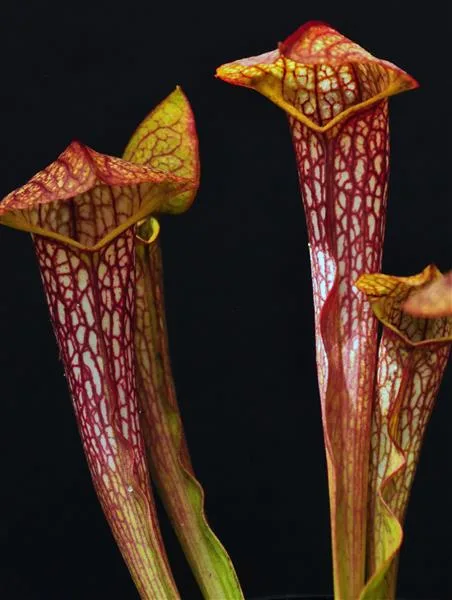
| Care difficulty | 4 / 5 |
|---|---|
| Watering schedule | Keep medium moist with pure water, never allow complete drying |
| Sunlight requirements | Full sun |
| Ideal temperature | Information to be completed |
| Soil type | Loam |
| Soil pH | Acid |
| Soil moisture | Poorly drained |
| Fertilizing | Avoid regular fertilizer; feed only if species-specific care allows |
| Toxicity | Information to be completed |
How to Water Sarracenia × gilpinii?
Keep medium moist with pure water, never allow complete drying
Learn more →What Are the Sunlight Requirements for Sarracenia × gilpinii?
Full sun
Learn more →What Soil Is Best for Sarracenia × gilpinii?
- Soil type
- Loam
- Soil pH
- Acid
What Are the Moisture Requirements for Sarracenia × gilpinii?
Poorly drained
Learn more →How to Fertilize Sarracenia × gilpinii?

Avoid regular fertilizer; feed only if species-specific care allows
Learn more →How to Prune Sarracenia × gilpinii?

Trim off tatty growth in autumn
Learn more →How to Propagate Sarracenia × gilpinii?

Propagate by division in spring
Learn more →How to Plant Sarracenia × gilpinii?
Grow in a bog garden, or outdoors in containers of specialist carnivorous compost, in full sun. In summer stand containers in trays of lime-free water and irrigate only with rainwater. Sarracenia require a period of winter dormancy when they should be kept moist, cool, and well ventilated; an unheated greenhouse is ideal. See Carnivorous plant cultivation
Learn more →Common Pests & Diseases

Diseases
Generally disease-free
Pests
May be susceptible to slugs, snails and aphids
Explore the plant health library →