



Planting and Growing black-drink tree

| Care difficulty | 1 / 5 |
|---|---|
| Watering schedule | Deep watering during dry spells, allowing slight surface drying between soakings |
| Sunlight requirements | Full sun · Partial shade |
| Ideal temperature | 15 – 25 °C |
| Soil type | Sand · Loam · Clay · Chalk |
| Soil pH | Neutral · Alkaline · Acid |
| Soil moisture | Moist but well drained · Well drained |
| Fertilizing | Balanced shrub or tree feed once each early spring |
| Toxicity | Fruit are ornamental - not to be eaten. Wear gloves and other protective equipment when handling |
How to Water black-drink tree?
Native to the southeastern United States, yaupon thrives in environments that mimic its natural habitat of periodic rainfall and well-draining soils. This species exhibits a moderate drought tolerance, requiring a balance between moisture retention and drainage. Watering should be adjusted to once every 1-2 weeks, ensuring the soil partially dries out between sessions. Typically grown outdoors due to its resilience, yaupon is an evergreen plant that maintains hydration even in varying temperatures, highlighting its adaptability to different water regimes.
Learn more →What Are the Sunlight Requirements for black-drink tree?
Yaupon's optimal light conditions include direct exposure to full sunlight, where it thrives with the greatest intensity and duration of light. This species shows a good degree of flexibility, tolerating partial sun and demonstrating resilience when light conditions are not ideal. Although not as robust as in full sun, yaupon can still maintain reasonable growth in these less intense light environments. Variations from optimal lighting may slow growth and affect leaf density, but yaupon possesses adaptive traits to help manage light stress, such as leaf orientation adjustments. Typically found outdoors, the best planting positions for yaupon include open areas receiving ample sunlight, such as clearings or the southern side of landscapes.
Learn more →What Is the Ideal Temperature Range for black-drink tree?

Yaupon is notably resilient, tolerating temperatures as low as -5℃ (23℉) and as high as 38℃ (100℉). This adaptability makes it suitable for diverse climates. However, during extremely cold conditions, yaupon may exhibit leaf drop or browning, necessitating protective measures like mulching or using frost covers. Conversely, in excessive heat, signs of wilting or scorching could appear, indicating the need for adequate watering and shading. This robust temperature tolerance implies that yaupon can thrive in various environments, provided that appropriate care is administered during extreme weather fluctuations.
Learn more →What Soil Is Best for black-drink tree?
Yaupon likes acidic soil with a pH value of 5-6. In neutral or alkaline soil, its leaves tend to yellow and the plant may even die. It requires humid culture media that retain water and are rich in organic matter. Humus soil with an appropriate amount of coarse sand or perlite added will increase soil permeability. A formula for the culture medium, for example, could be 1/2 leaf mold + 1/4 coarse sand or perlite + 1/4 decomposed bark. Before putting it into the pot, the medium should be soaked in a carbendazim solution to kill any bacteria and insect eggs. Some ceramsites can be put at the bottom of the pot to improve drainage and avoid water accumulation caused by excessive daily watering. Change the soil every two years.
- Soil type
- Sand · Loam · Clay · Chalk
- Soil pH
- Neutral · Alkaline · Acid
What Are the Moisture Requirements for black-drink tree?
Moist but well drained · Well drained
Learn more →How to Fertilize black-drink tree?

Optimal care for yaupon involves using balanced nutrition fertilizers or high nitrogen options, tailored to its growth cycle. In spring, apply every 2-3 weeks to boost budding, using a half-strength solution. During the active growth phase, a monthly application promotes vigor. In fall, reduce to quarterly, aiding in preparation for dormancy. A light hand is essential—over-fertilization can damage yaupon's roots and health. Prefer slow-release granules or liquid formulations for efficient uptake, adjusting quantities as per manufacturer’s guidelines and plant size. Always water yaupon well post-fertilization to distribute nutrients and prevent root burn.
Learn more →How to Prune black-drink tree?

Yaupon flowers and fruits only grow on new branches, so the plant needs to be pruned to promote the germination of new branches. It’s best to prune before early spring, ideally during winter. In addition to promptly cutting off old, yellow, dried, and diseased leaves, one-third of the old branches should be cut off from the base every year. This promotes vertical growth, flowering, and fruiting. After winter pruning in cold areas where it snows, the remaining branches can be bundled with ropes to avoid damage caused by snow or ice on the branches.
Learn more →How to Propagate black-drink tree?

Yaupon can be propagated effectively through cuttings, with spring and summer being the ideal seasons. The process is moderately easy, and successful propagation is marked by new leaf growth. Ensure optimal humidity and consistent temperature for better results.
Learn more →How to Transplant black-drink tree?
Optimal transplant timing for yaupon is during the verdant vitality of mid to late spring, ensuring vigorous growth. Select a sunny spot with well-drained soil, and provide ample water post-transplant to encourage acclimatization.
Learn more →How to Care for black-drink tree in Winter?

Yaupon thrives in USDA Hardiness Zones 7-10, exhibiting resilience against frosty fluctuations. Despite its subtropical origins, it adapts well to temperate winter challenges, with its moisture-retentive, waxy leaf coating. Gardeners must ensure that yaupon is watered moderately amidst low temperatures. Even though this evergreen can endure winter cold, a sheltered location coupled with mulch around the base provides further protection.
Learn more →How to Plant black-drink tree?
Indoors-potted: Ensure yaupon has space to thrive; indoors, it can become a unique conversation piece with its evergreen leaves and structural form. Outdoors-potted: Yaupon adapts well to container life outdoors; just monitor growth as it may need transplanting to avoid becoming root-bound over time. Outdoors-in the ground: Planted in the ground, yaupon's resilience shines, tolerating various conditions but watch for excessive growth which might require pruning.
Learn more →How to Repot black-drink tree?
Repot yaupon, a bushy evergreen, every 2-3 years to support its moderate growth. Best done in early spring to coincide with its growth cycle. Choose a container 2 inches larger than the current one, ensuring ample room for root development. Post-repotting, water thoroughly and place in bright, indirect light to encourage acclimatization. Use a well-draining potting mix to maintain yaupon's health.
Learn more →How to Harvest black-drink tree?

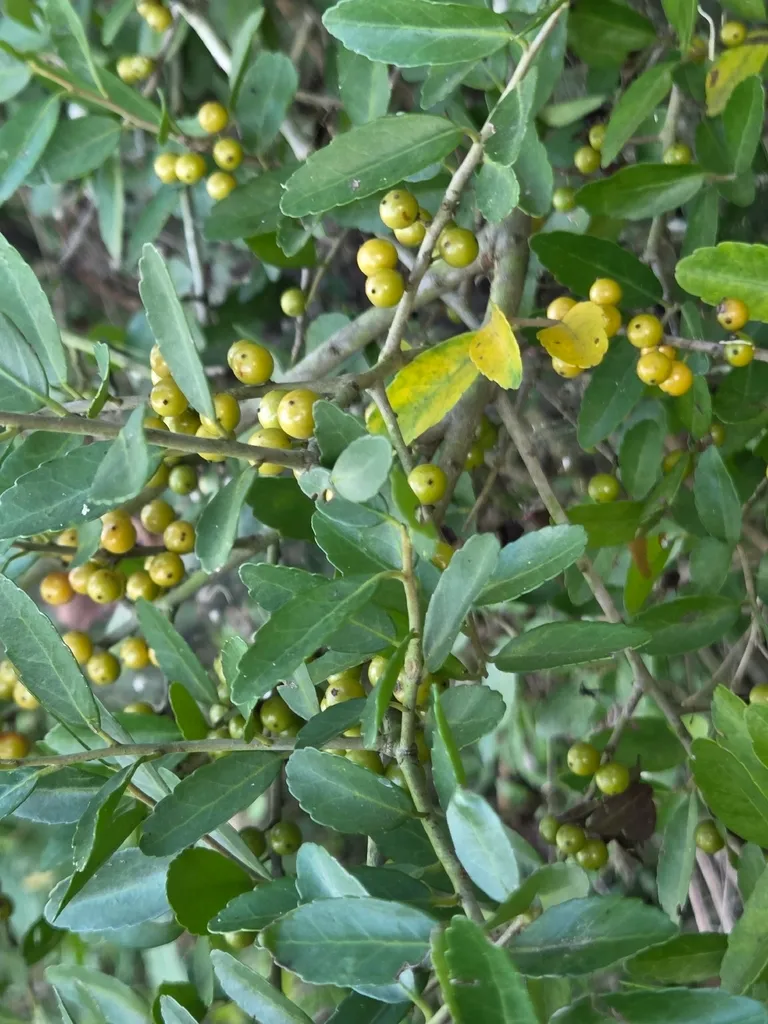
In suitable growth conditions, yaupon blooms and bears fruits once a year. The fruits appear in fall and winter, and can be appreciated for a long time before picking. Without birds in the yard, the fruits often persist into the next spring. The vase life of fruit-bearing branches after picking is about 20-40 days. Use sharp garden shears when picking and cut the base of branches at a 45-degree angle, or make the cut into a cross, to increase the water absorption area. Quickly put the cutting in a vase with clean water to avoid water loss. The fruits of Ilex verticillata can also be air-dried since they tend to not drop from the branches. Their colors will change from bright red to deep red, providing good ornamental value.
Learn more →Common Pests & Diseases

Diseases
May be susceptible to holly leaf blight, Phytophthora root rot and sometimes honey fungus
Pests
May be susceptible to scale insects, holly leaf miner and young shoots may be susceptible to aphids
Explore the plant health library →The Toxicity of black-drink tree
Fruit are ornamental - not to be eaten. Wear gloves and other protective equipment when handling