



Planting and Growing Hippeastrum 'Apple Blossom'

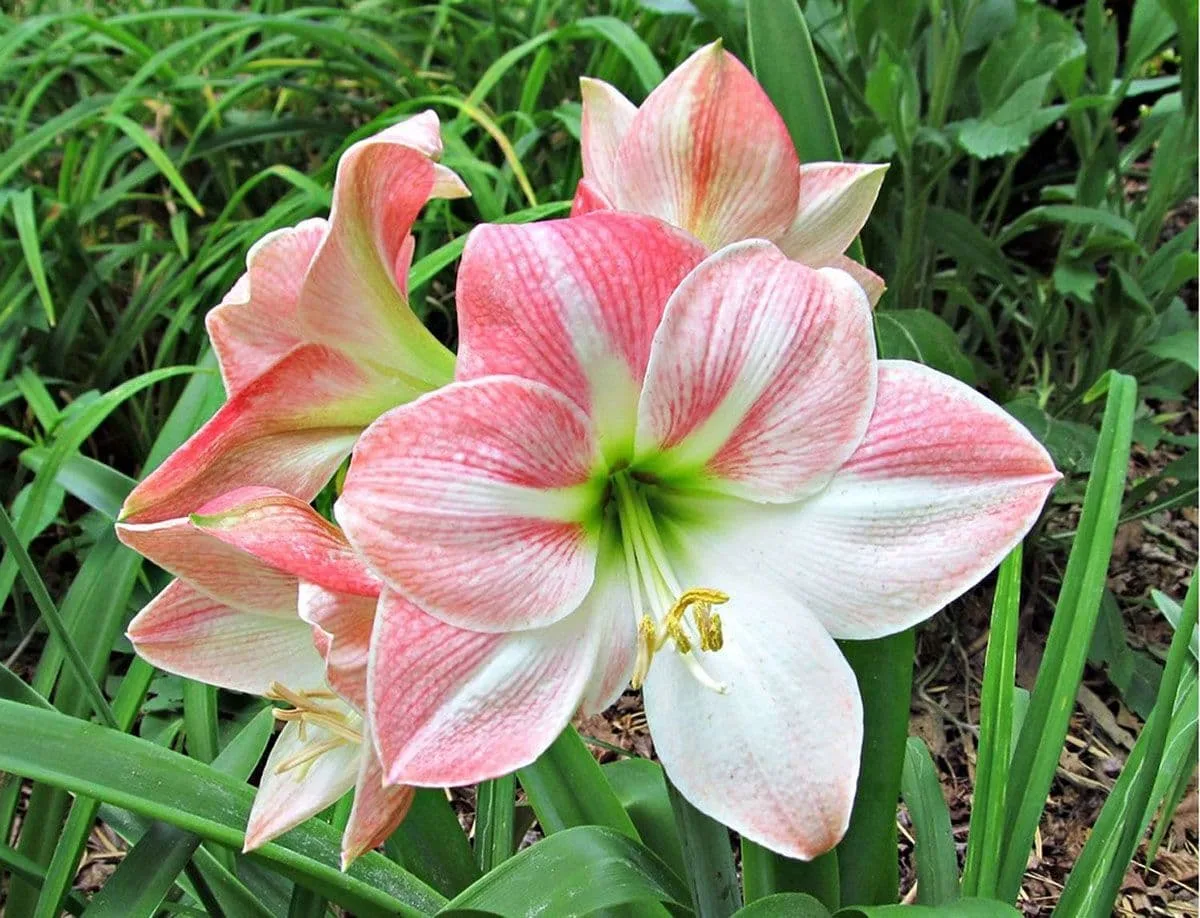
| Care difficulty | 3 / 5 |
|---|---|
| Watering schedule | Moderate regular watering, avoid prolonged drought or waterlogging |
| Sunlight requirements | Full sun · Partial shade |
| Ideal temperature | Information to be completed |
| Soil type | Chalk · Clay · Loam · Sand |
| Soil pH | Acid · Alkaline · Neutral |
| Soil moisture | Moist but well drained · Well drained |
| Fertilizing | Balanced feed in spring and light repeat in growth season |
| Toxicity | Harmful if eaten. Wear gloves and other protective equipment when handling |
How to Water Hippeastrum 'Apple Blossom'?
Moderate regular watering, avoid prolonged drought or waterlogging
Learn more →What Are the Sunlight Requirements for Hippeastrum 'Apple Blossom'?
Full sun · Partial shade
Learn more →What Soil Is Best for Hippeastrum 'Apple Blossom'?
- Soil type
- Chalk · Clay · Loam · Sand
- Soil pH
- Acid · Alkaline · Neutral
What Are the Moisture Requirements for Hippeastrum 'Apple Blossom'?
Moist but well drained · Well drained
Learn more →How to Fertilize Hippeastrum 'Apple Blossom'?

Balanced feed in spring and light repeat in growth season
Learn more →How to Prune Hippeastrum 'Apple Blossom'?

No pruning required
Learn more →How to Propagate Hippeastrum 'Apple Blossom'?

Propagate by seed sown as fresh as possible in spring. Seed-raised plants may take up to 6 years to flower. May also be propagated by separating offsets from the main bulb
Learn more →How to Plant Hippeastrum 'Apple Blossom'?
Plant from October to January using John Innes No.2 into pots a little larger than the bulb itself. Two-thirds of the bulb should remain above the surface. Place in a well-lit spot at 21°C. Water sparingly until the new leaves develop and then start watering regularly. Turn the pot regularly to prevent the flower stem from bending toward the light. Once in flower, move the pot to a cool room to extend the flowering period. See Hippeatsrum cultivation for further information
Learn more →Common Pests & Diseases

Diseases
Generally disease-free
Pests
May be susceptible to bulb scale mite and narcissus bulb fly
Explore the plant health library →The Toxicity of Hippeastrum 'Apple Blossom'
Harmful if eaten. Wear gloves and other protective equipment when handling