



Planting and Growing dragon fruit

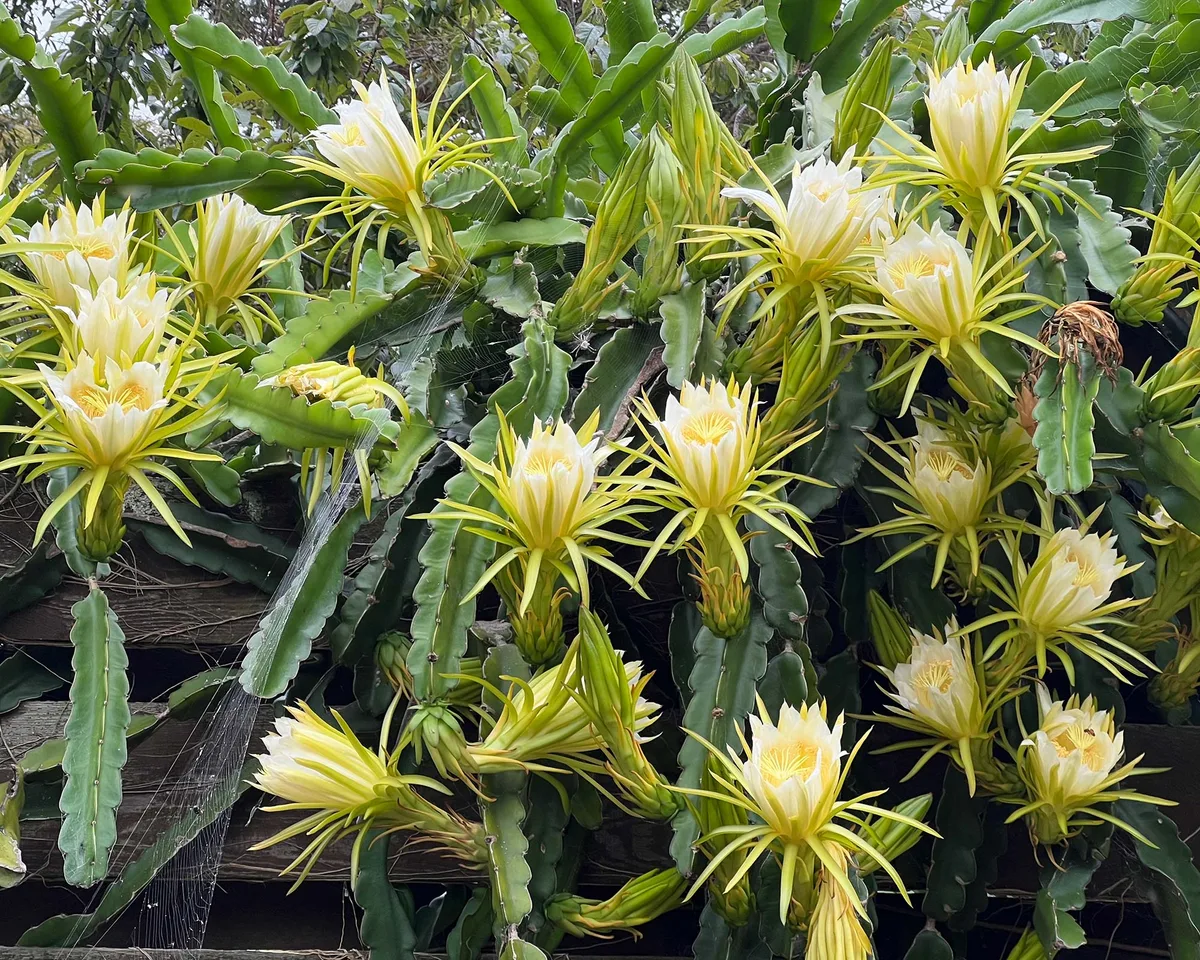
| Care difficulty | 2 / 5 |
|---|---|
| Watering schedule | Water deeply then dry substrate fully, drought-tolerant cactus vine |
| Sunlight requirements | Partial shade |
| Ideal temperature | 20 – 30 °C |
| Soil type | Sand |
| Soil pH | Acid |
| Soil moisture | Well drained |
| Fertilizing | Diluted low-nitrogen cactus feed monthly warm growing months |
| Toxicity | Information to be completed |
How to Water dragon fruit?
Dragon fruit thrives in environments that mimic its native tropical climate, where high humidity and sporadic rainfall are the norms. This species is well-adapted to periods of drought, showing a preference for drier conditions over prolonged wetness. Accordingly, it requires watering once every three weeks to maintain the right moisture balance without oversaturating its roots. As dragon fruit is predominantly an outdoor plant, it benefits from natural rainwater during its active growing season, which enhances its succulent fruit production while relying less on supplemental irrigation.
Learn more →What Are the Sunlight Requirements for dragon fruit?
Dragon fruit thrives in full sun exposure, which is fundamental for its vigorous growth, healthy development, and successful flowering. Optimal light involves being bathed in unfiltered sunlight for the majority of the day. When dragon fruit experiences partial sun, it can still perform well, although prolonged periods of low light may hinder bloom production and reduce overall vitality. To maximize growth outdoors, dragon fruit should be positioned in a location that receives ample sunlight for 6+ hours, whereas, for indoor cultivation, placing dragon fruit near a south-facing window would ensure sufficient light. The plant exhibits adaptability by adjusting its growth pattern towards light sources to optimize light absorption.
Learn more →What Is the Ideal Temperature Range for dragon fruit?

Dragon fruit demonstrates notable resilience to temperature fluctuations, tolerating cold down to 5℃ (41℉) and heat up to 43℃ (109℉). This adaptability necessitates specific care strategies; in colder temperatures, frost damage prevention is essential, while in extreme heat, shading and increased watering can mitigate stress. Symptoms of overcooling include wilting and discoloration, while overheating may result in leaf scorch and dehydration. To protect dragon fruit from temperature extremes, consider moving it to a sheltered location during cold snaps and ensuring adequate hydration and ventilation during heatwaves.
Learn more →What Soil Is Best for dragon fruit?
A well-draining soil mix is crucial for dragon fruit, as it prevents root rot. Suitable soil can be a purchased succulent & cactus mix or homemade with equal parts potting soil, coarse sand, and perlite for improved drainage. Ensure pots have drainage holes. Incorporate slow-release fertilizer annually for optimal growth. Soil conditioners are rarely needed if the mix is well balanced.
- Soil type
- Sand
- Soil pH
- Acid
What Are the Moisture Requirements for dragon fruit?
Well drained
Learn more →How to Fertilize dragon fruit?

For optimal growth, dragon fruit requires regular fertilization with succulents and cacti-specific food to promote flowering and yield. Apply a quarter-strength balanced (20-20-20) formula bi-weekly during active growth in spring and summer, reducing to monthly in fall and ceasing in winter. Over-fertilizing can harm dragon fruit; adhere to recommended dilutions and frequency. Seasonal adjustments ensure dragon fruit receives nutrients when most beneficial, bolstering plant vigor and fruit production while preventing nutrient burn and waste.
Learn more →How to Prune dragon fruit?

Dragon fruit does not require much pruning. Remove withered flowers and branches so the plant uses nutrients on healthy growth.
Learn more →How to Propagate dragon fruit?

A succulent climbing cactus, dragon fruit boasts ornamental flowers that give way to vibrant fruit. Propagation is predominantly achieved through stem cuttings, encouraging swift, effective growth. Cuttings should be taken from mature, healthy growth. The cutting end must be allowed to callous for several days before planting in well-draining soil to prevent rotting. Watering is commenced once roots are established, adhering to the species' preference for intermittent deep watering. It is crucial to ensure ample sunlight and warmth, simulating its native tropical climate for optimal development.
Learn more →How to Transplant dragon fruit?
To transplant dragon fruit successfully, choose the ideal time between late spring and mid-summer as it fosters optimum growth. Ensure dragon fruit is placed in a well-lit location with proper drainage. Handle the delicate roots gently, ensuring minimal root disturbance during transplanting.
Learn more →How to Care for dragon fruit in Winter?

Dragon fruit hails from the warm, tropical climate of Central America and is distinctly unaccustomed to the chills of winter. It adapts by shedding its fruits and resting, awaiting the warmer seasons. For gardeners, it is vital to mimic these conditions by moving dragon fruit indoors or increasing humidity around the plant during winter. Freezing temperatures are lethal, so protective shields or warming blankets may be employed.
Learn more →How to Plant dragon fruit?
Indoors-potted: Ensure dragon fruit has a sturdy support structure indoors; its climbing habit thrives with proper guidance and space to grow. Outdoors-potted: Outdoor potted dragon fruit should be rotated regularly to encourage even growth, as it can lean towards light sources. Outdoors-in the ground: When planting dragon fruit in the ground, select a spot that allows for vertical or sprawling growth, as this species naturally climbs.
Learn more →How to Repot dragon fruit?
Springtime is ideal for repotting dragon fruit, a climbing cacti requiring refreshment every 2-3 years due to vigorous growth. Select a pot slightly larger than the current, ensuring space for the extensive root system. Post-repotting, offer dragon fruit bright indirect light and avoid watering for a week to prevent root rot, fostering strong recovery and bloom.
Learn more →How to Harvest dragon fruit?

Most fruits of dragon fruit are edible. Pick the fruit when they turn red. Avoid food safety issues by confirming the species with experts. Wear gloves or use scissors and other tools to harvest.
Learn more →Common Pests & Diseases

Diseases
Generally disease-free
Pests
May be susceptible to scale insects
Explore the plant health library →