



Planting and Growing montbretia 'Emberglow'

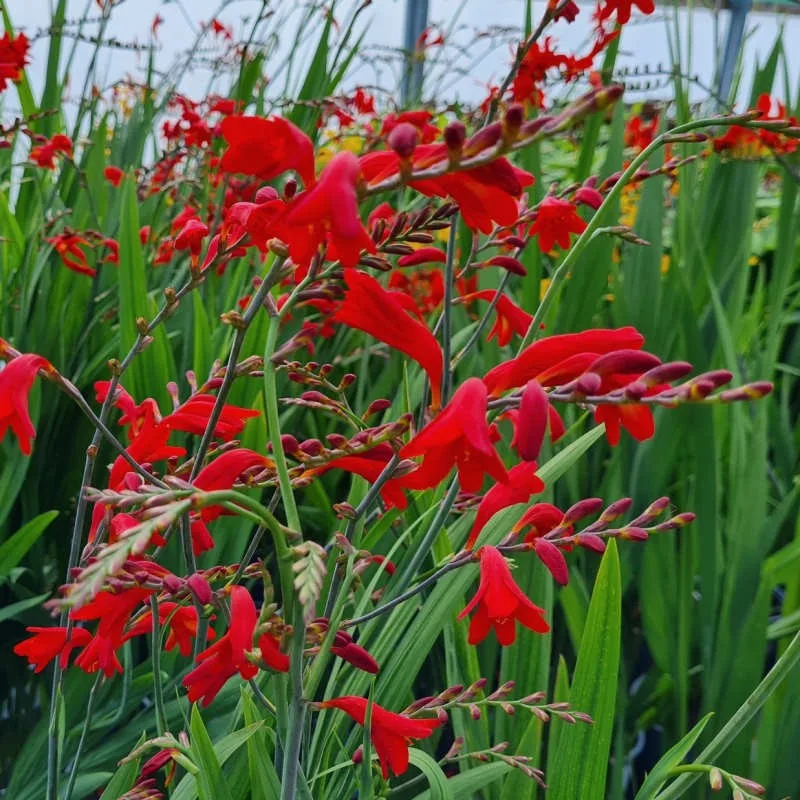
| Care difficulty | 2 / 5 |
|---|---|
| Watering schedule | Keep soil evenly moist during active growth, drier once winter dormancy arrives |
| Sunlight requirements | Full sun · Partial shade |
| Ideal temperature | Information to be completed |
| Soil type | Chalk · Clay · Loam · Sand |
| Soil pH | Acid · Alkaline · Neutral |
| Soil moisture | Moist but well drained |
| Fertilizing | Balanced crocosmia feed every three weeks from spring into midsummer |
| Toxicity | Information to be completed |
How to Water montbretia 'Emberglow'?
Keep soil evenly moist during active growth, drier once winter dormancy arrives
Learn more →What Are the Sunlight Requirements for montbretia 'Emberglow'?
Full sun · Partial shade
Learn more →What Soil Is Best for montbretia 'Emberglow'?
- Soil type
- Chalk · Clay · Loam · Sand
- Soil pH
- Acid · Alkaline · Neutral
What Are the Moisture Requirements for montbretia 'Emberglow'?
Moist but well drained
Learn more →How to Fertilize montbretia 'Emberglow'?

Balanced crocosmia feed every three weeks from spring into midsummer
Learn more →How to Prune montbretia 'Emberglow'?

No pruning required, except the removal of dead leaves and flower stems before new growth starts in spring.
Learn more →How to Propagate montbretia 'Emberglow'?

Propagate by division in early spring when clumps become congested or Propagate by seed sown in containers in a cold frame as soon as ripe
Learn more →How to Plant montbretia 'Emberglow'?
Corms should be planted in moderately fertile, humus rich soil approximately 10cm deep and 7.5–10cm apart in groups to form clumps. Water if it is a dry season as a lack of water reduces flowering. May have the potential to become a nuisance in some gardens if not managed well
Learn more →Common Pests & Diseases

Diseases
Generally disease-free
Pests
May be susceptible to glasshouse red spider mite
Explore the plant health library →