



Planting and Growing English lavender 'Munstead'

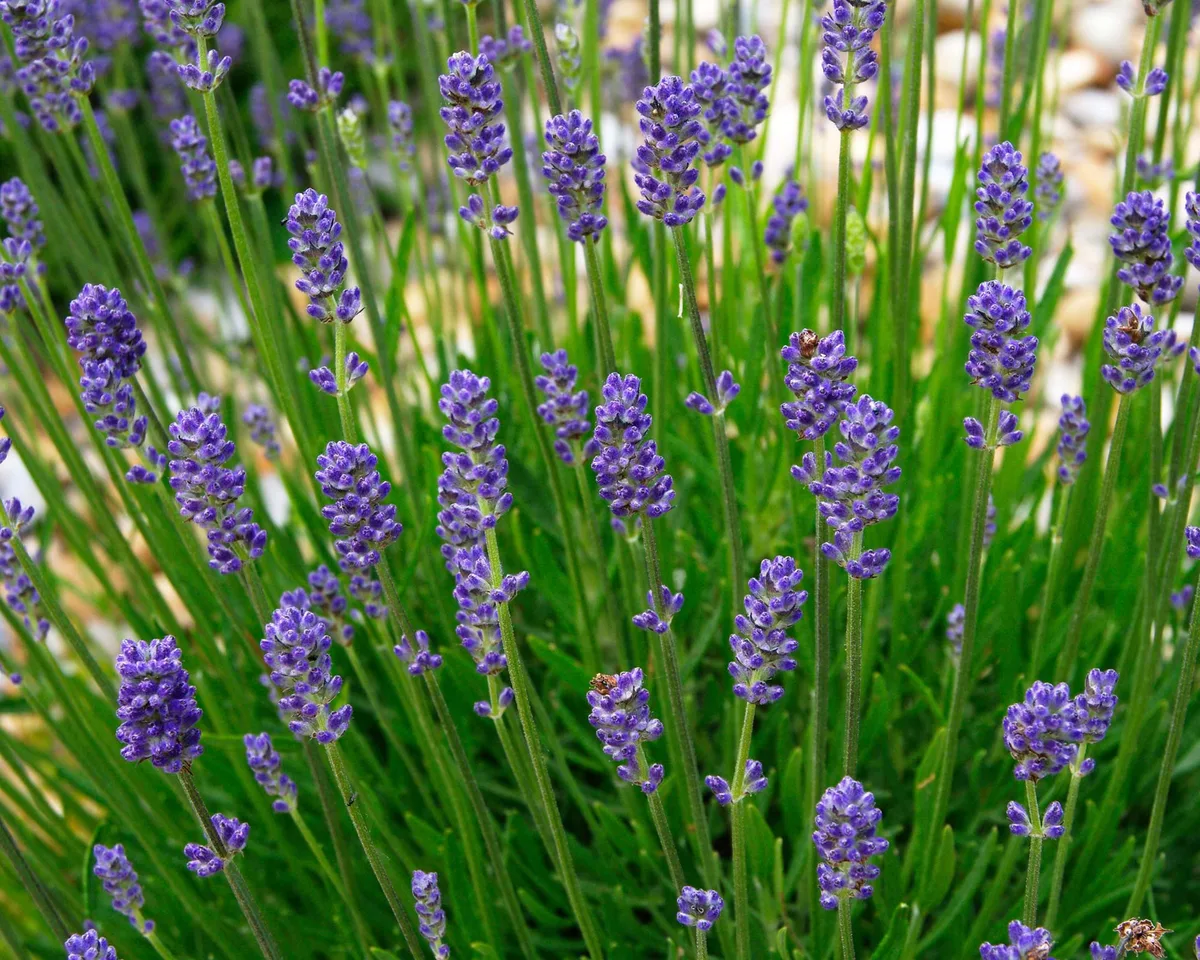
| Care difficulty | 2 / 5 |
|---|---|
| Watering schedule | Water once soil partially dries, avoid continuously soggy substrate |
| Sunlight requirements | Full sun |
| Ideal temperature | Information to be completed |
| Soil type | Chalk · Loam · Sand |
| Soil pH | Acid · Alkaline · Neutral |
| Soil moisture | Well drained |
| Fertilizing | Weak lavender feed every four weeks warm growing summer months |
| Toxicity | Information to be completed |
How to Water English lavender 'Munstead'?
Water once soil partially dries, avoid continuously soggy substrate
Learn more →What Are the Sunlight Requirements for English lavender 'Munstead'?
Full sun
Learn more →What Soil Is Best for English lavender 'Munstead'?
- Soil type
- Chalk · Loam · Sand
- Soil pH
- Acid · Alkaline · Neutral
What Are the Moisture Requirements for English lavender 'Munstead'?
Well drained
Learn more →How to Fertilize English lavender 'Munstead'?

Weak lavender feed every four weeks warm growing summer months
Learn more →How to Prune English lavender 'Munstead'?

Shorten flowered shoots to about 1.5–2.5 cm from the previous year's growth. Prune after flowering has finished.
Learn more →How to Propagate English lavender 'Munstead'?

Propagate by semi-hardwood cuttings in summer
Learn more →How to Plant English lavender 'Munstead'?
Prefers a well-drained neutral to alkaline soil but tolerates acidic conditions. In heavy soil improve drainage as it does not tolerate waterlogging. Potash will encourage flowering but high nitrogen fertilisers and manure will result in \"\"floppy\"\" plants. See lavender cultivation for further advice
Learn more →Common Pests & Diseases

Diseases
May be susceptible to grey moulds (Botrytis) and honey fungus (rarely)
Pests
May be susceptible to rosemary beetle and cuckoo spit (froghoppers)
Explore the plant health library →