
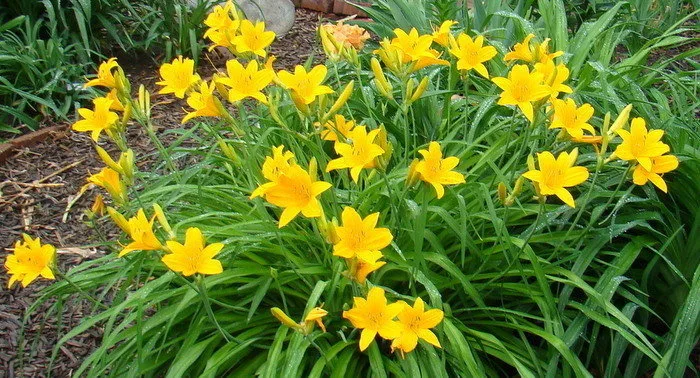



Daylily

Daylily · Pests & diseases

Daylily · Hemerocallis species
Also known as: Daylily, Common daylily

Daylilies thrive in full sun or light shade and prefer moist but well-drained soil. They are tolerant of a wide range of soil types, including sandy and clay soils, but perform best in fertile loam. Water regularly during dry spells, but avoid waterlogging. Apply a balanced fertiliser in early spring as new growth emerges, and again after flowering. In cold regions mulch around the crown in autumn for winter protection. Divide clumps every 3–5 years in early spring or after flowering to maintain vigour.

Watering: Keep soil moist but not waterloggedSunlight: Full sunToxic to cats; ingestion can cause kidney failure. Mildly toxic to dogs if large quantities are eaten. Keep out of reach of pets.

Common Pests & Diseases

Diseases

Daylilies are generally healthy but can be affected by leaf streak (caused by Aureobasidium microstictum) and rust (Puccinia hemerocallidis). Ensure good air circulation and avoid overhead watering to reduce risk.

Pests

Common pests include aphids, spider mites, and thrips. Slugs and snails may also damage young foliage. Monitor regularly and treat with appropriate controls if necessary.

Explore the plant health library →
PlantCare

Your Ultimate Guide to Plants

Identify, grow and nurture the better way!

PlantCare plant identification and care illustration
PlantCare

Botanist in your pocket

Scan to download PlantCareDownload on the App Store

Scan the QR code with your phone camera to download the app