
Daylily
Also known as: Daylily, Common daylily
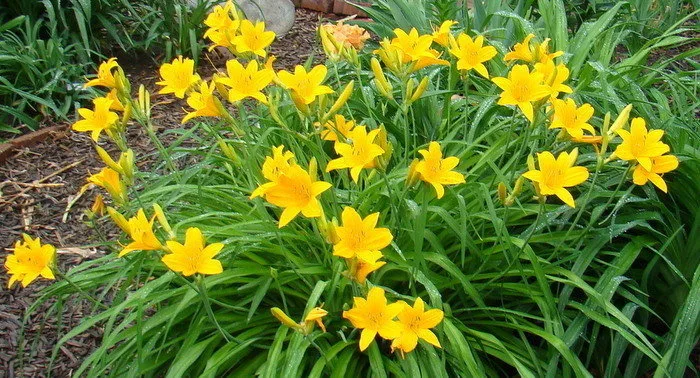
Hemerocallis, commonly known as daylily, is a clump-forming herbaceous perennial with strap-shaped, arching green leaves. From early to late summer it produces large, funnel-shaped flowers in a wide range of colours including yellow, orange, red, pink and purple. Each bloom lasts only one day, but plants produce numerous buds over a long flowering period, giving an extended display of colour. Daylilies are valued for their vibrant blooms, ease of cultivation and ability to naturalise in borders.
Scientific classification
- Species
- Daylily (Hemerocallis species)
- Genus
- Information to be completed
- Family
- Asphodelaceae
- Toxic to cats; ingestion can cause kidney failure. Mildly toxic to dogs if large quantities are eaten. Keep out of reach of pets.
- Toxicity
- Herbaceous Perennial
- Plant type
- 0.6 - 1.2 metres
- Height
- 0.5 - 0.9 metres
- Spread
- Deciduous
- Foliage
- Clump forming
- Habit
- Summer
- Season of interest
- Full sun
- Sunlight
- 15 – 25 °C
- Ideal temperature









Daylily pictures
Distribution of Daylily
Distribution map
Eastern Asia (China, Japan, Korea, eastern Russia)
Toxicity
Toxic to cats; ingestion can cause kidney failure. Mildly toxic to dogs if large quantities are eaten. Keep out of reach of pets.
Daylily care guide
- Keep soil moist but not waterlogged
- Watering
- Full sun
- Sunlight
- 15 – 25 °C
- Ideal temperature

Watering
Keep soil moist but not waterlogged
Fertilizing
 Fertilizing
Every 4-6 weeks during growing season
Pruning
 Pruning
Remove spent flower stems after blooming to encourage reblooming and tidy appearance. Cut back foliage to the ground in late autumn or early spring before new growth begins.
Propagation
 Propagation
Propagate by division in early spring (just as growth starts) or after flowering. Lift the clump, gently separate the fans of leaves with roots attached, and replant at the same depth. Divisions establish quickly if kept moist. Some species can also be grown from seed, but seedlings may not come true to the parent.
Growing
 Growing
Daylilies thrive in full sun or light shade and prefer moist but well-drained soil. They are tolerant of a wide range of soil types, including sandy and clay soils, but perform best in fertile loam. Water regularly during dry spells, but avoid waterlogging. Apply a balanced fertiliser in early spring as new growth emerges, and again after flowering. In cold regions mulch around the crown in autumn for winter protection. Divide clumps every 3–5 years in early spring or after flowering to maintain vigour.
Common pests and diseases
Diseases
Daylilies are generally healthy but can be affected by leaf streak (caused by Aureobasidium microstictum) and rust (Puccinia hemerocallidis). Ensure good air circulation and avoid overhead watering to reduce risk.
Pests
Common pests include aphids, spider mites, and thrips. Slugs and snails may also damage young foliage. Monitor regularly and treat with appropriate controls if necessary.
Explore the plant health library →




