
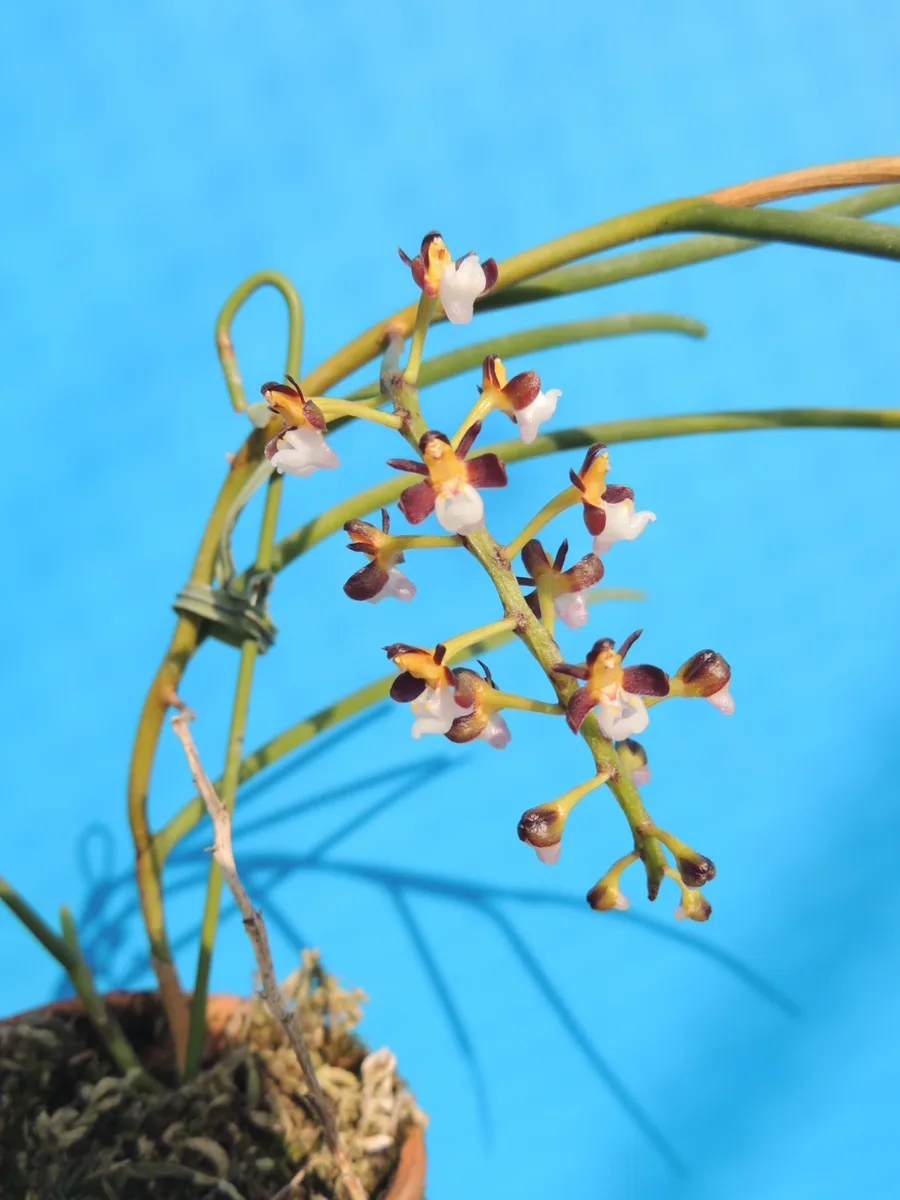



Cleisostoma filiforme

Cleisostoma filiforme · Propagation

Cleisostoma filiforme · Cleisostoma filiforme

For successful cultivation and frequent flowering, plants require high light levels and long, light days. In summer, they would benefit from being in a warm and bright greenhouse or conservatory, but direct, mid-day sun should be avoided. The shape of leaves may indicate the plant's light requirements. Wider, darker leaves prefer bright but indirect sunlight, while thinner or pencil-like leaves need larger amount of bright light. Darker tips of the roots are a sign of actively growing plant. High air humidity (70 -80%), good air circulation and regular misting should be provided frequently when in active growth. In cooler climates with shorter days, plants may go dormant in winter. Misting may be reduced to avoid rots, but plants shouldn't be left dry for long periods. Ideal temperature range is 15°C in winter and up to 30°C during summer months. Plants can be grown in an open basket, or in a coarse, bark-based epiphyte orchid mix. They are heavy feeders and require regular application of orchid fertiliser between spring and autumn

Watering: Moderate regular watering, allowing brief slight drying between soakingsSunlight: Full sun · Partial shadeInformation to be completed

How to Propagate Cleisostoma filiforme?

Propagation by seed is only possible in a controlled laboratory environment. Mature plants produce sideshoots (keiki) which may be removed and potted separately, when the new roots (preferably 3 or more) are at least 2cm long.

PlantCare

Your Ultimate Guide to Plants

Identify, grow and nurture the better way!

PlantCare plant identification and care illustration
PlantCare

Botanist in your pocket

Scan to download PlantCareDownload on the App Store

Scan the QR code with your phone camera to download the app