
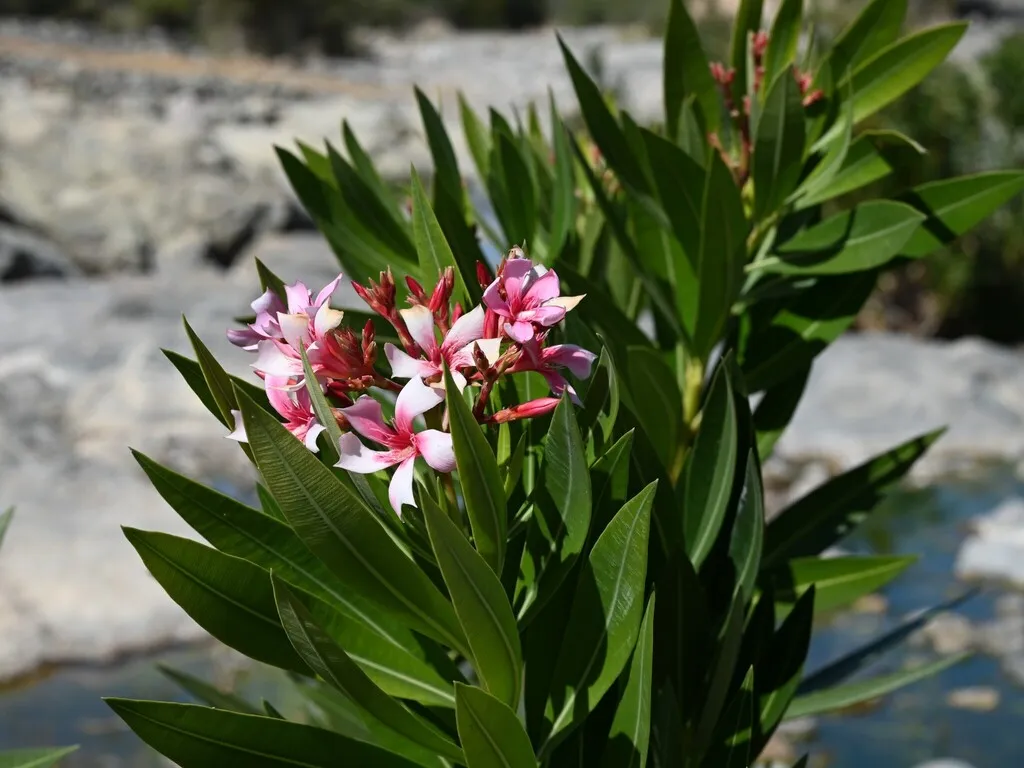



oleander

oleander · Propagation

oleander · Nerium oleander
Also known as: East Indian oleander; Jamaica South Sea rose; laurier rose; rose bay; sweet-scented oleander

Oleander is a robust and ornamental plant known for its resilience and ability to thrive with minimal fuss. Key care needs include placing the plant in full sun and ensuring well-drained soil to prevent root rot. A special care point is the plant's toxicity; all parts are poisonous if ingested, requiring careful handling and placement away from pets and children. Oleander tolerates drought well, reducing the need for frequent watering, which contributes to its overall low maintenance.

Watering: Water deeply when soil is dry, drought-tolerant once establishedSunlight: Full sunTOXIC if eaten, smoke from burning is harming. Wear gloves and other protective equipment when handling]

How to Propagate oleander?

A popular evergreen shrub, oleander is known for its vibrant flowers and adaptability to a range of environments. Propagation of oleander is most effective through cuttings, ensuring clones of the parent plant, with practical tips including selecting healthy semi-hardwood stems, making clean cuts, and using rooting hormones for improved success rates. Rooting should be done in a well-draining medium, kept moist but not soggy to foster root development without decay or disease. Once established, young oleander plants require a nurturing transition to their permanent growing locations.