
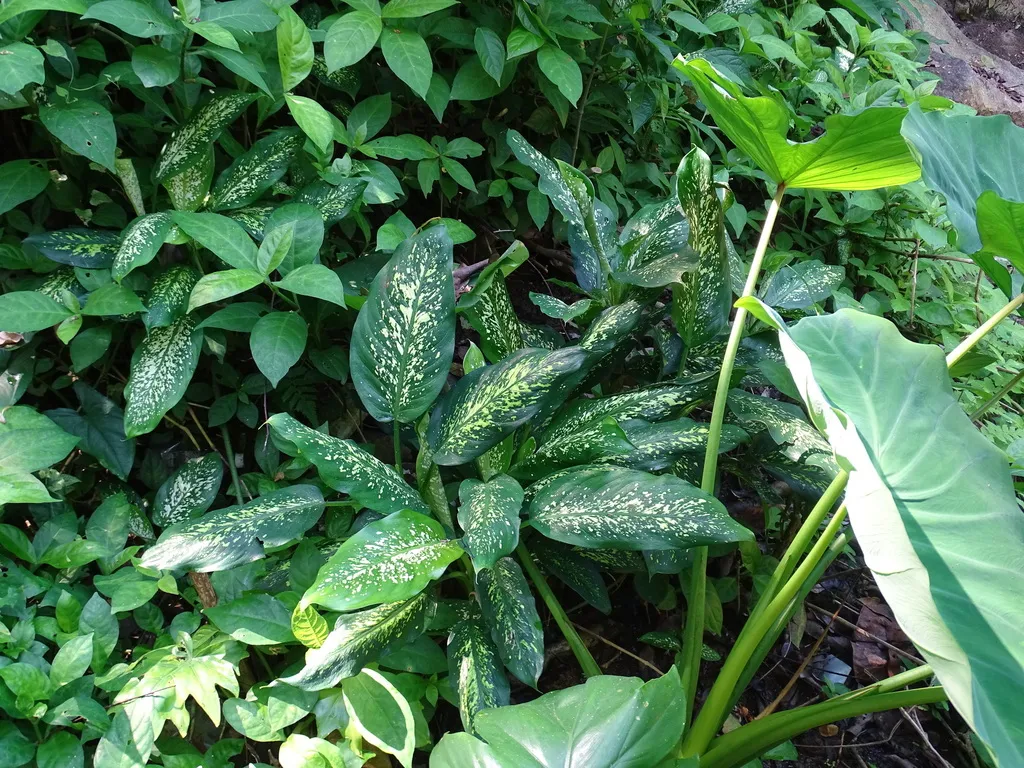



Dumb Cane

Dumb Cane · Soil

Dumb Cane · Dieffenbachia seguine
Also known as: Dumb Cane, Tropic Snow, Dieffenbachia

Dieffenbachia is typically considered an easy-to-care-for houseplant with a few specific needs to ensure its health and growth. Key to dieffenbachia's care is appropriate lighting; it thrives in bright, indirect sun exposure, avoiding direct sunlight that can scorch its leaves. Additionally, dieffenbachia requires regular watering, but it’s crucial to let the topsoil dry out between waterings to prevent root rot. Awareness of its toxic sap, especially to pets and children, is a special care point, necessitating cautious handling and placement.

Watering: Keep soil moderately moist, allow slight drying between wateringsSunlight: Bright indirect lightToxic to humans and pets if ingested, causing oral irritation, swelling, and difficulty swallowing; handle with gloves as sap can irritate skin.

What Soil Is Best for Dumb Cane?

Dieffenbachia prefers fertile, moist, well-drained, well-ventilated soil with a pH of 6-7.5. Common indoor potted-plant soil can be used. Mix 1:1:1 of organic fertile soil, sphagnum, and fine sand or perlite for cultivation medium. Ample sphagnum (peat moss) helps to retain moisture. Loose, well-draining soil is more conducive to the respiration of the roots, avoiding root rot, etc. Fertilize regularly to prevent unhealthy symptoms such as yellowing of leaves.

Soil type
Loam · Peat
Soil pH
Acid · Neutral