
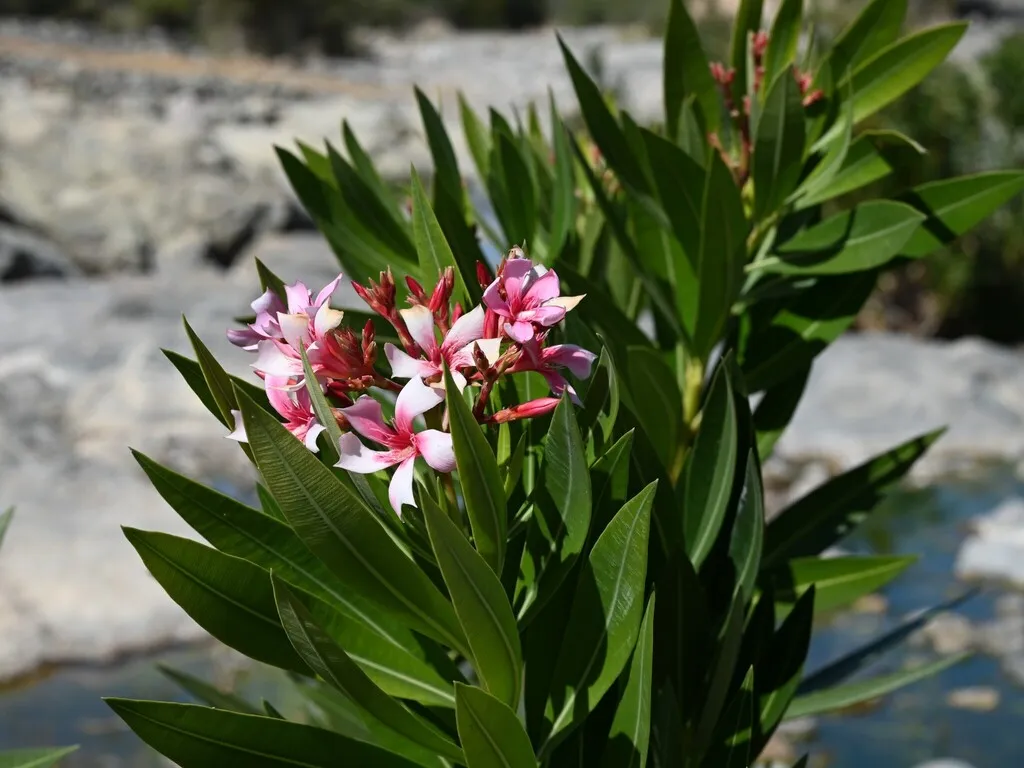



oleander

oleander · Temperature

oleander · Nerium oleander
Also known as: East Indian oleander; Jamaica South Sea rose; laurier rose; rose bay; sweet-scented oleander

Oleander is a robust and ornamental plant known for its resilience and ability to thrive with minimal fuss. Key care needs include placing the plant in full sun and ensuring well-drained soil to prevent root rot. A special care point is the plant's toxicity; all parts are poisonous if ingested, requiring careful handling and placement away from pets and children. Oleander tolerates drought well, reducing the need for frequent watering, which contributes to its overall low maintenance.

Watering: Water deeply when soil is dry, drought-tolerant once establishedSunlight: Full sunTOXIC if eaten, smoke from burning is harming. Wear gloves and other protective equipment when handling]

What Is the Ideal Temperature Range for oleander?

Oleander is notably resilient to temperature variations, able to tolerate cold down to -5℃ (23℉) and heat up to 43℃ (109℉). This adaptability makes it suitable for diverse climates but also necessitates specific care. During colder seasons, frost protection is essential to prevent damage, as symptoms of cold stress include leaf drop and wilting. In extreme heat, signs of distress include scorched leaves and stunted growth. Countermeasures involve relocating the plant to a sheltered, warmer spot or providing shade and ample water in high temperatures. Understanding these requirements ensures oleander thrives in various environmental conditions.