
golden pheasant-eye
Also known as: yellow pheasantberry
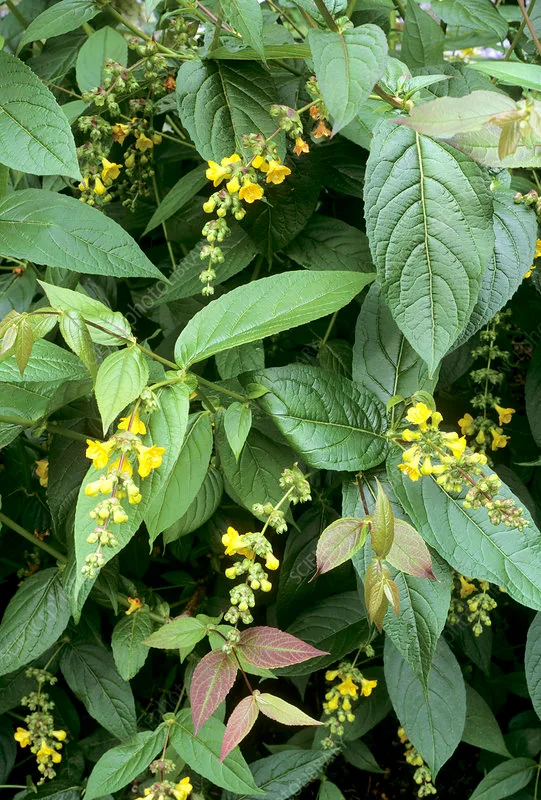
A deciduous, upright shrub with arching shoots reaching a height and spread of 2m with slender-pointed, ovate leaves up to 15cm long and conspicuously veined. In late spring, small yellow flowers are borne in arching terminal racemes up to 17cm long and are followed by small, green, gooseberry-like fruits
Scientific classification
- Species
- golden pheasant-eye (Leycesteria crocothyrsos)
- Genus
- Leycesteria
- Family
- Caprifoliaceae
- Fruit are ornamental - not to be eaten. Wear gloves and other protective equipment when handling
- Toxicity
- Shrubs
- Plant type
- 1.5-2.5 metres
- Height
- 1.5-2.5 metres
- Spread
- Deciduous
- Foliage
- Bushy
- Habit
- Spring · Summer · Autumn
- Season of interest
- Full sun · Partial shade
- Sunlight
- Information to be completed
- Ideal temperature









golden pheasant-eye pictures
Distribution of golden pheasant-eye
Distribution map
Himalaya, (Assam) Myanmar
Information to be completed
Culture
Information to be completed
Toxicity
Fruit are ornamental - not to be eaten. Wear gloves and other protective equipment when handling
Quick identification of golden pheasant-eye
Information to be completed
golden pheasant-eye care guide
- Moderate regular watering, allowing brief slight drying between soakings
- Watering
- Full sun · Partial shade
- Sunlight
- Information to be completed
- Ideal temperature

Watering
Moderate regular watering, allowing brief slight drying between soakings
Fertilizing
 Fertilizing
Balanced perennial feed every four weeks from spring through summer
Pruning
 Pruning
Shorten flowered shoots to vigorous sideshoots; remove about a third of stems at ground level annually. Prune immediately after flowering.
Propagation
 Propagation
Propagate by seed or softwood cuttings
Growing
 Growing
Grows in any fertile soil but may suffer foliage damage and stem dieback in harsh winters in cold gardens so overwinter under cover or protect from cold, drying winds
People also ask
Information to be completed
Common pests and diseases
Diseases
May be susceptible to honey fungus (rarely)
Pests
Generally pest-free
Explore the plant health library →




