
lace flower
Also known as: lace flower
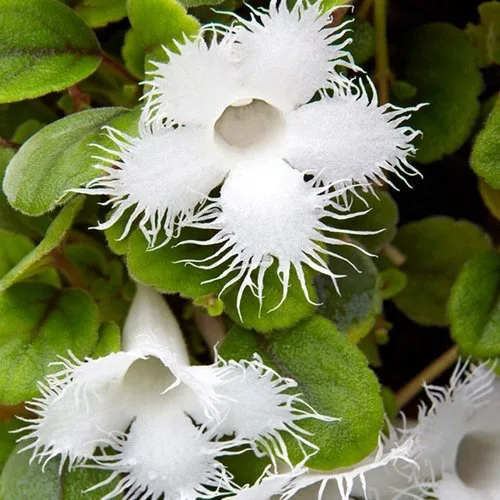
A tropical epiphytic perennial or subshrub, to around 30cm high and spreading by trailing runners, with succulent, hairy green leaves with dark reddish veins and scalloped edges. Solitary, funnel-shaped white flowers, with fringed edges to the petals and sometimes mottled with purple on the insides, are produced in the leaf axils
Scientific classification
- Species
- lace flower (Alsobia dianthiflora)
- Genus
- Alsobia
- Family
- Gesneriaceae
- Order
- Lamiales
- Class
- Magnoliopsida
- Phylum
- Magnoliophyta
- Information to be completed
- Toxicity
- Herbaceous Perennial · Shrubs
- Plant type
- Information to be completed
- Height
- Information to be completed
- Spread
- Evergreen
- Foliage
- Matforming · Trailing
- Habit
- Spring · Summer · Autumn · Winter
- Season of interest
- Full sun · Partial shade
- Sunlight
- Information to be completed
- Ideal temperature









lace flower pictures
Distribution of lace flower
Distribution map
- Native
- Introduced
- Cultivated
Source:WCVP v16 · Royal Botanic Gardens, Kew · CC BY 3.0 · Boundaries:WGSRPD / TDWG
lace flower care guide
- Maintain evenly damp medium, mist foliage in dry indoor air
- Watering
- Full sun · Partial shade
- Sunlight

Watering
Maintain evenly damp medium, mist foliage in dry indoor air
Fertilizing
 Fertilizing
Weak gesneriad feed every three weeks warm growing seasons
Pruning
 Pruning
Pinch out stems to enourage bushier growth
Propagation
 Propagation
Propagate by softwood cuttings, or by layering, pinning runners into soil and allowing them to root before separating from the main plant
Growing
 Growing
Grow under glass, or in containers to overwinter in a greenhouse, in moist but well-drained soil in bright, filtered light or light shade. Do not allow to dry out or to sit in water. See houseplant cultivation
Common pests and diseases
Diseases
May be susceptible to grey moulds
Pests
May be susceptible to mealybugs and thrips
Explore the plant health library →




