
Asplenium scolopendrium (Undulatum Group)
Also known as: Information to be completed
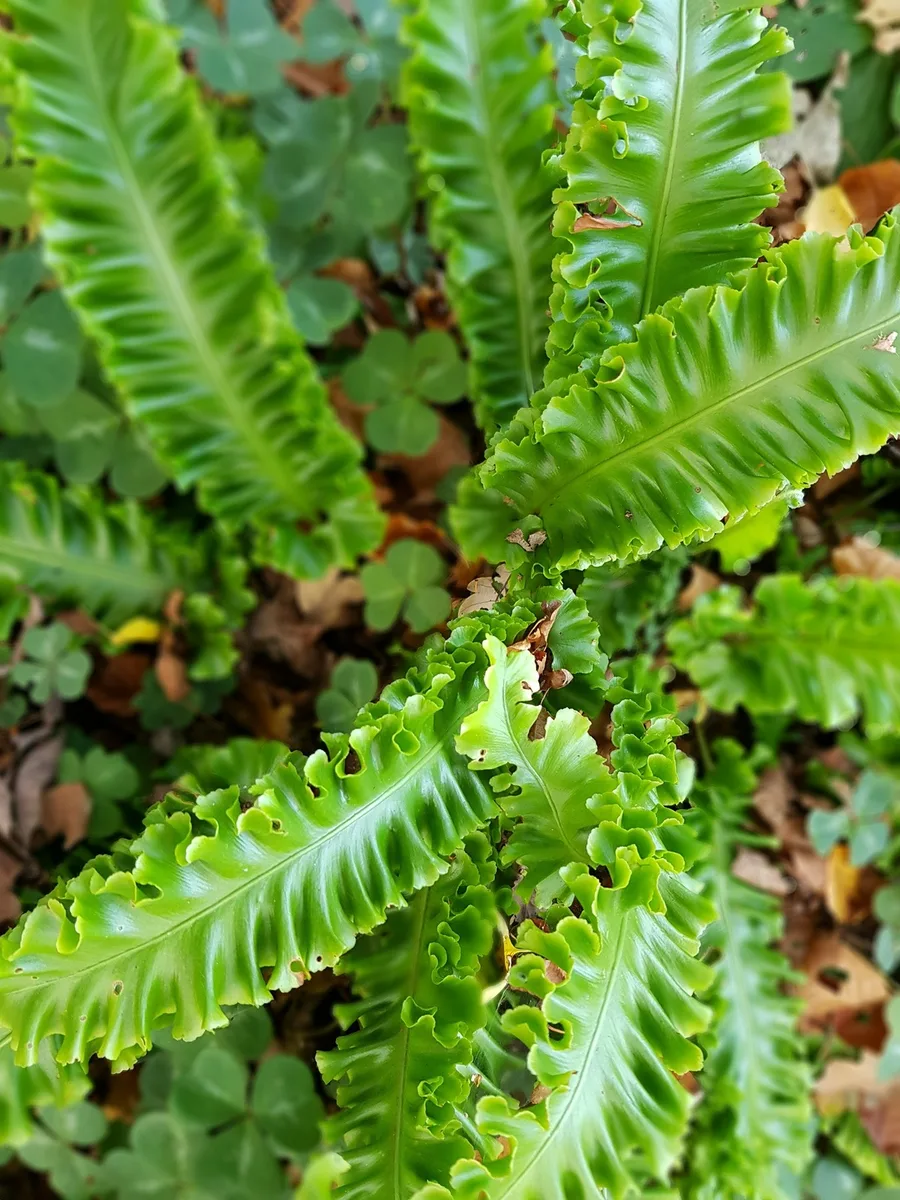
An evergreen, hardy fern growing to around 50cm producing rich green fronds with undulating margins.
Scientific classification
- Species
- Asplenium scolopendrium (Undulatum Group) (Asplenium scolopendrium (Undulatum Group))
- Genus
- Asplenium
- Family
- Aspleniaceae
- Information to be completed
- Toxicity
- Ferns
- Plant type
- 0.1-0.5 metres
- Height
- 0.5-1 metres
- Spread
- Evergreen
- Foliage
- Clump forming
- Habit
- Spring · Summer · Autumn · Winter
- Season of interest
- Full shade · Partial shade
- Sunlight
- Information to be completed
- Ideal temperature









Asplenium scolopendrium (Undulatum Group) pictures
Distribution of Asplenium scolopendrium (Undulatum Group)
Distribution map
- Native
- Introduced
- Cultivated
Source:WCVP v16 · Royal Botanic Gardens, Kew · CC BY 3.0 · Boundaries:WGSRPD / TDWG
Culture
Information to be completed
Toxicity
Information to be completed
Quick identification of Asplenium scolopendrium (Undulatum Group)
Information to be completed
Asplenium scolopendrium (Undulatum Group) care guide
- Keep soil consistently moist with higher humidity and no hot drying winds
- Watering
- Full shade · Partial shade
- Sunlight
- Information to be completed
- Ideal temperature

Watering
Keep soil consistently moist with higher humidity and no hot drying winds
Fertilizing
 Fertilizing
Very dilute fern feed monthly during warm active frond growth
Pruning
 Pruning
No pruning required but can remove older fading leaves if necessary
Propagation
 Propagation
Propagate by division or spores
Growing
 Growing
Grow outdoors in humus-rich, moist but well-drained soil. Prefers alkaline or neutral soil conditions. Bright midday sun can cause damage. Water moderately when in growth, water sparingly over winter. When in growth apply a half-strength balanced liquid fertiliser monthly. For full cultivation notes see our advice web page how to grow ferns
People also ask
Information to be completed
Common pests and diseases
Diseases
Generally disease-free
Pests
Generally pest-free
Explore the plant health library →




