
cowberry Koralle Group
Also known as: Information to be completed
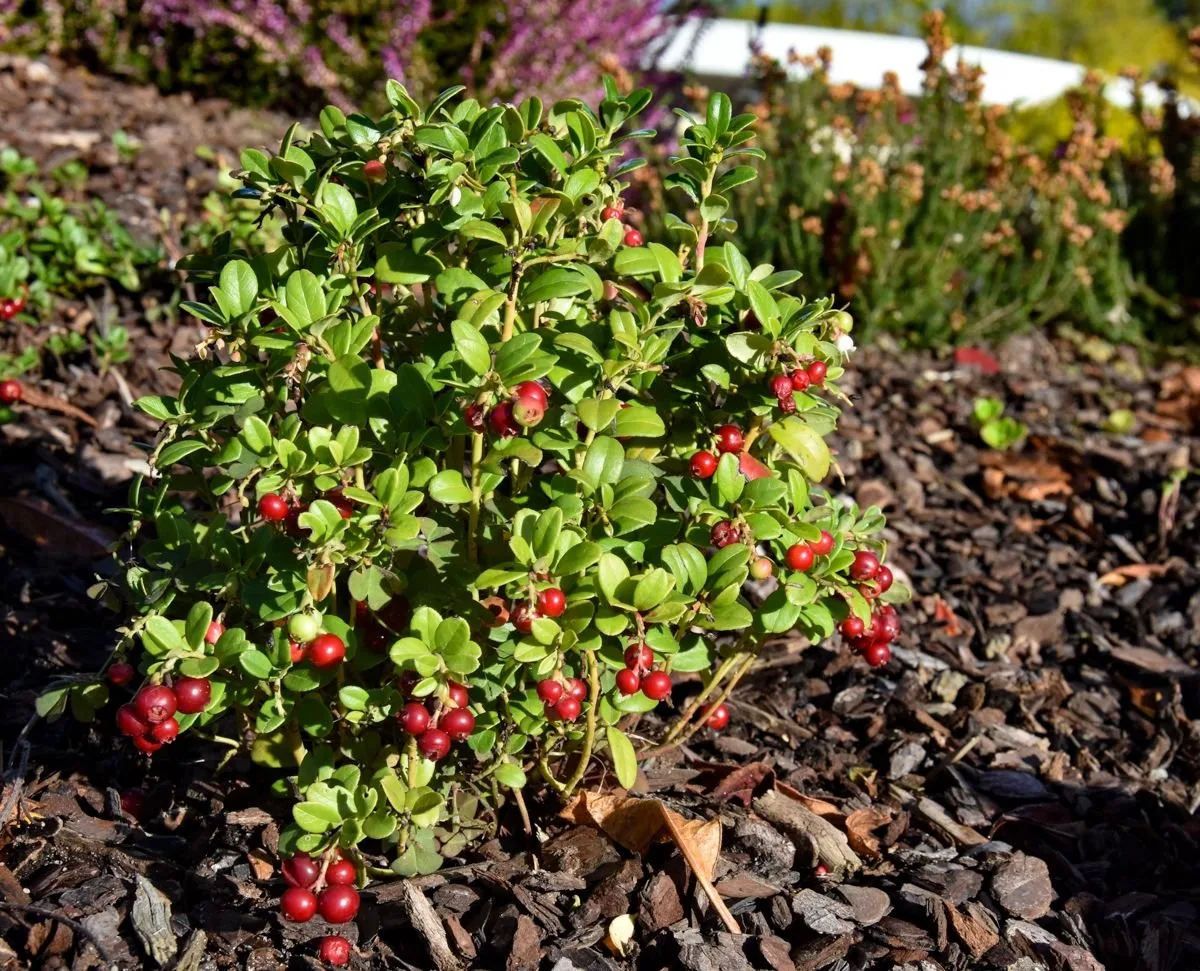
Koralle Group is a bushy dwarf evergreen shrub with neat, lustrous, leathery, obovate dark green leaves and terminal racemes of small, pink, bell-shaped flowers, followed by bright red berries 10mm in width
Scientific classification
- Species
- cowberry Koralle Group (Vaccinium vitis-idaea (Koralle Group))
- Genus
- Vaccinium
- Family
- Ericaceae
- Order
- Ericales
- Class
- Magnoliopsida
- Phylum
- Magnoliophyta
- Information to be completed
- Toxicity
- Shrubs
- Plant type
- 0.1-0.5 metres
- Height
- 0.5-1 metres
- Spread
- Evergreen
- Foliage
- Suckering
- Habit
- Spring · Summer · Autumn · Winter
- Season of interest
- Full shade · Full sun · Partial shade
- Sunlight
- Information to be completed
- Ideal temperature









cowberry Koralle Group pictures
Distribution of cowberry Koralle Group
Distribution map
- Native
- Introduced
- Cultivated
Source:WCVP v16 · Royal Botanic Gardens, Kew · CC BY 3.0 · Boundaries:WGSRPD / TDWG
cowberry Koralle Group care guide
- Light frequent watering, acidic medium kept lightly moist
- Watering
- Full shade · Full sun · Partial shade
- Sunlight

Watering
Light frequent watering, acidic medium kept lightly moist
Fertilizing
 Fertilizing
Low-strength ericaceous feed monthly spring-summer growth
Pruning
 Pruning
Usually little pruning is needed. Lightly shape if necessary, removing dead, damaged or diseased shoots. Prune after flowering.
Propagation
 Propagation
Propagate by semi-hardwood cuttings in mid to late summer or layer in mid-summer. Propagate by seed sown, in containers, in a cold-frame in autumn
Growing
 Growing
Grows well in extremely acid soils that are moist but well-drained. Tolerant of shade and woodland edges. Susceptible to frost damage and delayed flowering in colder climes
Common pests and diseases
Diseases
May be susceptible to honey fungus (rarely), powdery mildews, root rot and chlorosis due to iron and manganese deficiency; see nutrient deficiencies
Pests
Generally pest-free
Explore the plant health library →




