
orchid cactus 'Celestial Snow'
Also known as: Information to be completed
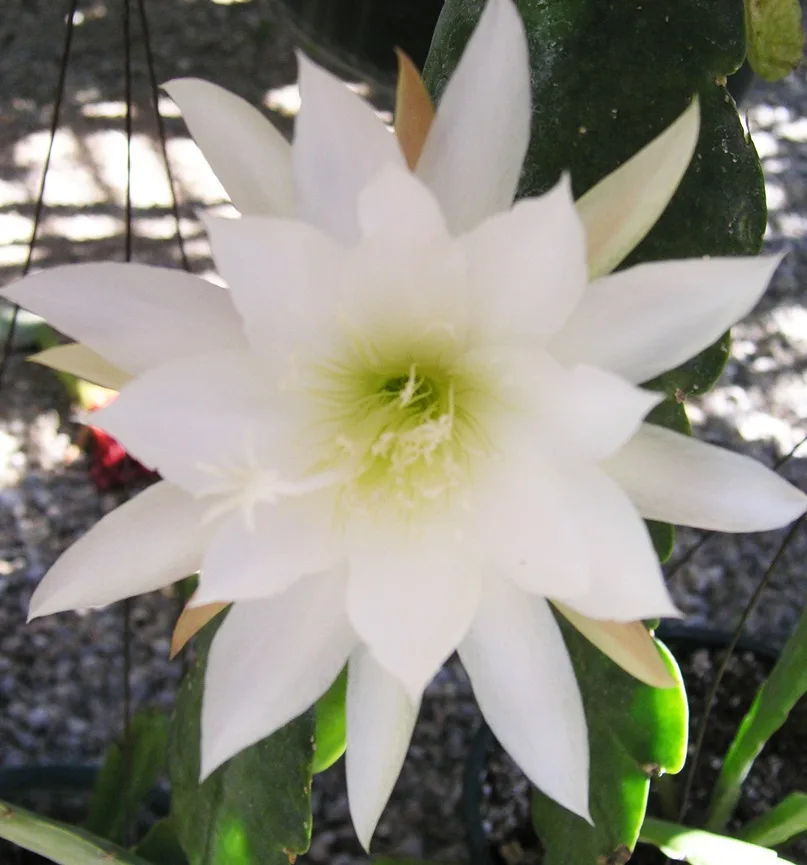
An evergreen epiphytic cactus with rounded stems and green succulent-like lobed leaves. Large, double creamy yellow fragrant flowers appear from late spring to early summer
Scientific classification
- Species
- orchid cactus 'Celestial Snow' (Epiphyllum 'Celestial Snow')
- Genus
- Epiphyllum
- Family
- Cactaceae
- Information to be completed
- Toxicity
- Cactus Succulent · Houseplants · Conservatory Greenhouse
- Plant type
- 0.1-0.5 metres
- Height
- 0.1-0.5 metres
- Spread
- Evergreen
- Foliage
- Trailing
- Habit
- Spring · Summer · Autumn · Winter
- Season of interest
- Partial shade
- Sunlight
- Information to be completed
- Ideal temperature









orchid cactus 'Celestial Snow' pictures
Distribution of orchid cactus 'Celestial Snow'
Distribution map
Information to be completed
Information to be completed
Culture
Information to be completed
Toxicity
Information to be completed
Quick identification of orchid cactus 'Celestial Snow'
Information to be completed
orchid cactus 'Celestial Snow' care guide
- Moderate regular watering, avoid prolonged drought and stagnant waterlogging
- Watering
- Partial shade
- Sunlight
- Information to be completed
- Ideal temperature

Watering
Moderate regular watering, avoid prolonged drought and stagnant waterlogging
Fertilizing
 Fertilizing
Balanced perennial feed every four weeks spring through summer growth
Pruning
 Pruning
No pruning required
Propagation
 Propagation
Propagate by stem cuttings in early summer
Growing
 Growing
In areas where temperatures drop below 10ºC, grow in epiphytic cactus compost in bright filtered light as houseplants or in a warm greenhouse with moderate to high humidity, and a minimum temperature of 10ºC for most of the year but 15ºC in the growing season; from mid-spring to late summer water freely and apply a high-potash fertilizer every 2 weeks as flower buds form, while in winter keep just moist. In warmer climates, grow in fertile, sharply drained soil in light dappled or partial shade. For more advice, see Epiphyllum cultivation
People also ask
Information to be completed
Common pests and diseases
Diseases
Generally disease-free
Pests
May be susceptible to mealybugs, aphids and glasshouse red spider mite
Explore the plant health library →




