
begonia 'Marmaduke'
Also known as: Information to be completed
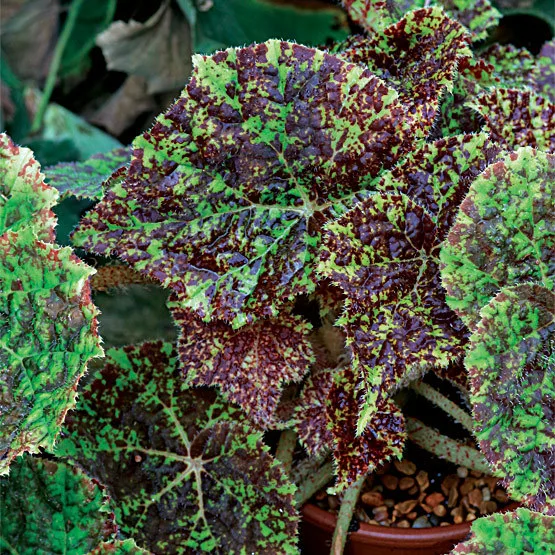
Marmaduke' is a bushy plant with broadly oval light yellowish-green leaves heavily blotched with reddish-brown, and sprays of small pale pink flowers in late spring
Scientific classification
- Species
- begonia 'Marmaduke' (Begonia 'Marmaduke')
- Genus
- Begonia
- Family
- Begoniaceae
- Ornamental bulbs - not to be eaten. Wear gloves and other protective equipment when handling
- Toxicity
- Conservatory Greenhouse · Houseplants
- Plant type
- 0.1-0.5 metres
- Height
- 0.1-0.5 metres
- Spread
- Evergreen
- Foliage
- Bushy
- Habit
- Spring · Summer · Autumn · Winter
- Season of interest
- Partial shade
- Sunlight
- Information to be completed
- Ideal temperature









begonia 'Marmaduke' pictures
Distribution of begonia 'Marmaduke'
Distribution map
Information to be completed
Information to be completed
Culture
Information to be completed
Toxicity
Ornamental bulbs - not to be eaten. Wear gloves and other protective equipment when handling
Quick identification of begonia 'Marmaduke'
Information to be completed
begonia 'Marmaduke' care guide
- Moderate regular watering, allowing brief slight drying between soakings
- Watering
- Partial shade
- Sunlight
- Information to be completed
- Ideal temperature

Watering
Moderate regular watering, allowing brief slight drying between soakings
Fertilizing
 Fertilizing
Balanced perennial feed every four weeks from spring through summer
Pruning
 Pruning
No pruning required
Propagation
 Propagation
Propagate by leaf cuttings or sections of rhizome
Growing
 Growing
Under glass grow in light, well-drained loam-based or loam-less potting compost in bright filtered light with shade from hot sun at an optimum of 19°C. Water moderately when in growth and apply a balanced liquid fertiliser at alternative waterings. Keep barely moist over winter. See Begonias: houseplants for further advice.
People also ask
Information to be completed
Common pests and diseases
Diseases
May be susceptible to grey moulds, powdery mildews, stem rot and rhizome rot
Pests
May be susceptible to caterpillars, mealy bugs, mites, glasshouse thrips, vine weevil and aphids
Explore the plant health library →




