
Itoa orientalis
Also known as: Information to be completed
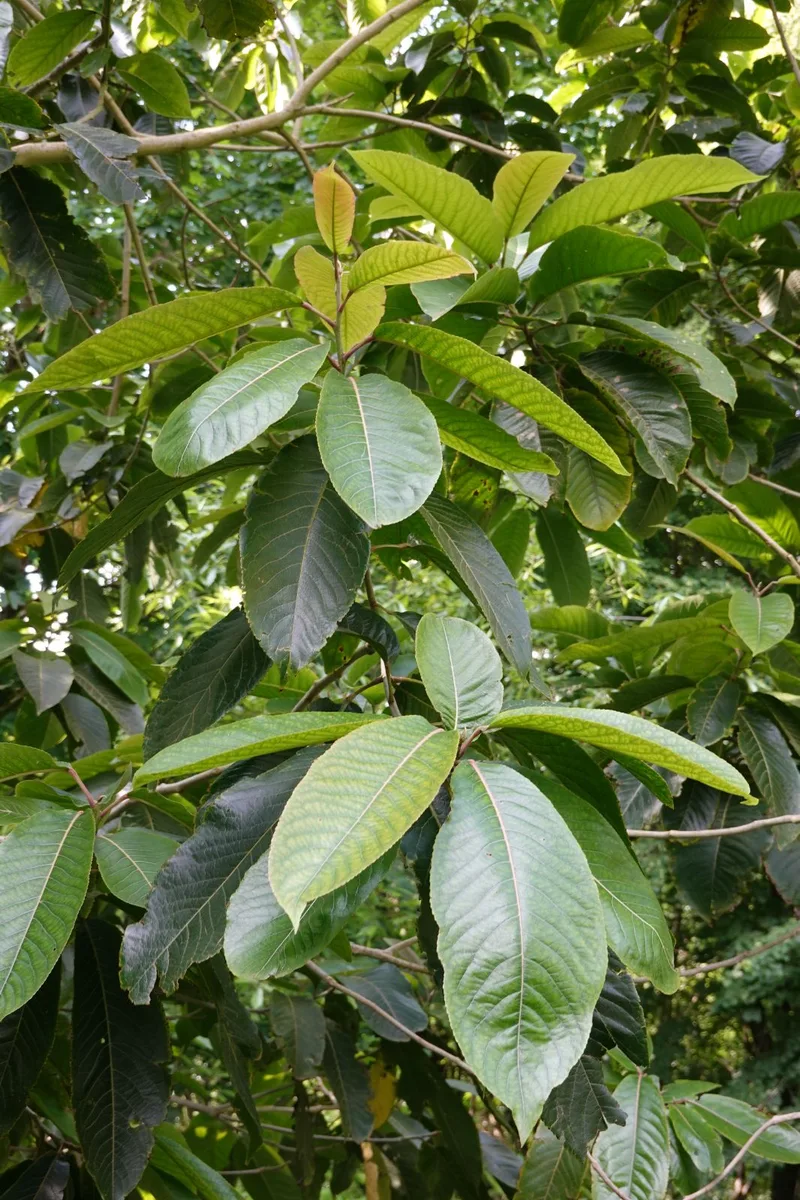
Semi-evergreen to evergreen tree about 17m tall, with pale grey to creamy coloured bark and hairy branchlets. Oval, leathery, dark green leaves are 40cm long or more. Produces panicles of yellowish male flowers and single female flowers on the same tree, during summer, followed by large yellow or reddish, ovoid fruits that release winged seeds
Scientific classification
- Species
- Itoa orientalis (Itoa orientalis)
- Genus
- Itoa
- Family
- Salicaceae
- Information to be completed
- Toxicity
- Trees
- Plant type
- Higher than 12 metres
- Height
- wider than 8 metres
- Spread
- Semi evergreen · Evergreen
- Foliage
- Information to be completed
- Habit
- Spring · Summer · Autumn · Winter
- Season of interest
- Full sun · Partial shade
- Sunlight
- Information to be completed
- Ideal temperature









Itoa orientalis pictures
Distribution of Itoa orientalis
Distribution map
China to Vietnam
Information to be completed
Culture
Information to be completed
Toxicity
Information to be completed
Quick identification of Itoa orientalis
Information to be completed
Itoa orientalis care guide
- Deep weekly irrigation, reduce water amount during winter cold
- Watering
- Full sun · Partial shade
- Sunlight
- Information to be completed
- Ideal temperature

Watering
Deep weekly irrigation, reduce water amount during winter cold
Fertilizing
 Fertilizing
Woody tree balanced fertilizer applied single dose each spring
Pruning
 Pruning
 goup 1 (little or no pruning of trees and shrubs)
Propagation
 Propagation
Propagate by seed or by semi-ripe cuttings with bottom heat in summer
Growing
 Growing
In mild and frost-free areas, grow in well-drained, neutral to acid soil, in full sun in a warm, dry position such as a courtyard or against a south-facing or west-facing wall; in frost-prone areas, grow in a cool or temperate greenhouse, in a mix of peat-free potting compost and grit, in full light and low humidity. Water moderately during the growing season and sparingly in winter
People also ask
Information to be completed
Common pests and diseases
Diseases
Generally disease-free
Pests
May be susceptible to glasshouse red spider mite if grown under glass
Explore the plant health library →




