
English lavender 'Beechwood Blue'
Also known as: Information to be completed
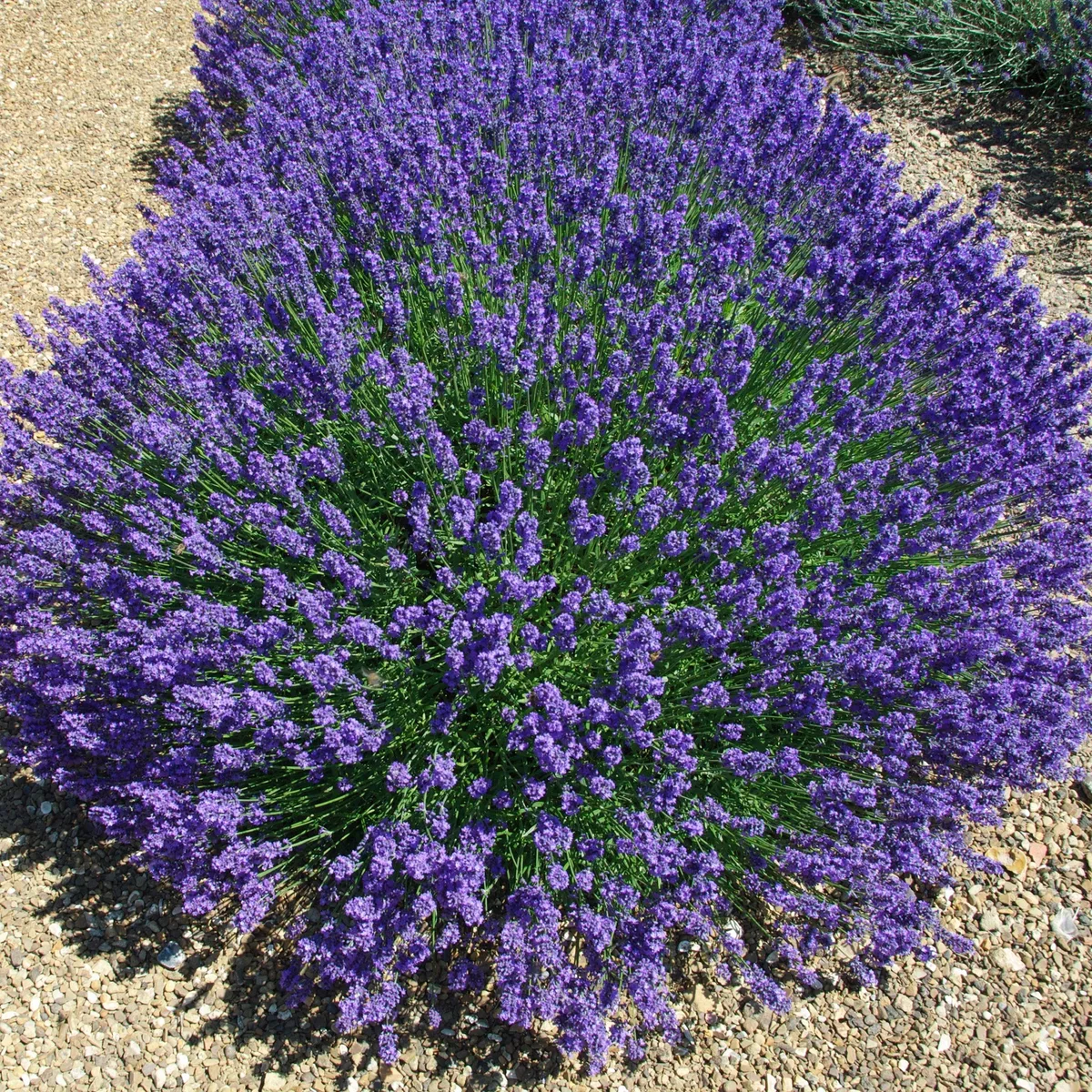
A compact, evergreen shrub to about 45cm with narrow, strongly aromatic, grey-green foliage and dense, terminal spikes of violet-blue flower spikes in summer
Scientific classification
- Species
- English lavender 'Beechwood Blue' (Lavandula angustifolia 'Beechwood Blue')
- Genus
- Lavandula
- Family
- Lamiaceae
- Order
- Lamiales
- Class
- Magnoliopsida
- Phylum
- Magnoliophyta
- Information to be completed
- Toxicity
- Shrubs
- Plant type
- 0.1-0.5 metres
- Height
- 0.1-0.5 metres
- Spread
- Evergreen
- Foliage
- Bushy
- Habit
- Spring · Summer · Autumn · Winter
- Season of interest
- Full sun
- Sunlight
- Information to be completed
- Ideal temperature









English lavender 'Beechwood Blue' pictures
English lavender 'Beechwood Blue' care guide
- Water deeply then let soil fully dry before rewatering
- Watering
- Full sun
- Sunlight

Watering
Water deeply then let soil fully dry before rewatering
Fertilizing
 Fertilizing
Low nutrient lavender feed once monthly warm months only
Pruning
 Pruning
Shorten flowered shoots to about 1.5–2.5 cm from the previous year's growth. Prune after flowering has finished.
Propagation
 Propagation
Propagate by semi-hardwood cuttings, may not come true from seed
Growing
 Growing
Prefers a well-drained neutral to alkaline soil but tolerates acidic conditions. In heavy soil improve drainage as lavender does not tolerate waterlogging. Potash will encourage flowering but high nitrogen fertilisers and manure will result in floppy plants. See lavender cultivation for further advice
Common pests and diseases
Diseases
May be susceptible to grey moulds (Botrytis) and honey fungus (rarely)
Pests
May be susceptible to rosemary beetle and cuckoo spit (froghoppers)
Explore the plant health library →




