
bloody cranesbill 'Belle of Herterton'
Also known as: Information to be completed
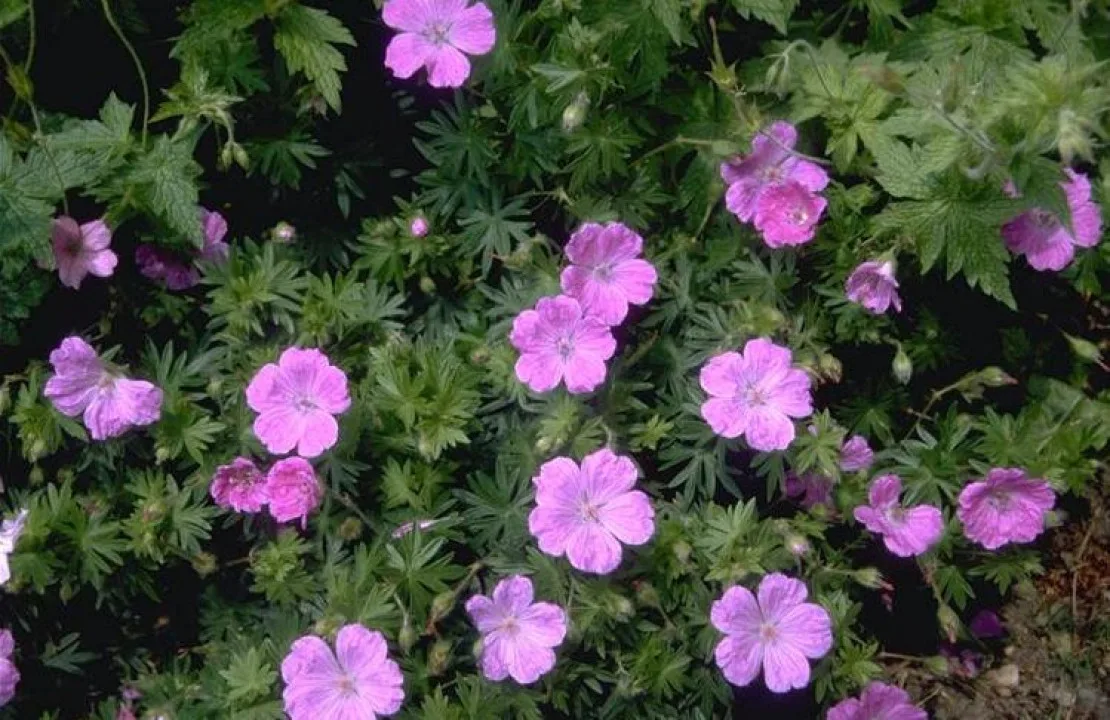
A rhizomatous, clump-forming herbaceous perennial, up to 25cm high, with deciduous, deeply cut, five-lobed or seven-lobed, mid-green leaves, 5-10cm across, and soft pink flowers, up to 4cm across, which become paler with age, from early to late summer and occasionally on to autumn
Scientific classification
- Species
- bloody cranesbill 'Belle of Herterton' (Geranium sanguineum 'Belle of Herterton')
- Genus
- Geranium
- Family
- Geraniaceae
- Order
- Geraniales
- Class
- Magnoliopsida
- Phylum
- Tracheophyta
- Information to be completed
- Toxicity
- Herbaceous Perennial
- Plant type
- 0.1-0.5 metres
- Height
- 0.1-0.5 metres
- Spread
- Deciduous
- Foliage
- Clump forming
- Habit
- Spring · Summer · Autumn
- Season of interest
- Full sun
- Sunlight
- Information to be completed
- Ideal temperature









bloody cranesbill 'Belle of Herterton' pictures
Distribution of bloody cranesbill 'Belle of Herterton'
Distribution map
- Native
- Introduced
- Cultivated
Source:WCVP v16 · Royal Botanic Gardens, Kew · CC BY 3.0 · Boundaries:WGSRPD / TDWG
bloody cranesbill 'Belle of Herterton' care guide
- Moderate regular watering, avoid prolonged drought and stagnant waterlogging
- Watering
- Full sun
- Sunlight

Watering
Moderate regular watering, avoid prolonged drought and stagnant waterlogging
Fertilizing
 Fertilizing
Balanced perennial feed every four weeks spring through summer growth
Pruning
 Pruning
No pruning required
Propagation
 Propagation
Propagate by division or by root cuttings in spring
Growing
 Growing
Grow in full sun in well-drained soil; excellent for ground-cover
Common pests and diseases
Diseases
May be susceptible to a rust, a downy mildew, leafy gall and viral diseases; may also be affected by powdery mildews in dry conditions but generally disease free
Pests
May be susceptible to capsid bug, geranium sawfly, vine weevil, slugs and snails but generally pest free
Explore the plant health library →




