
mountain laurel 'Little Linda'
Also known as: Information to be completed
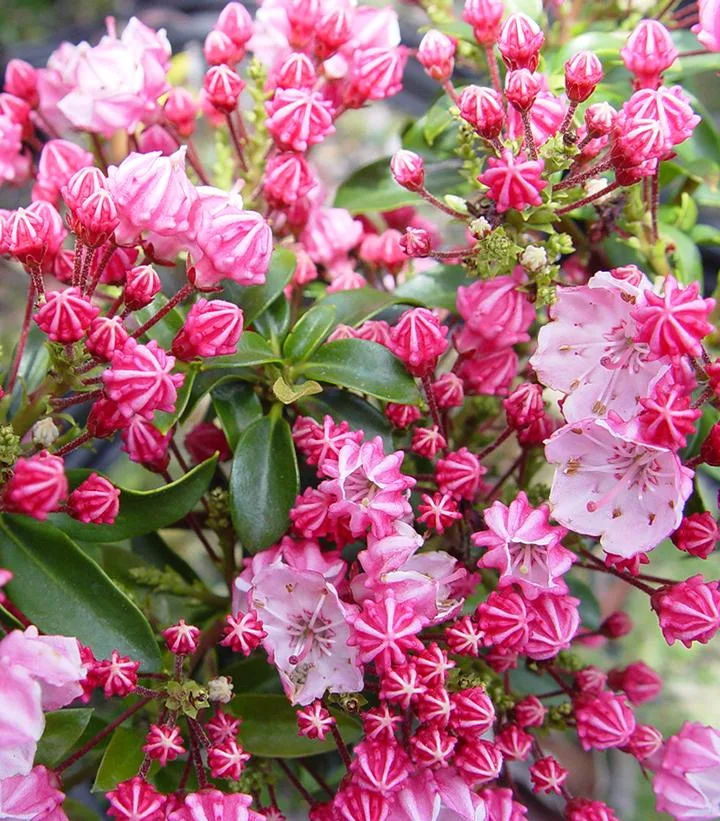
Little Linda' is a dwarf cultivar, usually to 1m in height, dense in habit, with untypically small, evergreen leaves. Buds are intense red, opening to pink flowers which deepen in colour as they mature
Scientific classification
- Species
- mountain laurel 'Little Linda' (Kalmia latifolia 'Little Linda')
- Genus
- Kalmia
- Family
- Ericaceae
- Order
- Ericales
- Class
- Magnoliopsida
- Phylum
- Magnoliophyta
- Harmful if eaten. Wear gloves and other protective equipment when handling
- Toxicity
- Shrubs
- Plant type
- 0.5-1 metres
- Height
- 0.5-1 metres
- Spread
- Evergreen
- Foliage
- Bushy
- Habit
- Spring · Summer · Autumn · Winter
- Season of interest
- Full sun · Partial shade
- Sunlight
- Information to be completed
- Ideal temperature









mountain laurel 'Little Linda' pictures
Distribution of mountain laurel 'Little Linda'
Distribution map
- Native
- Introduced
- Cultivated
Source:WCVP v16 · Royal Botanic Gardens, Kew · CC BY 3.0 · Boundaries:WGSRPD / TDWG
Toxicity
Harmful if eaten. Wear gloves and other protective equipment when handling
mountain laurel 'Little Linda' care guide
- Keep acidic root zone moist and cool, never soggy
- Watering
- Full sun · Partial shade
- Sunlight

Watering
Keep acidic root zone moist and cool, never soggy
Fertilizing
 Fertilizing
Ericaceous feed in spring and lightly after bloom
Pruning
 Pruning
Usually little pruning is needed. Lightly shape if necessary, removing dead, damaged or diseased shoots. Prune after flowering.
Propagation
 Propagation
Propagate by semi-ripe cuttings in midsummer
Growing
 Growing
Grow in moist but well-drained acidic soil in partial shade or in sun where the soil remains reliably moist; mulch in spring with leaf mould or well-rotted pine needles
Common pests and diseases
Diseases
May be susceptible to honey fungus in gardens where it is present but insufficient data to determine degree of susceptibility
Pests
Generally pest-free
Explore the plant health library →




