
Paeonia 'Moonrise'
Also known as: Information to be completed
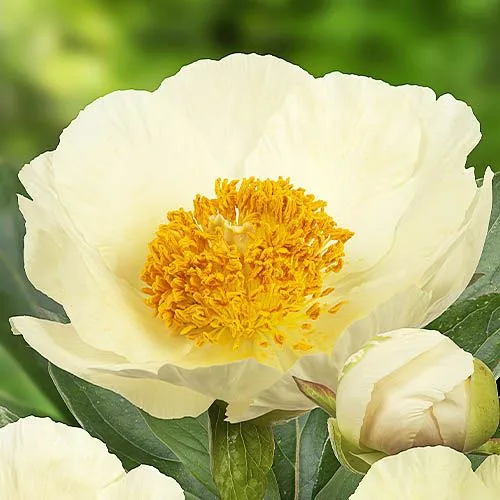
A clump-forming herbaceous perennial, to around 90cm high, with divided, slightly glossy deep green leaves. Large, creamy white flowers are produced in late spring and early summer
Scientific classification
- Species
- Paeonia 'Moonrise' (Paeonia 'Moonrise')
- Genus
- Paeonia
- Family
- Paeoniaceae
- Order
- Saxifragales
- Class
- Magnoliopsida
- Phylum
- Magnoliophyta
- Information to be completed
- Toxicity
- Herbaceous Perennial
- Plant type
- Information to be completed
- Height
- Information to be completed
- Spread
- Deciduous
- Foliage
- Bushy · Clump forming
- Habit
- Spring · Summer · Autumn
- Season of interest
- Full sun · Partial shade
- Sunlight
- Information to be completed
- Ideal temperature









Paeonia 'Moonrise' pictures
Paeonia 'Moonrise' care guide
- Deep infrequent watering, allow partial dry between irrigation
- Watering
- Full sun · Partial shade
- Sunlight

Watering
Deep infrequent watering, allow partial dry between irrigation
Fertilizing
 Fertilizing
Rich phosphorus feed in early spring and post-bloom annually
Pruning
 Pruning
Cut back to ground level in autumn, to remove dead foliage and reduce the risk of disease
Propagation
 Propagation
Propagate by division, lifting and dividing established clumps in autumn
Growing
 Growing
Grow in deep, rich, well-drained soil, ideally in full sun but will tolerate light shade. Will not tolerate waterlogging. Flowers may need support, see staking perennials. See herbaceous peony cultivation for more detailed advice
Common pests and diseases
Diseases
May be susceptible to a virus, honey fungus, Verticillium wilt, peony leaf blotch and peony wilt
Pests
May be susceptible to leaf and bud eelworm and swift moth caterpillar
Explore the plant health library →




