
Lysimachia congestiflora 'Outback Sunset'
Also known as: Information to be completed
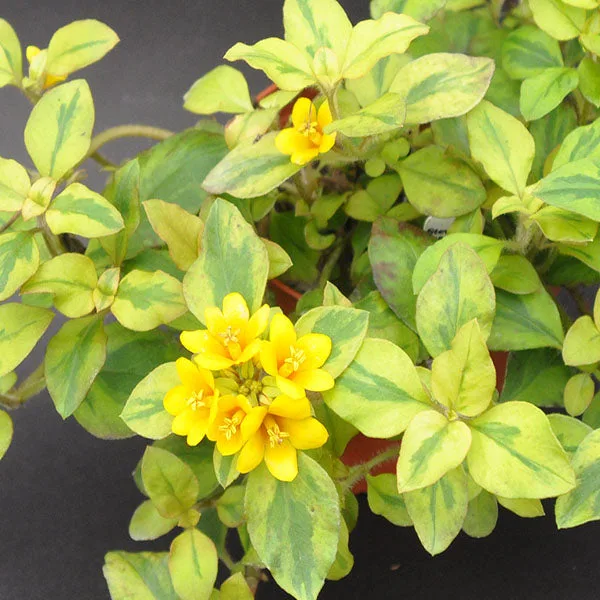
A low-growing evergreen perennial with a creeping habit and broadly ovate green leaves splashed with pale yellow. Golden yellow flowers are produced in tight clusters at the tips of the stems from late spring to mid summer
Scientific classification
- Species
- Lysimachia congestiflora 'Outback Sunset' (Lysimachia congestiflora 'Outback Sunset')
- Genus
- Lysimachia
- Family
- Primulaceae
- Information to be completed
- Toxicity
- Herbaceous Perennial
- Plant type
- 0.1-0.5 metres
- Height
- 0.5-1 metres
- Spread
- Evergreen · Semi evergreen
- Foliage
- Matforming · Trailing
- Habit
- Spring · Summer · Autumn · Winter
- Season of interest
- Full sun · Partial shade
- Sunlight
- Information to be completed
- Ideal temperature









Lysimachia congestiflora 'Outback Sunset' pictures
Distribution of Lysimachia congestiflora 'Outback Sunset'
Distribution map
- Native
- Introduced
- Cultivated
Source:WCVP v16 · Royal Botanic Gardens, Kew · CC BY 3.0 · Boundaries:WGSRPD / TDWG
Culture
Information to be completed
Toxicity
Information to be completed
Quick identification of Lysimachia congestiflora 'Outback Sunset'
Information to be completed
Lysimachia congestiflora 'Outback Sunset' care guide
- Moderate regular watering, allowing brief slight drying between soakings
- Watering
- Full sun · Partial shade
- Sunlight
- Information to be completed
- Ideal temperature

Watering
Moderate regular watering, allowing brief slight drying between soakings
Fertilizing
 Fertilizing
Balanced perennial feed every four weeks from spring through summer
Pruning
 Pruning
Tip prune after flowering to maintain shape
Propagation
 Propagation
Propagate by softwood cuttings or by division; stems will root at the nodes as the plant spreads. As this plant is protected by Plant Breeders' Rights, any propagation should be for personal rather than commercial use
Growing
 Growing
Grow in moist, well drained soil. Prefers full sun in cooler areas but may benefit from partial shade in hot summers. May be deciduous in cold winters. Often grown as an annual for seasonal containers, hanging baskets or ground cover
People also ask
Information to be completed
Common pests and diseases
Diseases
Generally disease-free
Pests
May be susceptible to slugs and snails
Explore the plant health library →




