
Sierre Madre mountain mock orange
Also known as: Information to be completed
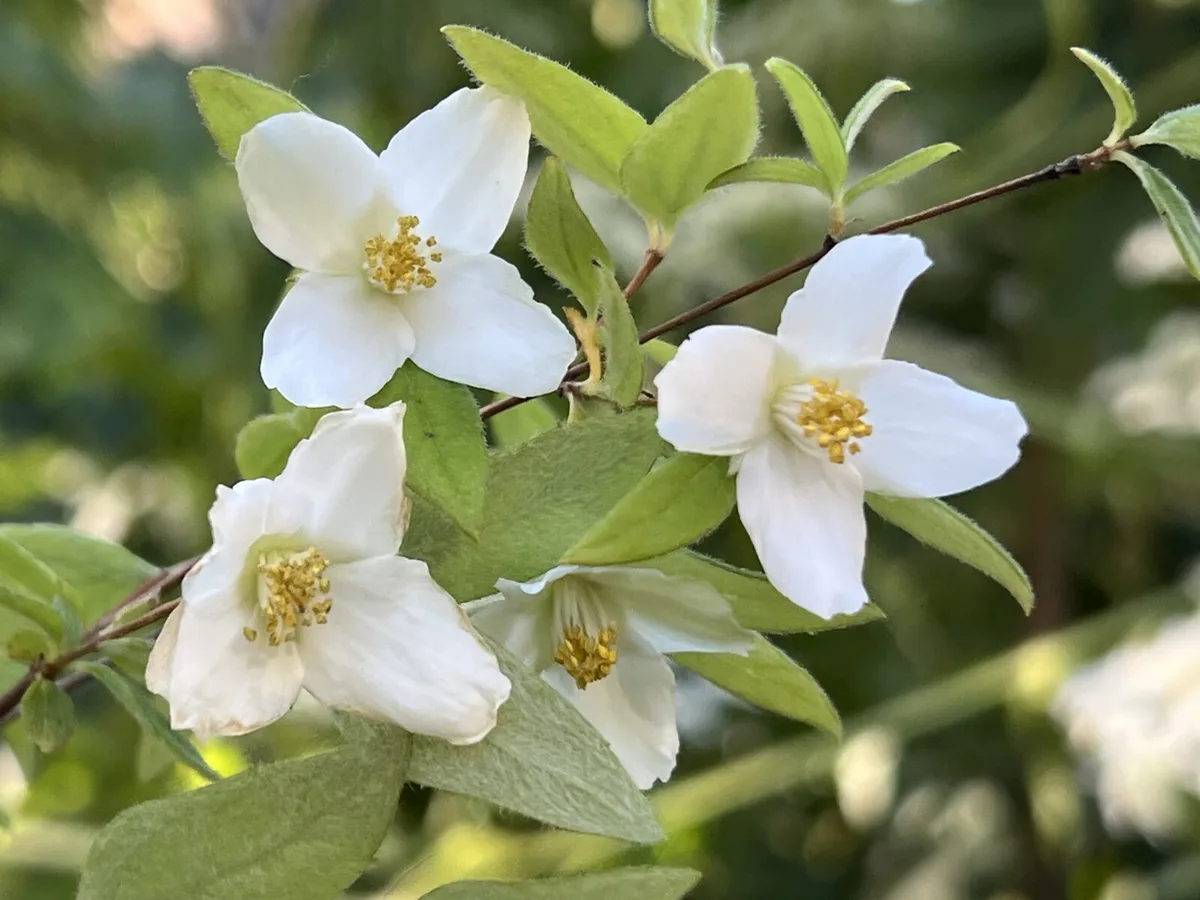
A highly desirable, upright, deciduous shrub species native to Mexico, Southern Arizona and New Mexico and named after the Sierra Madre Mountains. It grows to 2m tall and is semi-evergreen in its native habitat and deciduous in the UK, arching, almost pendulous branches carry dark green foliage and in summer, single, solitary, extremely fragrant white flowers with a pink centre appear with dark purple calyxes. Known for its powerful scent with one flower enough to fragrance a room
Scientific classification
- Species
- Sierre Madre mountain mock orange (Philadelphus madrensis)
- Genus
- Philadelphus
- Family
- Hydrangeaceae
- Order
- Cornales
- Class
- Magnoliopsida
- Phylum
- Magnoliophyta
- Information to be completed
- Toxicity
- Shrubs
- Plant type
- 1.5-2.5 metres
- Height
- 1.5-2.5 metres
- Spread
- Deciduous · Semi evergreen
- Foliage
- Bushy
- Habit
- Spring · Summer · Autumn
- Season of interest
- Full sun · Partial shade
- Sunlight
- Information to be completed
- Ideal temperature









Sierre Madre mountain mock orange pictures
Distribution of Sierre Madre mountain mock orange
Distribution map
- Native
- Introduced
- Cultivated
Source:WCVP v16 · Royal Botanic Gardens, Kew · CC BY 3.0 · Boundaries:WGSRPD / TDWG
Sierre Madre mountain mock orange care guide
- Moderate deep watering during dry periods, free drainage preferred
- Watering
- Full sun · Partial shade
- Sunlight

Watering
Moderate deep watering during dry periods, free drainage preferred
Fertilizing
 Fertilizing
Balanced shrub feed once in spring
Pruning
 Pruning
Cut flowered growth back to strong young shoots below, removing up to a fifth of old stems near the base each year. Prune immediately after flowering.
Propagation
 Propagation
Propagate by softwood or hardwood cuttings
Growing
 Growing
Grow in moist, well drained soil in sun to partial shade. Plant bare root plants in winter when the ground is not frozen or waterlogged. Incorporate lots of well-rotted manure or garden compost to improve the soil and water in well. Mulch in spring
Common pests and diseases
Diseases
May be susceptible to honey fungus (rarely) and powdery mildews
Pests
May be susceptible to aphids
Explore the plant health library →




