
clematis 'Annemieke'
Also known as: Information to be completed
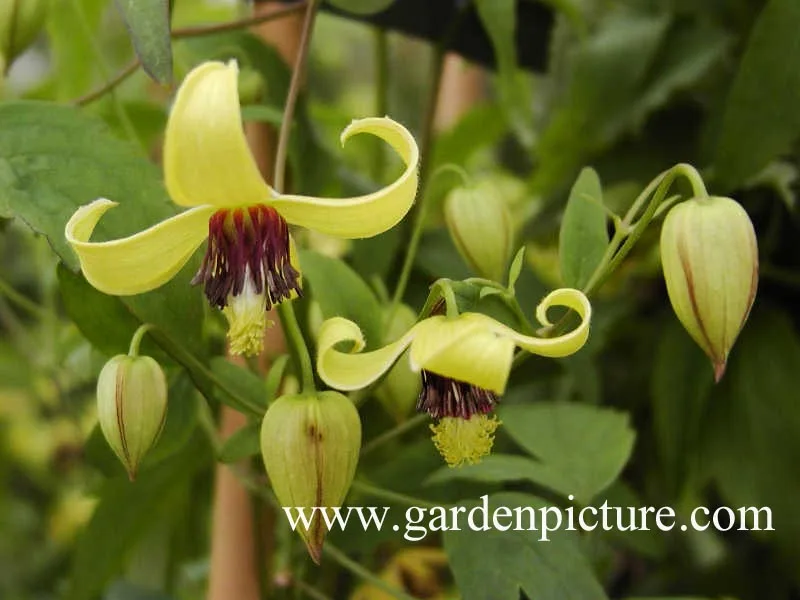
A vigorous climber to about 4m with small, divided leaves. Small, nodding, sulphur-yellow flowers with reflexed, twisted petals and prominent, purple-brown stamens are produced from mid-summer to early autumn, followed by long-lasting, silky seed heads
Scientific classification
- Species
- clematis 'Annemieke' (Clematis 'Annemieke')
- Genus
- Clematis
- Family
- Ranunculaceae
- Order
- Ranunculales
- Class
- Magnoliopsida
- Phylum
- Tracheophyta
- Skin irritant. Wear gloves and other protective equipment when handling
- Toxicity
- Climber Wall Shrub
- Plant type
- 2.5-4 metres
- Height
- 1.5-2.5 metres
- Spread
- Deciduous
- Foliage
- Climbing
- Habit
- Spring · Summer · Autumn · Winter
- Season of interest
- Full sun · Partial shade
- Sunlight
- Information to be completed
- Ideal temperature









clematis 'Annemieke' pictures
Toxicity
Skin irritant. Wear gloves and other protective equipment when handling
clematis 'Annemieke' care guide
- Evenly moist root ball, dry thin top soil layer between watering rounds
- Watering
- Full sun · Partial shade
- Sunlight

Watering
Evenly moist root ball, dry thin top soil layer between watering rounds
Fertilizing
 Fertilizing
Clematis balanced vine feed every three weeks spring to autumn
Pruning
 Pruning
In late winter or early spring as buds start growing, cut old stems to the lowest healthy bud pair, about 15–30 cm above the soil. Herbaceous types may be cut near ground level in early spring or late autumn.
Propagation
 Propagation
Propagate by layering or semi-hardwood cuttings
Growing
 Growing
Plant in a moisture-retentive, well-drained soil, with the roots and base of the plant kept cool and shaded by other plants or a layer of pebbles at the base. Plant with the crown 5-8cm (2-3in) deep to encourage new shoots to grow from below ground level. See clematis cultivation
Common pests and diseases
Diseases
May be susceptible to honey fungus (rarely), clematis wilt and clematis slime flux
Pests
May be susceptible to aphids, capsid bug, slugs and snails
Explore the plant health library →




