
squill 'Tubergeniana'
Also known as: Information to be completed
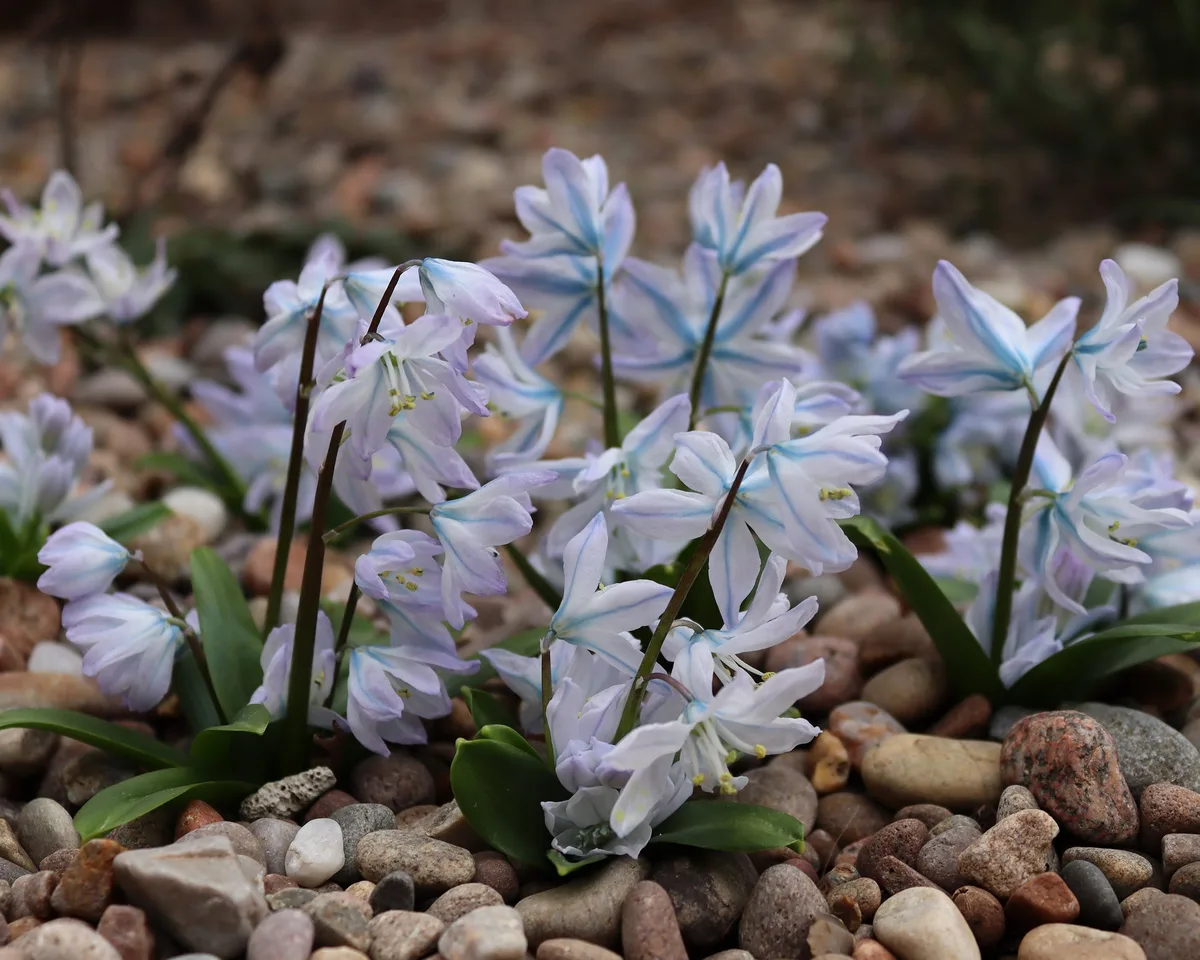
A bulbous perennial to 15cm in height, with 3-5 narrow leaves. Flowers 2cm in width, star-shaped, the tepals whitish-blue with darker central stripes, in racemes of up to 6 appearing with the leaves from late winter
Scientific classification
- Species
- squill 'Tubergeniana' (Scilla mischtschenkoana 'Tubergeniana')
- Genus
- Scilla
- Family
- Asparagaceae
- Order
- Asparagales
- Class
- Liliopsida
- Phylum
- Magnoliophyta
- Ornamental bulbs - not to be eaten. Wear gloves and other protective equipment when handling
- Toxicity
- Alpine Rockery · Bulbs
- Plant type
- 0.1-0.5 metres
- Height
- 0-0.1 metre
- Spread
- Deciduous
- Foliage
- Clump forming
- Habit
- Spring · Winter
- Season of interest
- Full sun · Partial shade
- Sunlight
- Information to be completed
- Ideal temperature









squill 'Tubergeniana' pictures
Distribution of squill 'Tubergeniana'
Distribution map
- Native
- Introduced
- Cultivated
Source:WCVP v16 · Royal Botanic Gardens, Kew · CC BY 3.0 · Boundaries:WGSRPD / TDWG
Toxicity
Ornamental bulbs - not to be eaten. Wear gloves and other protective equipment when handling
squill 'Tubergeniana' care guide
- Moderate regular watering, avoid prolonged drought or waterlogging
- Watering
- Full sun · Partial shade
- Sunlight

Watering
Moderate regular watering, avoid prolonged drought or waterlogging
Fertilizing
 Fertilizing
Balanced feed in spring and light repeat in growth season
Pruning
 Pruning
No pruning required
Propagation
 Propagation
Propagate by seed, sown in pots in a cold frame when ripe, keep shaded and do not allow to dry out. Alternatively remove offsets in summer. See bulb propagation
Growing
 Growing
Ideal for naturalising in grass or a gravel garden in full sun and a well-drained soil. Plant bulbs two to three times their depth. Please see bulb cultivation page
Common pests and diseases
Diseases
Generally disease-free
Pests
Generally pest-free
Explore the plant health library →




