
Katherine blood lily
Also known as: Information to be completed
S. multiflorus subsp. katherinae is a bulbous perennial to 1.2m tall, with wavy-margined, oblong-lance-shaped leaves and stout stems bearing umbels of spidery scarlet flowers with long stamens, sometimes followed by small orange berries
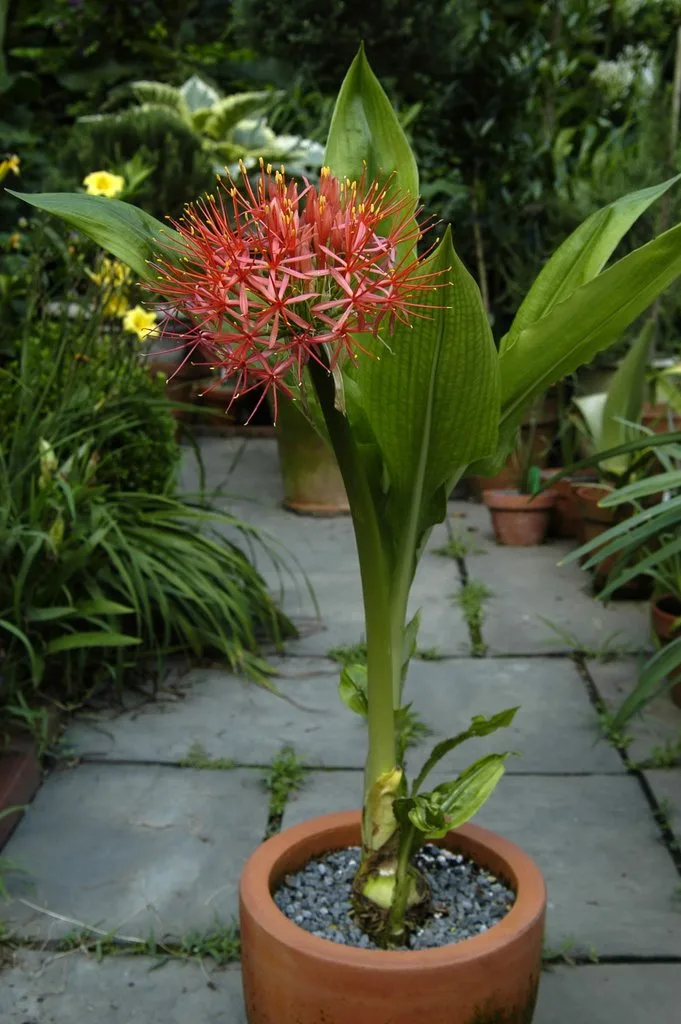
Scientific classification
- Species
- Katherine blood lily (Scadoxus multiflorus subsp. katherinae)
- Genus
- Scadoxus
- Family
- Amaryllidaceae
- Ornamental bulbs - not to be eaten. Wear gloves and other protective equipment when handling
- Toxicity
- Conservatory Greenhouse
- Plant type
- 1-1.5 metres
- Height
- 0.1-0.5 metres
- Spread
- Deciduous
- Foliage
- Bushy
- Habit
- Autumn · Summer
- Season of interest
- Full sun · Partial shade
- Sunlight
- Information to be completed
- Ideal temperature









Katherine blood lily pictures
Distribution of Katherine blood lily
Distribution map
Information to be completed
Information to be completed
Culture
Information to be completed
Toxicity
Ornamental bulbs - not to be eaten. Wear gloves and other protective equipment when handling
Quick identification of Katherine blood lily
Information to be completed
Katherine blood lily care guide
- Moderate regular watering, allowing brief slight drying between soakings
- Watering
- Full sun · Partial shade
- Sunlight
- Information to be completed
- Ideal temperature

Watering
Moderate regular watering, allowing brief slight drying between soakings
Fertilizing
 Fertilizing
Balanced perennial feed every four weeks from spring through summer
Pruning
 Pruning
No pruning required other than removing the faded leaves.
Propagation
 Propagation
sow seed at 19-24C (66-75F) as soon as ripe. Offsets can be separated and planted up individually in the spring
Growing
 Growing
Grow in a well drained, loam-based compost (JI No2) in full sun with some protection from very hot sun. Water freely when in active growth and gradually withhold water as the leaves fade for the winter.
People also ask
Information to be completed
Common pests and diseases
Diseases
Generally disease-free
Pests
Generally pest-free
Explore the plant health library →




