
ninebark 'Diabolo'
Also known as: Information to be completed
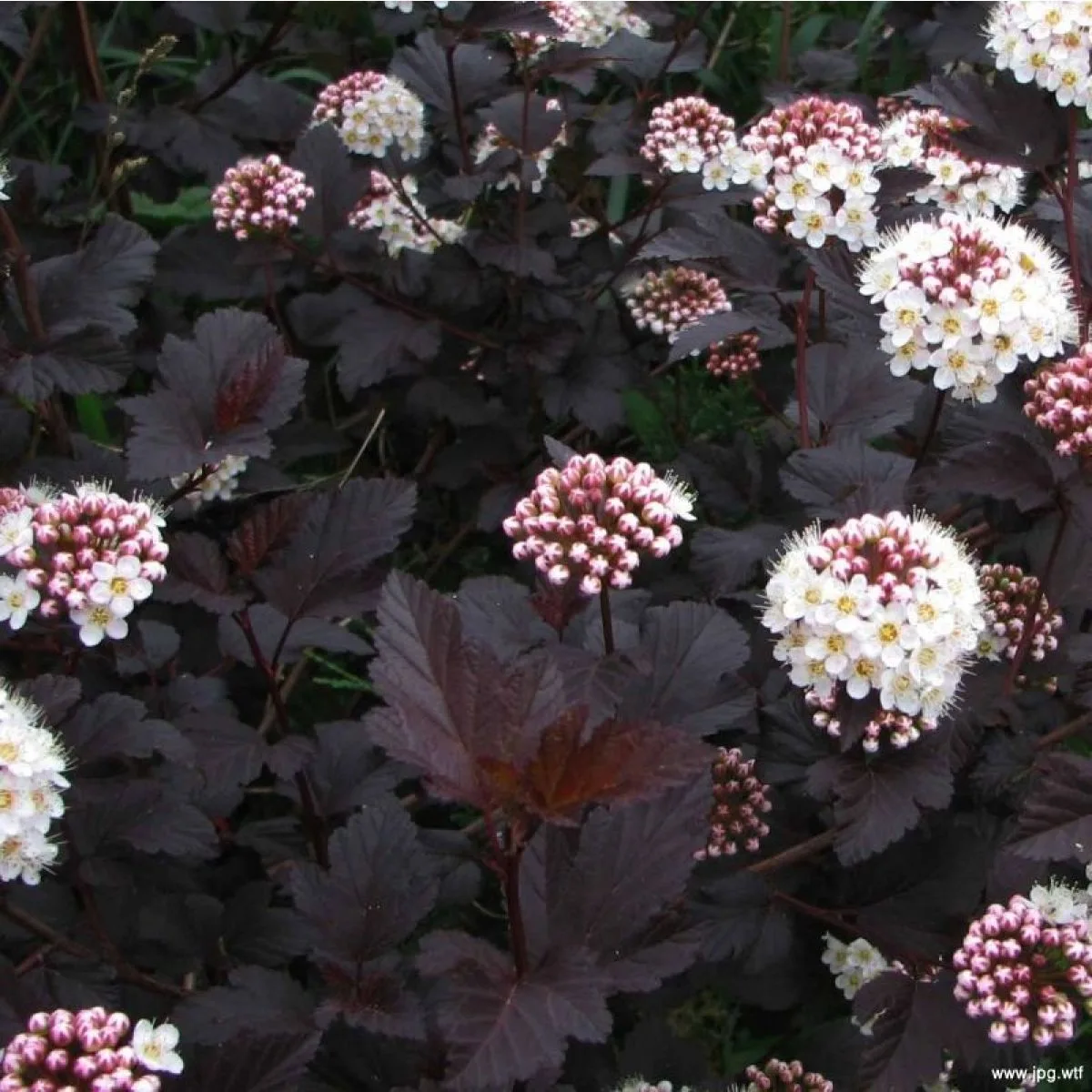
Diabolo' is a deciduous shrub with deep purple, three-lobed leaves and clusters of small white, pink-tinged flowers in summer
Scientific classification
- Species
- ninebark 'Diabolo' (Physocarpus opulifolius 'Diabolo')
- Genus
- Physocarpus
- Family
- Rosaceae
- Order
- Rosales
- Class
- Magnoliopsida
- Phylum
- Magnoliophyta
- Information to be completed
- Toxicity
- Shrubs
- Plant type
- 1.5-2.5 metres
- Height
- 1.5-2.5 metres
- Spread
- Deciduous
- Foliage
- Suckering
- Habit
- Spring · Summer · Autumn
- Season of interest
- Full sun · Partial shade
- Sunlight
- Information to be completed
- Ideal temperature









ninebark 'Diabolo' pictures
Distribution of ninebark 'Diabolo'
Distribution map
- Native
- Introduced
- Cultivated
Source:WCVP v16 · Royal Botanic Gardens, Kew · CC BY 3.0 · Boundaries:WGSRPD / TDWG
ninebark 'Diabolo' care guide
- Moderate regular watering, avoid prolonged drought or waterlogging
- Watering
- Full sun · Partial shade
- Sunlight

Watering
Moderate regular watering, avoid prolonged drought or waterlogging
Fertilizing
 Fertilizing
Balanced feed in spring and light repeat in growth season
Pruning
 Pruning
Cut flowered growth back to strong young shoots below, removing up to a fifth of old stems near the base each year. Prune immediately after flowering.
Propagation
 Propagation
Propagate by softwood cuttings in summer or pot up rooted suckers in autumn or spring
Growing
 Growing
Grows best in acidic, moderately fertile, humus-rich soil but will tolerate alkaline soils. Chlorosis may occur if grown in shallow chalky soil
Common pests and diseases
Diseases
May be susceptible to honey fungus
Pests
Generally pest-free
Explore the plant health library →




