
three-coloured nasturtium
Also known as: Information to be completed
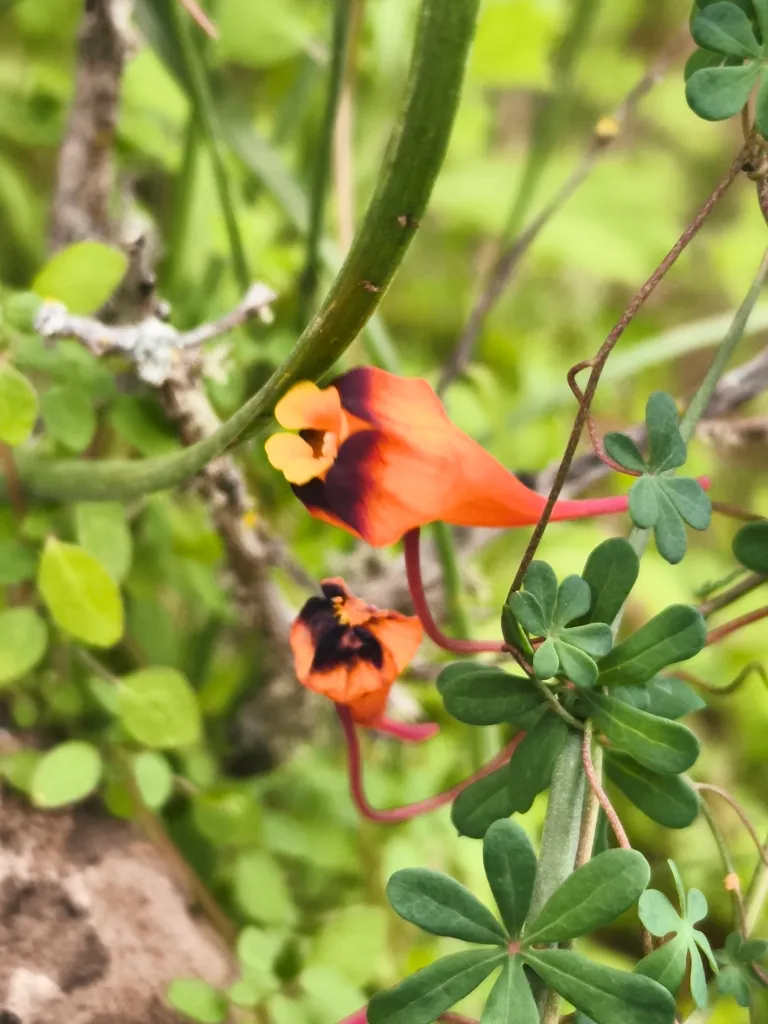
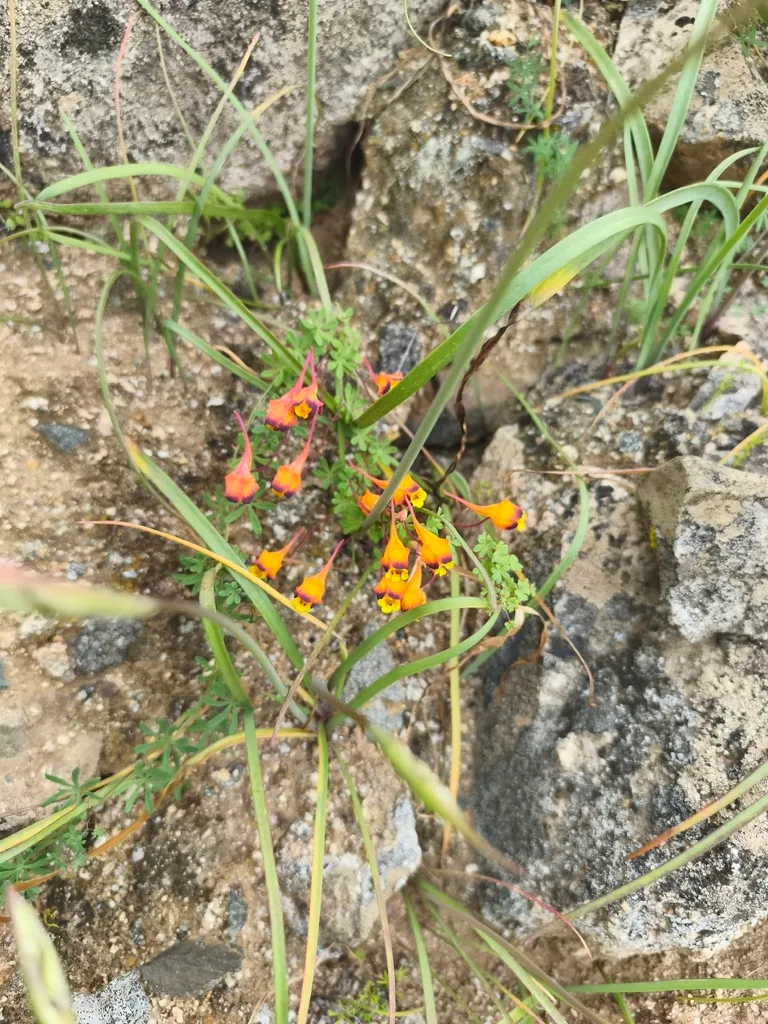
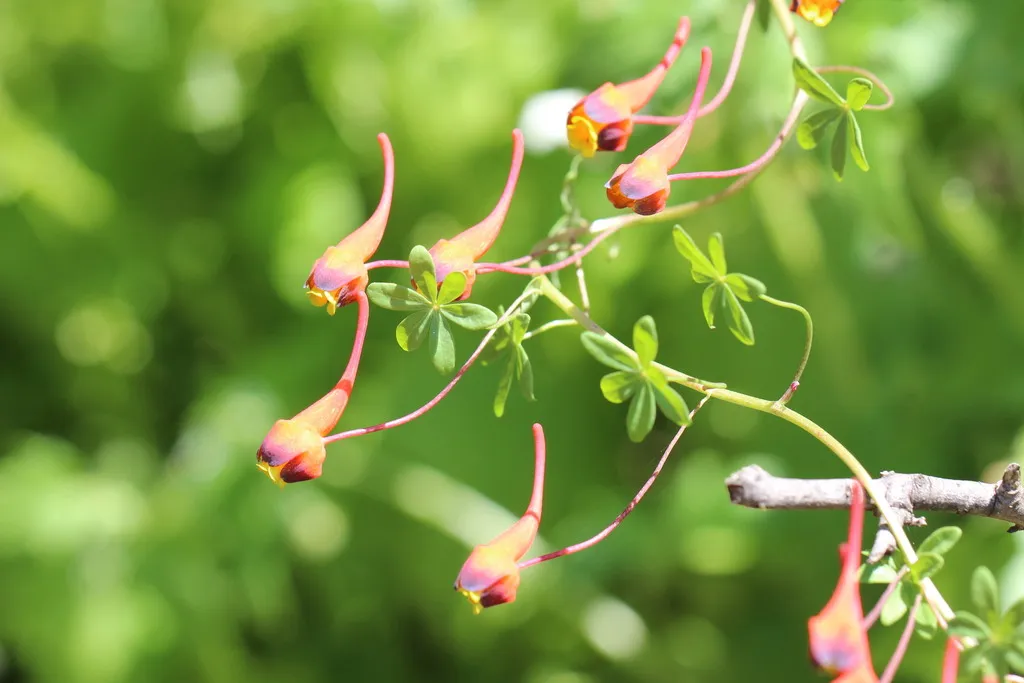
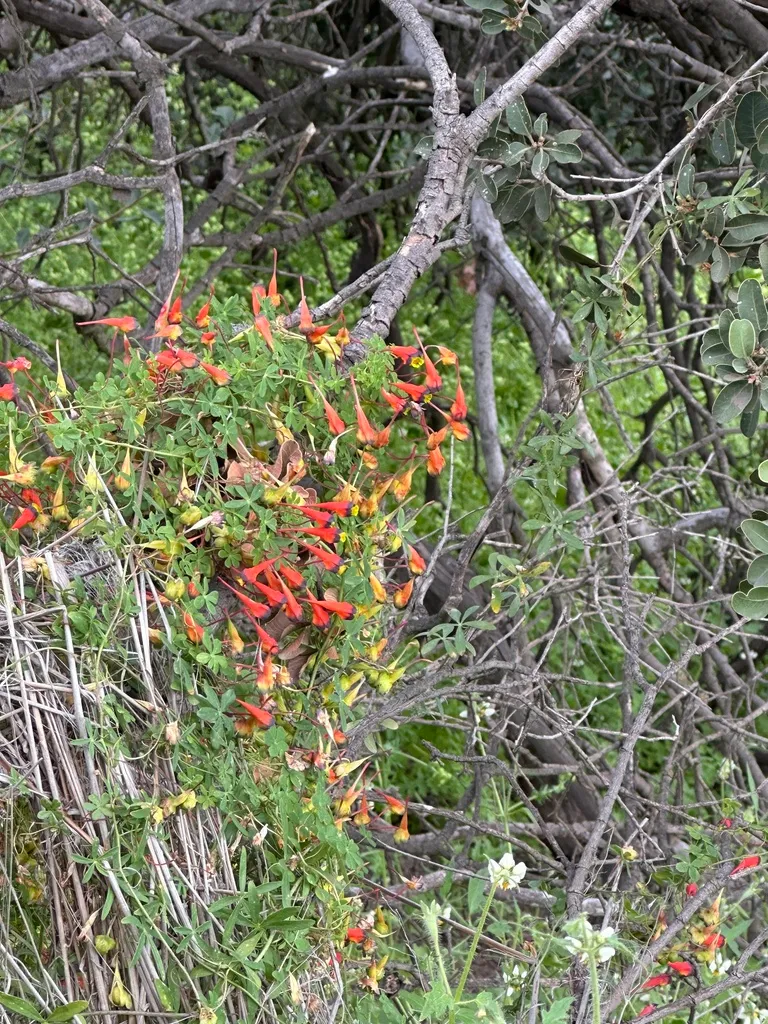
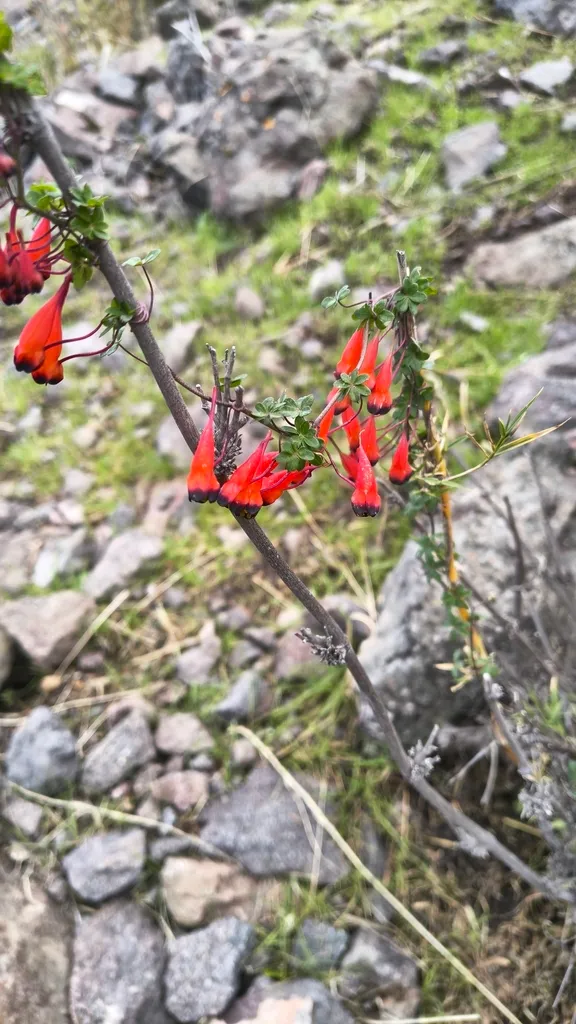
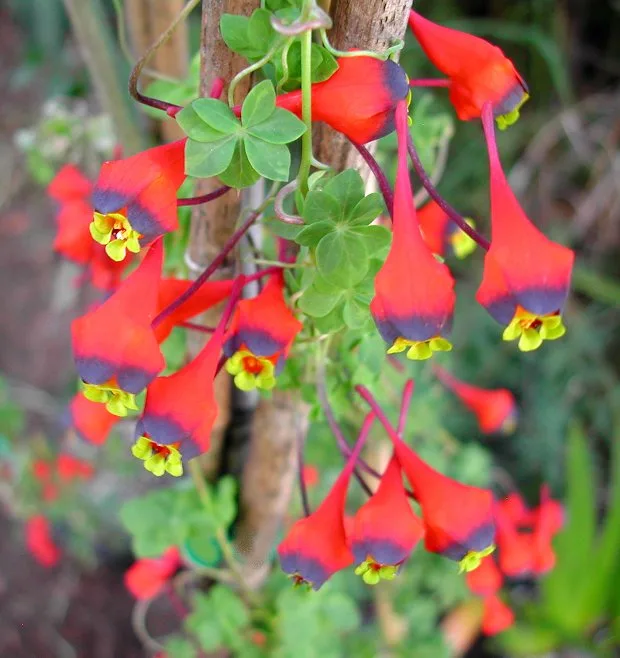
T. tricolor is a summer-dormant, tuberous, perennial climber to about 1.5m with small, light green, five- or seven-lobed leaves. The small, yellow flowers are surrounded by a showy purple-tipped, orange-red calyx with a long red or purple spur, in all about 3cm long. Flowering takes place from winter to early summer
Scientific classification
- Species
- three-coloured nasturtium (Tropaeolum tricolor)
- Genus
- Tropaeolum
- Family
- Tropaeolaceae
- Order
- Brassicales
- Class
- Magnoliopsida
- Phylum
- Magnoliophyta
- Skin allergen. Wear gloves and other protective equipment when handling
- Toxicity
- Climber Wall Shrub · Conservatory Greenhouse
- Plant type
- 1-1.5 metres
- Height
- 0.1-0.5 metres
- Spread
- Deciduous
- Foliage
- Climbing
- Habit
- Spring · Autumn · Winter
- Season of interest
- Full sun
- Sunlight
- Information to be completed
- Ideal temperature









three-coloured nasturtium pictures
Distribution of three-coloured nasturtium
Distribution map
- Native
- Introduced
- Cultivated
Source:WCVP v16 · Royal Botanic Gardens, Kew · CC BY 3.0 · Boundaries:WGSRPD / TDWG
Toxicity
Skin allergen. Wear gloves and other protective equipment when handling
three-coloured nasturtium care guide
- Let soil partially dry between watering, avoid saturated medium
- Watering
- Full sun
- Sunlight

Watering
Let soil partially dry between watering, avoid saturated medium
Fertilizing
 Fertilizing
Diluted bloom fertilizer every three weeks spring and summer time
Pruning
 Pruning
No pruning needed - allow to die down naturally in midsummer
Propagation
 Propagation
Propagate by separating tubers when dormant in summer
Growing
 Growing
Grow under glass in good light with shade from hot sun. Plant tubers in a deep container of loam-based compost with added fine grit, starting into growth in autumn
Common pests and diseases
Diseases
Generally disease-free
Pests
May be susceptible to glasshouse whitefly and glasshouse red spider mite and whitefly
Explore the plant health library →




