
dwarf nasturtium
Also known as: Indian-cress; small tropaeolum; yellow Larke's-heeles
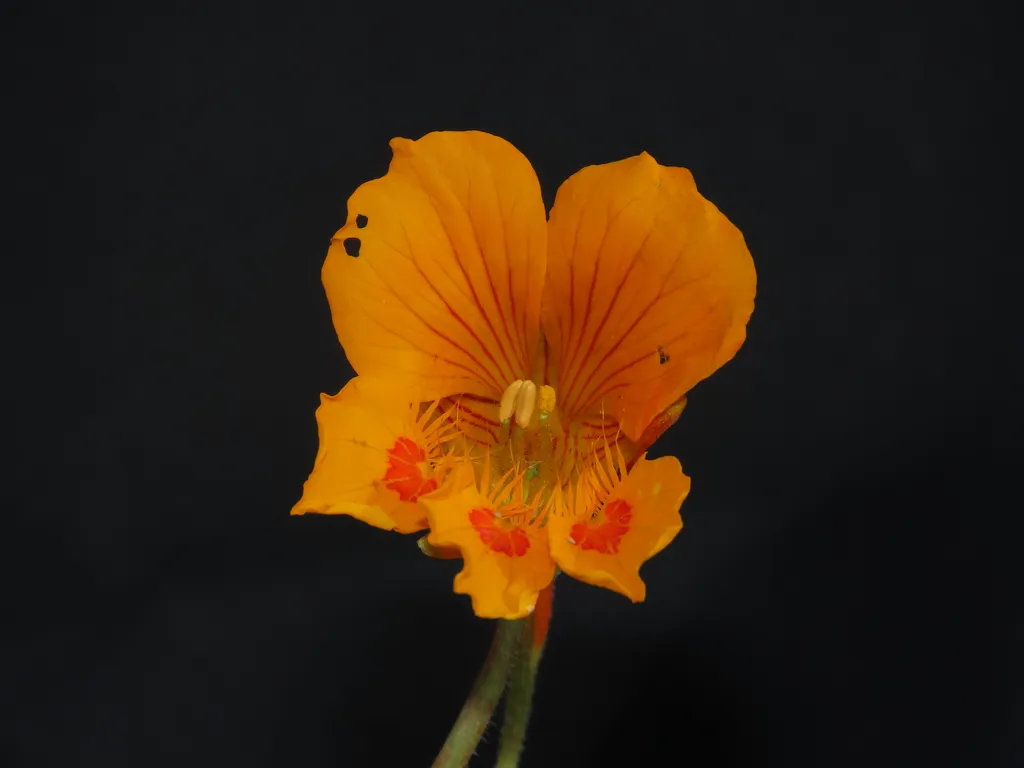
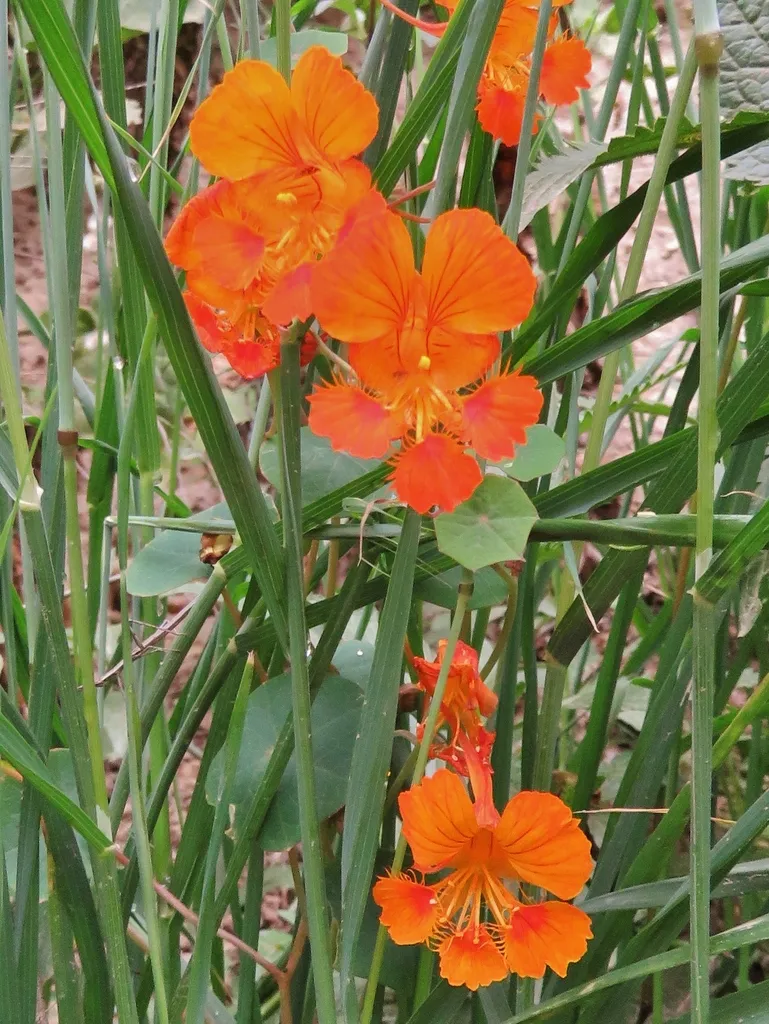
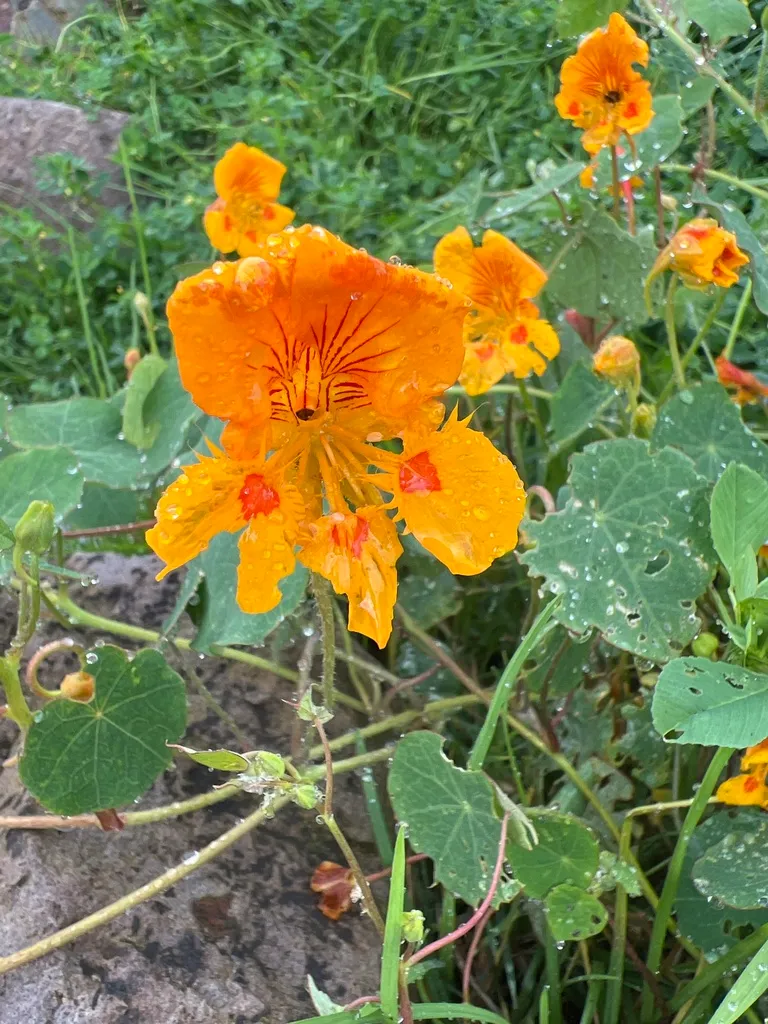
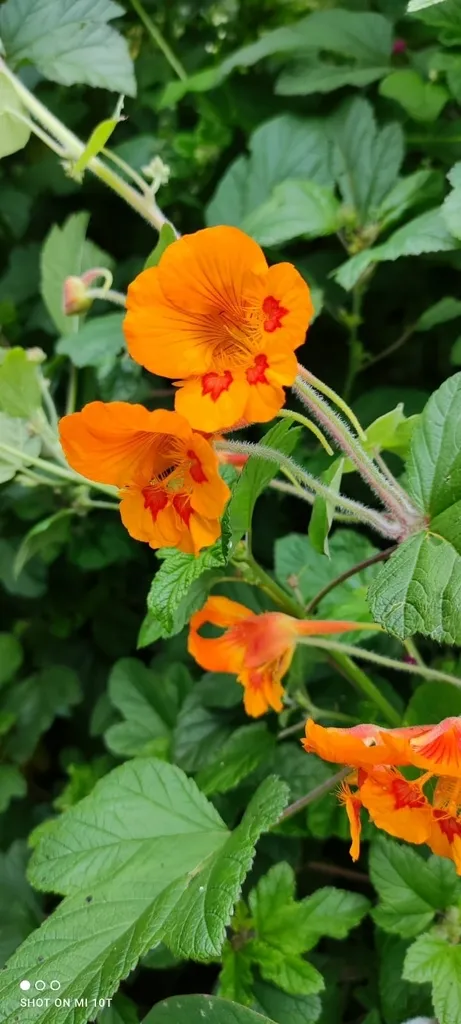
A bushy annual, up to 50cm high, with rounded, shield-shaped ('peltate') leaves up to 8cm across, edged with tiny teeth where the veins meet the leaf margin. Rich orange or reddish orange flowers, with pointed tips to the petals and sometimes with purple veins or with red blotches at the base, are borne singly in the leaf axils from early summer into autumn
Scientific classification
- Species
- dwarf nasturtium (Tropaeolum minus)
- Genus
- Tropaeolum
- Family
- Tropaeolaceae
- Order
- Brassicales
- Class
- Magnoliopsida
- Phylum
- Magnoliophyta
- Skin allergen. Wear gloves and other protective equipment when handling
- Toxicity
- Annual Biennial
- Plant type
- 0.1-0.5 metres
- Height
- 0.1-0.5 metres
- Spread
- Deciduous
- Foliage
- Bushy
- Habit
- Spring · Summer · Autumn
- Season of interest
- Full sun · Partial shade
- Sunlight
- Information to be completed
- Ideal temperature









dwarf nasturtium pictures
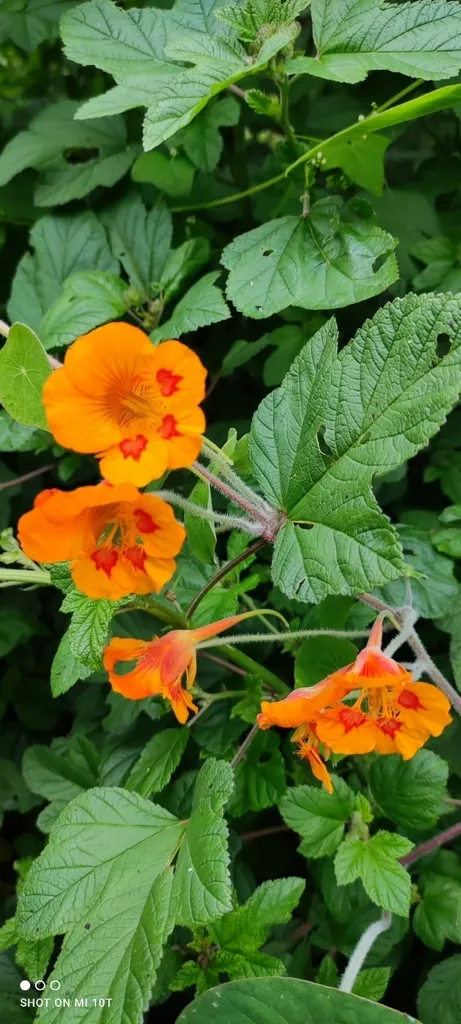
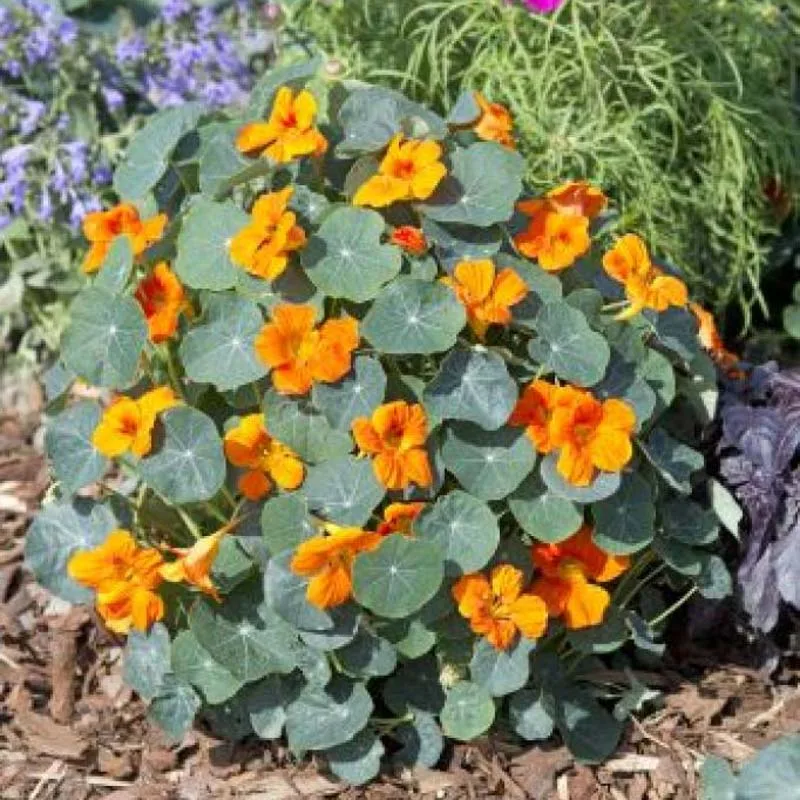
Distribution of dwarf nasturtium
Distribution map
- Native
- Introduced
- Cultivated
Source:WCVP v16 · Royal Botanic Gardens, Kew · CC BY 3.0 · Boundaries:WGSRPD / TDWG
Toxicity
Skin allergen. Wear gloves and other protective equipment when handling
dwarf nasturtium care guide
- Moderate regular watering, allowing brief slight drying between soakings
- Watering
- Full sun · Partial shade
- Sunlight

Watering
Moderate regular watering, allowing brief slight drying between soakings
Fertilizing
 Fertilizing
Balanced perennial feed every four weeks from spring through summer
Pruning
 Pruning
No pruning required. Deadhead to encourage further flowers
Propagation
 Propagation
Propagate by seed, sown under glass in spring and planted out after danger of frost has passed. May self-seed in place in good conditions, but germination is often too late to produce good flowers
Growing
 Growing
Best grown in poor, well-drained soil; if the soil is too rich foliage will be produced at the expense of flowers. Will tolerate light shade but flowering is better in full sun
Common pests and diseases
Diseases
May be susceptible to virus diseases
Pests
May be susceptible to glasshouse whitefly and glasshouse red spider mite and whitefly
Explore the plant health library →




