
giant marsh marigold
Also known as: Information to be completed
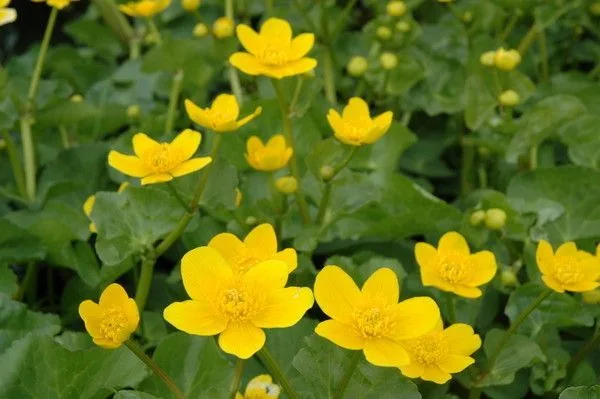
A herbaceous perennial, up to 60cm high and 90cm wide, spreading by rooting stems across ground or across water. It has rounded green leaves, the basal leaves up to 10cm across, the stem leaves fewer and smaller, and shining, bright golden yellow flowers, up to 5cm across, from early spring to summer
Scientific classification
- Species
- giant marsh marigold (Caltha polypetala)
- Genus
- Caltha
- Family
- Ranunculaceae
- Information to be completed
- Toxicity
- Aquatic · Bogs · Herbaceous Perennial
- Plant type
- 0.5-1 metres
- Height
- 0.5-1 metres
- Spread
- Deciduous
- Foliage
- Clump forming
- Habit
- Spring · Summer · Autumn
- Season of interest
- Full sun
- Sunlight
- Information to be completed
- Ideal temperature









giant marsh marigold pictures
Distribution of giant marsh marigold
Distribution map
Temp Northern Hemisphere
Information to be completed
Culture
Information to be completed
Toxicity
Information to be completed
Quick identification of giant marsh marigold
Information to be completed
giant marsh marigold care guide
- Keep soil consistently moist to wet, never allowing roots to dry
- Watering
- Full sun
- Sunlight
- Information to be completed
- Ideal temperature

Watering
Keep soil consistently moist to wet, never allowing roots to dry
Fertilizing
 Fertilizing
Light balanced feed in spring and early summer growth
Pruning
 Pruning
No pruning required, though the stems may be cut back after flowering
Propagation
 Propagation
Propagate by seed, sown fresh in late summer in a cold frame, making sure that the compost does not dry out, or by division in spring
Growing
 Growing
Plant from spring to autumn in full sun, in deep, rich organic soil, at the water's edge or in shallow water up to 15cm deep; mulch annually to conserve moisture
People also ask
Information to be completed
Common pests and diseases
Diseases
May be affected by powdery mildews and rust diseases
Pests
Generally pest-free
Explore the plant health library →




