
clustered spice bush
Also known as: Information to be completed
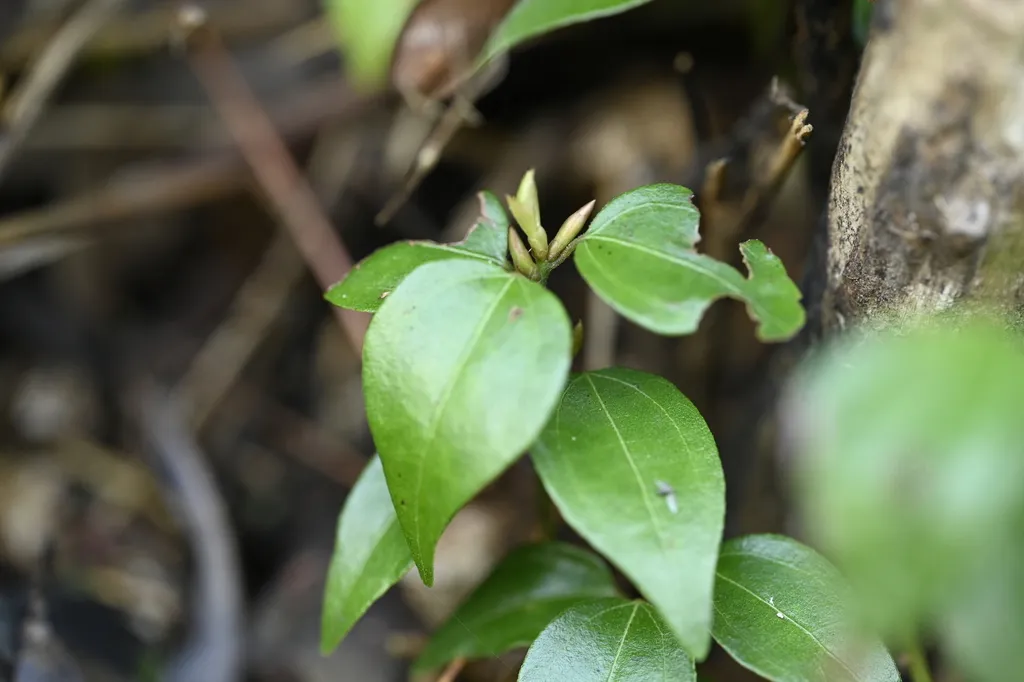
Small evergreen tree rare in cultivation, about 5m tall, with poplar-like leaves, glossy green above and glaucous below, covered with golden silky hairs when young. Fragrant, yellow flowers in early spring, in clusters about 1 cm across. Black fruit follow in autumn on female plants, if pollinated by a male plant
Scientific classification
- Species
- clustered spice bush (Lindera aggregata)
- Genus
- Lindera
- Family
- Lauraceae
- Information to be completed
- Toxicity
- Trees
- Plant type
- 4-8 metres
- Height
- 4-8 metres
- Spread
- Evergreen
- Foliage
- Bushy
- Habit
- Spring · Summer · Autumn · Winter
- Season of interest
- Partial shade
- Sunlight
- Information to be completed
- Ideal temperature









clustered spice bush pictures


Distribution of clustered spice bush
Distribution map
China, Vietnam, Taiwan, Philippines
Information to be completed
Culture
Information to be completed
Toxicity
Information to be completed
Quick identification of clustered spice bush
Information to be completed
clustered spice bush care guide
- Deep watering in dry heat, natural rainfall adequate once tree establishes well
- Watering
- Partial shade
- Sunlight
- Information to be completed
- Ideal temperature

Watering
Deep watering in dry heat, natural rainfall adequate once tree establishes well
Fertilizing
 Fertilizing
Organic compost mulch top dressing applied one time each early spring annually
Pruning
 Pruning
Little pruning is needed. Remove diseased, damaged, crowded or crossing shoots and unwanted growth. Timing depends on the plant: generally late winter or early spring; plants prone to bleeding and deciduous magnolias need different timing, and deciduous azaleas and lilacs are pruned after flowering.
Propagation
 Propagation
Propagate from seed (tree/shrub) in autumn or by greenwood cuttings in early summer
Growing
 Growing
Grow in fertile, moist but well-drained acid soil in partial shade
People also ask
Information to be completed
Common pests and diseases
Diseases
Generally disease-free
Pests
Generally pest-free
Explore the plant health library →




