
celeriac
Also known as: turnip-rooted celery
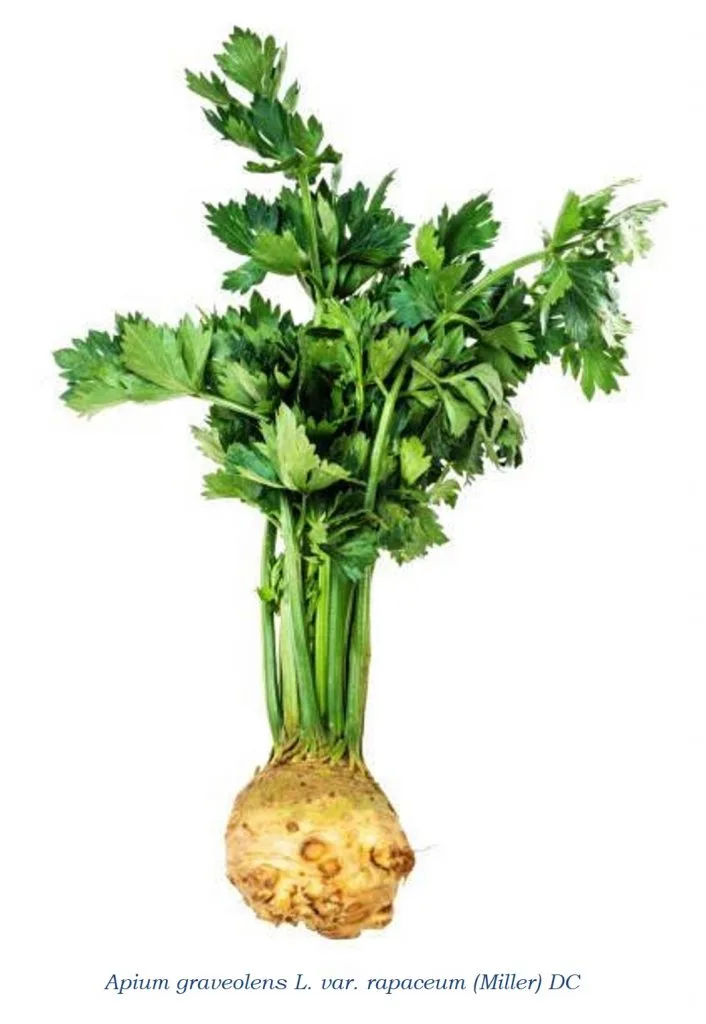
Cultivated variety of celery, grown for its knobbly, swollen edible stem. Celeriac is usually pale white, reaching up to 12cm in diameter. It is very hardy and reliable winter crop. Many cultivars are available, with some that are less prone to premature flowering (bolting). Green, aromatic leaves form a bunch-like rosette above the swelling. If left to flower, umbels of tiny, pale-white flowers are held on upright, ribbed stems
Scientific classification
- Species
- celeriac (Apium graveolens var. rapaceum)
- Genus
- Apium
- Family
- Apiaceae
- Order
- Apiales
- Class
- Magnoliopsida
- Phylum
- Magnoliophyta
- Harmful to skin with sunlight. Wear gloves and other protective equipment when handling
- Toxicity
- Annual Biennial · Herbs - Culinary
- Plant type
- 0.1-0.5 metres
- Height
- 0.1-0.5 metres
- Spread
- Semi evergreen
- Foliage
- Columnar upright
- Habit
- Spring · Summer · Autumn · Winter
- Season of interest
- Full sun
- Sunlight
- Information to be completed
- Ideal temperature









celeriac pictures
Distribution of celeriac
Distribution map
- Native
- Introduced
- Cultivated
Source:WCVP v16 · Royal Botanic Gardens, Kew · CC BY 3.0 · Boundaries:WGSRPD / TDWG
Toxicity
Harmful to skin with sunlight. Wear gloves and other protective equipment when handling
celeriac care guide
- Regular deep watering, keep root zone damp through bulb development stage
- Watering
- Full sun
- Sunlight

Watering
Regular deep watering, keep root zone damp through bulb development stage
Fertilizing
 Fertilizing
Root vegetable balanced feed every two weeks growing season period
Pruning
 Pruning
No pruning required
Propagation
 Propagation
Propagate by seed. See sowing vegetable seeds or sowing seeds indoors for further advice
Growing
 Growing
Grow in moist, rich soil in full sun. Will grow well in heavy and clay soils. Exposure to cold temperatures in spring may lead to premature flowering. For more advice see celeriac cultivation
Common pests and diseases
Diseases
May be susceptible to celery leaf spot
Pests
May be susceptible to slugs and snails and and celery leaf miner
Explore the plant health library →




