
sweet pepper 'New Ace'
Also known as: Information to be completed
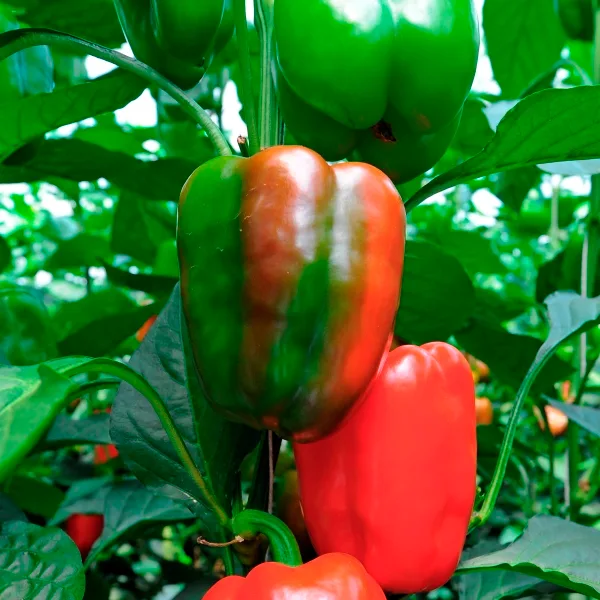
An early, and very productive, sweet pepper variety with a slightly spreading habit, producing dark green fruits which turn bright red as they mature. Shows some cold tolerance and may be suitable for colder climates
Scientific classification
- Species
- sweet pepper 'New Ace' (Capsicum annuum 'New Ace')
- Genus
- Capsicum
- Family
- Solanaceae
- Order
- Solanales
- Class
- Magnoliopsida
- Phylum
- Magnoliophyta
- Irritant if eaten, skin/eye irritant. Wear gloves and other protective equipment when handling]
- Toxicity
- Annual Biennial
- Plant type
- 0.5-1 metres
- Height
- 0.1-0.5 metres
- Spread
- Deciduous
- Foliage
- Columnar upright
- Habit
- Spring · Summer · Autumn
- Season of interest
- Full sun
- Sunlight
- Information to be completed
- Ideal temperature









sweet pepper 'New Ace' pictures
Distribution of sweet pepper 'New Ace'
Distribution map
- Native
- Introduced
- Cultivated
Source:WCVP v16 · Royal Botanic Gardens, Kew · CC BY 3.0 · Boundaries:WGSRPD / TDWG
Toxicity
Irritant if eaten, skin/eye irritant. Wear gloves and other protective equipment when handling]
sweet pepper 'New Ace' care guide
- Water deeply when top soil dries, maintain consistent mild soil moisture
- Watering
- Full sun
- Sunlight

Watering
Water deeply when top soil dries, maintain consistent mild soil moisture
Fertilizing
 Fertilizing
Apply high-potassium diluted fertilizer regularly through fruiting season
Pruning
 Pruning
Pinch out growing tips to encourage branching
Propagation
 Propagation
Propagate by seed. See sowing vegetable seeds or sowing seeds indoors for further advice
Growing
 Growing
Sow indoors from mid-February to early April in small pots filled with good quality seed compost and maintain a constant temperature between 18-21C. Transplant seedlings into individual pots when two true leaves have formed and grow on in a sunny, sheltered spot. Water regularly and feed with a high potash liquid fertiliser once the first fruit has set. See vegetable cultivation
Common pests and diseases
Diseases
May be susceptible to grey moulds and blossom end rot
Pests
May be susceptible to aphids, glasshouse red spider mite
Explore the plant health library →




