
Sonerila margaritacea
Also known as: Information to be completed
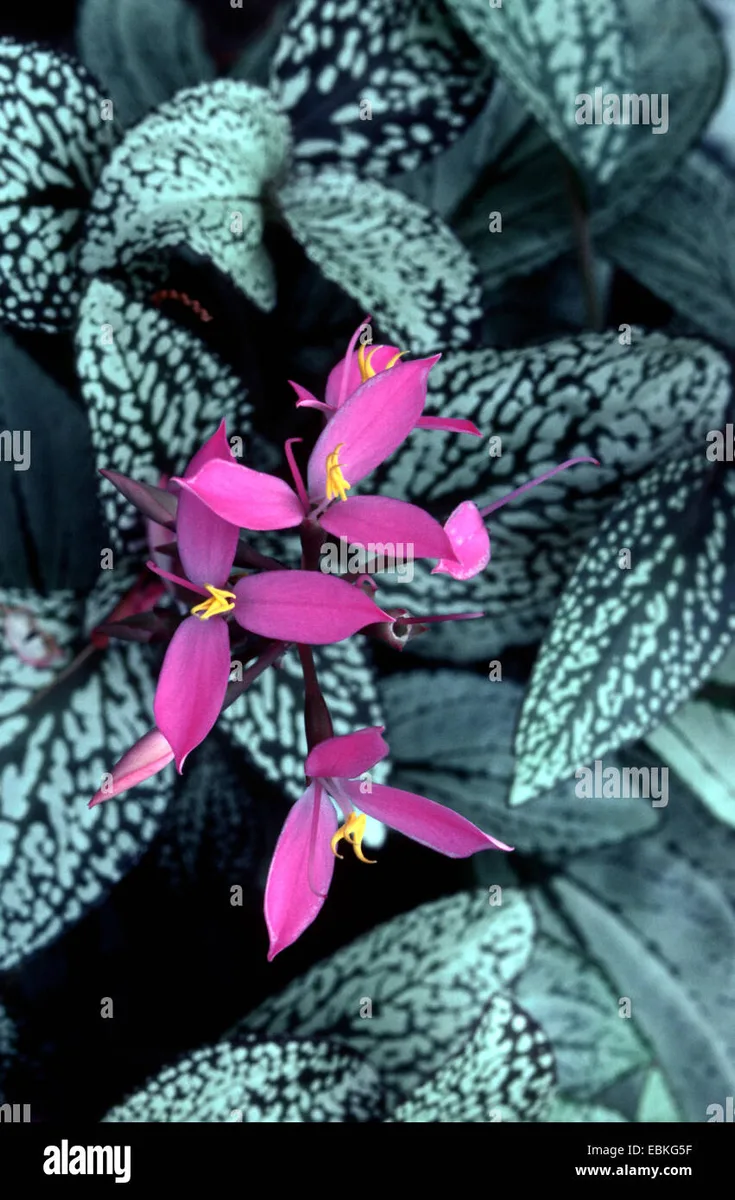
A tropical, evergreen perennial to 25cm tall, with 4-angled stems. Glossy, dark green leaves are held on purple-red leaf stalks, and have pearlescent white spots on the upper surface, and purple veins beneath. From summer to autumn it produces purple-pink, 3-petalled flowers in clusters at the shoot tips
Scientific classification
- Species
- Sonerila margaritacea (Sonerila margaritacea)
- Genus
- Sonerila
- Family
- Melastomataceae
- Information to be completed
- Toxicity
- Houseplants
- Plant type
- 0.1-0.5 metres
- Height
- 0.1-0.5 metres
- Spread
- Evergreen
- Foliage
- Bushy
- Habit
- Spring · Summer · Autumn · Winter
- Season of interest
- Partial shade
- Sunlight
- Information to be completed
- Ideal temperature









Sonerila margaritacea pictures
Distribution of Sonerila margaritacea
Distribution map
Burma to Indonesia
Information to be completed
Culture
Information to be completed
Toxicity
Information to be completed
Quick identification of Sonerila margaritacea
Information to be completed
Sonerila margaritacea care guide
- Moderate regular watering, allowing brief slight drying between soakings
- Watering
- Partial shade
- Sunlight
- Information to be completed
- Ideal temperature

Watering
Moderate regular watering, allowing brief slight drying between soakings
Fertilizing
 Fertilizing
Balanced perennial feed every four weeks from spring through summer
Pruning
 Pruning
Pinch out shoots regularly to maintain bushiness
Propagation
 Propagation
Propagate by softwood cuttings with bottom heat in summer
Growing
 Growing
Under glass, grow in shallow pans of standard houseplant compost with added fine-grade, granulated bark, in bright filtered light. Maintain steady temperatures and high humidity to prevent leaf drop. When in growth, water moderately and apply a half-strength balanced liquid fertiliser monthly. Keep just moist in winter
People also ask
Information to be completed
Common pests and diseases
Diseases
Generally disease-free
Pests
Generally pest-free
Explore the plant health library →




