
nerine 'Afterglow'
Also known as: Information to be completed
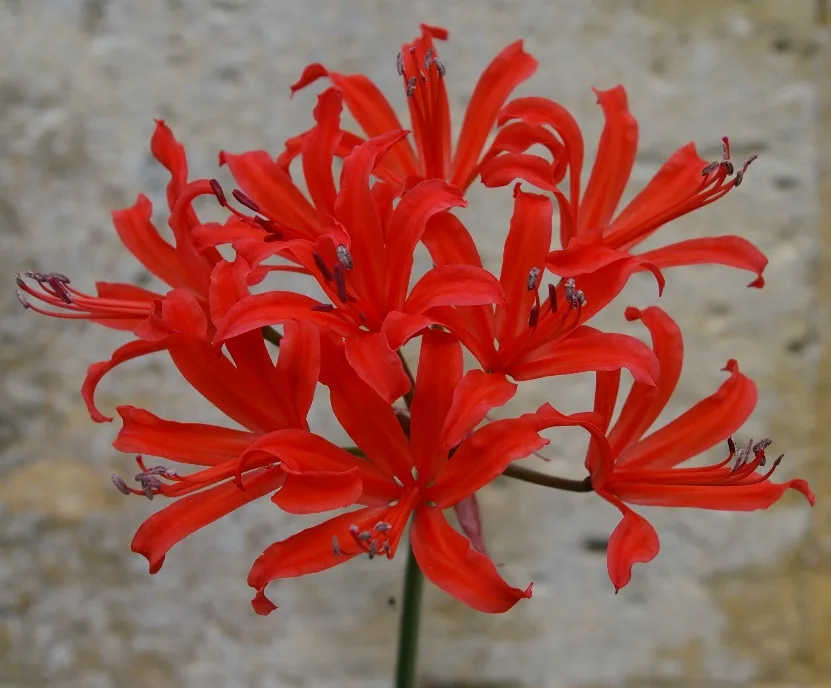
A bulbous perennial, to 70cm tall, bearing open umbels of orange-red flowers on tall stems in late autumn, followed by strap-shaped leaves
Scientific classification
- Species
- nerine 'Afterglow' (Nerine 'Afterglow')
- Genus
- Nerine
- Family
- Amaryllidaceae
- Order
- Asparagales
- Class
- Liliopsida
- Phylum
- Magnoliophyta
- Ornamental bulbs - not to be eaten. Wear gloves and other protective equipment when handling
- Toxicity
- Bulbs · Conservatory Greenhouse
- Plant type
- 0.5-1 metres
- Height
- 0.1-0.5 metres
- Spread
- Deciduous
- Foliage
- Clump forming
- Habit
- Autumn · Winter
- Season of interest
- Full sun
- Sunlight
- Information to be completed
- Ideal temperature









nerine 'Afterglow' pictures
Toxicity
Ornamental bulbs - not to be eaten. Wear gloves and other protective equipment when handling
nerine 'Afterglow' care guide
- Water moderately during growth; allow to dry slightly between waterings in dormancy.
- Watering
- Full sun
- Sunlight

Watering
Water moderately during growth; allow to dry slightly between waterings in dormancy.
Fertilizing
 Fertilizing
Apply a low-nitrogen bulb fertilizer at planting and after flowering.
Pruning
 Pruning
No pruning required
Propagation
 Propagation
Propagate by division after flowering
Growing
 Growing
Grow under glass, planting bulbs in autumn or spring with the tips above the surface of loam-based compost. They flower best if bulbs are congested. Water freely when in growth and keep warm and dry during summer dormancy. Apply a low-nitrogen liquid feed after flowering. In frost free areas plant outdoors in early spring in a moderately fertile, well-drained soil. See also Nerine cultivation
Common pests and diseases
Diseases
Generally disease-free
Pests
May be susceptible to slugs
Explore the plant health library →




