
nerine 'Rose Princess'
Also known as: Information to be completed
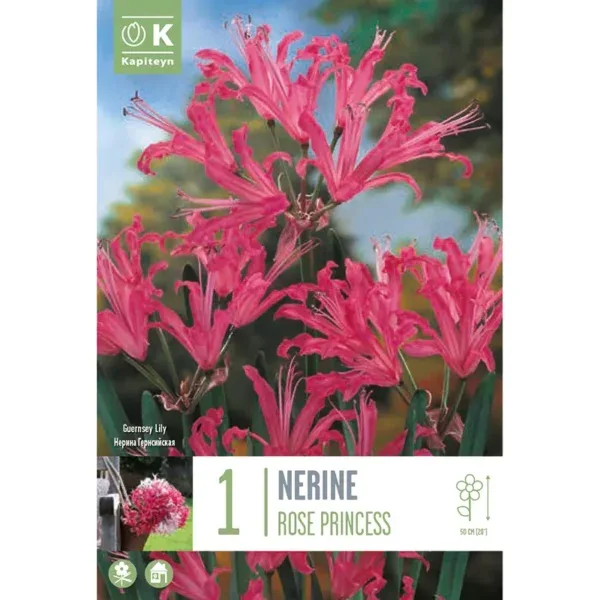
Rose Princess' is a bulbous herbaceous perennial with green, strap-like leaves which die down in summer. Light pink flowers with pink-mauve stripes appear in the spring.
Scientific classification
- Species
- nerine 'Rose Princess' (Nerine 'Rose Princess')
- Genus
- Nerine
- Family
- Amaryllidaceae
- Ornamental bulbs - not to be eaten. Wear gloves and other protective equipment when handling
- Toxicity
- Bulbs
- Plant type
- 0.1-0.5 metres
- Height
- 0.1-0.5 metres
- Spread
- Deciduous
- Foliage
- Columnar upright
- Habit
- Spring
- Season of interest
- Full sun
- Sunlight
- Information to be completed
- Ideal temperature









nerine 'Rose Princess' pictures
Distribution of nerine 'Rose Princess'
Distribution map
Information to be completed
Information to be completed
Culture
Information to be completed
Toxicity
Ornamental bulbs - not to be eaten. Wear gloves and other protective equipment when handling
Quick identification of nerine 'Rose Princess'
Information to be completed
nerine 'Rose Princess' care guide
- Moist soil during active growth, then reduce watering after foliage yellows
- Watering
- Full sun
- Sunlight
- Information to be completed
- Ideal temperature

Watering
Moist soil during active growth, then reduce watering after foliage yellows
Fertilizing
 Fertilizing
Light bulb fertilizer at emergence and again after flowering
Pruning
 Pruning
No pruning required
Propagation
 Propagation
Propagate by division of congested clumps in early summer
Growing
 Growing
Plant with the tips of the bulbs just above the surface: in frost-prone areas, grow in full light in a greenhouse or conservatory, in an open free-draining medium, water during active growth, give potassium-rich liquid fertilizer after flowering, and keep slightly dry when dormant in summer; in frost-free areas, grow outside in well-drained soil in a sunny position, for example by a south-facing or west-facing wall, and protect with a deep, dry mulch over winter; for more advice, see Nerine cultivation
People also ask
Information to be completed
Common pests and diseases
Diseases
May be affected by virus diseases
Pests
May be susceptible to slugs
Explore the plant health library →




