
Epimedium × omeiense 'Stormcloud'
Also known as: Information to be completed
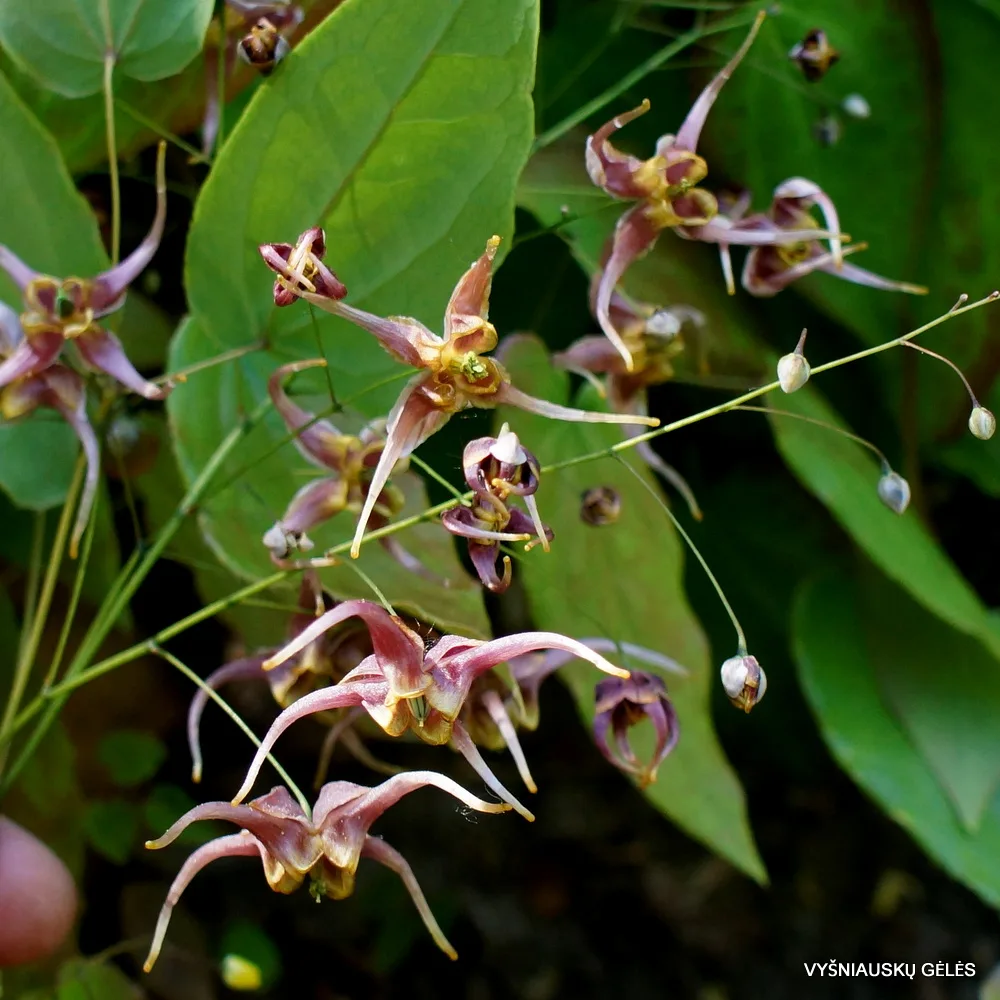
A clump-forming evergreen perennial, to around 40cm high, with narrowly heart-shaped green leaves flushed with bronze. Spidery flowers, with narrow, deep maroon-coloured spurs tipped with yellow, are borne on delicate stems above the leaves in spring
Scientific classification
- Species
- Epimedium × omeiense 'Stormcloud' (Epimedium × omeiense 'Stormcloud')
- Genus
- Epimedium
- Family
- Berberidaceae
- Information to be completed
- Toxicity
- Herbaceous Perennial
- Plant type
- 0.1-0.5 metres
- Height
- 0.1-0.5 metres
- Spread
- Evergreen
- Foliage
- Clump forming
- Habit
- Spring · Summer · Autumn · Winter
- Season of interest
- Partial shade
- Sunlight
- Information to be completed
- Ideal temperature









Epimedium × omeiense 'Stormcloud' pictures
Distribution of Epimedium × omeiense 'Stormcloud'
Distribution map
Information to be completed
Information to be completed
Culture
Information to be completed
Toxicity
Information to be completed
Quick identification of Epimedium × omeiense 'Stormcloud'
Information to be completed
Epimedium × omeiense 'Stormcloud' care guide
- Keep rich woodland soil evenly moist, never baking dry in summer
- Watering
- Partial shade
- Sunlight
- Information to be completed
- Ideal temperature

Watering
Keep rich woodland soil evenly moist, never baking dry in summer
Fertilizing
 Fertilizing
Light balanced feed monthly during spring and early summer growth
Pruning
 Pruning
Clip back old leaves in late winter or early spring, before new flower spikes form
Propagation
 Propagation
Propagate by division in autumn or after flowering; or by root cuttings of rhizomes, kept under glass in winter, and planted out after all danger of frost has passed
Growing
 Growing
Grow in fertile, humus-rich, moist but well-drained soil in partial shade, with shelter from cold, drying winds. Where frosts are prolonged or severe, spread an organic mulch such as leaf mould or composted bark to protect plants over winter
People also ask
Information to be completed
Common pests and diseases
Diseases
May be susceptible to virus diseases
Pests
May be susceptible to vine weevil
Explore the plant health library →




