
beetroot 'Boltardy'
Also known as: Information to be completed
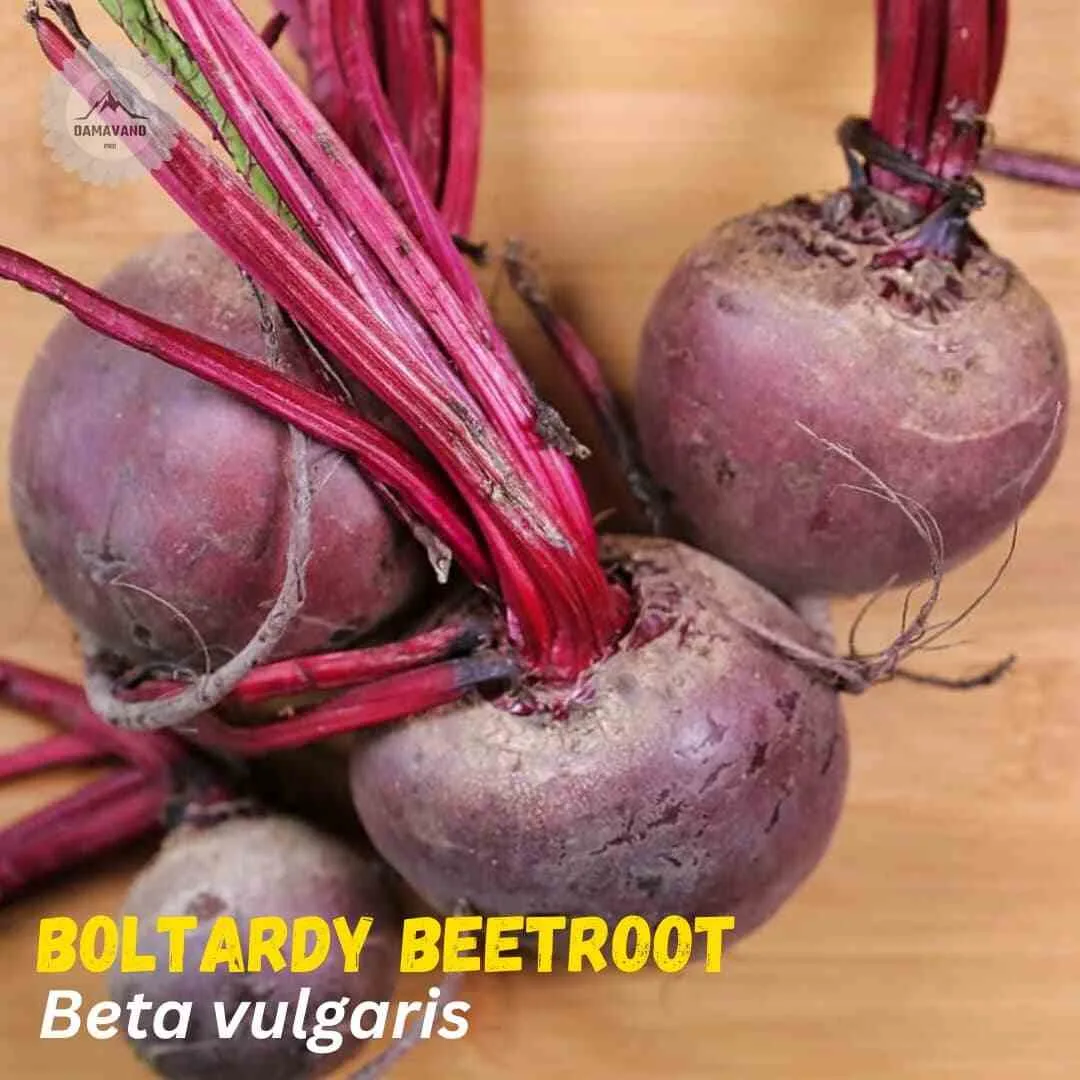
An annual vegetable, grown for its edible round, dark red taproots. Young leaves can also be eaten. Shows resistance to bolting
Scientific classification
- Species
- beetroot 'Boltardy' (Beta vulgaris 'Boltardy')
- Genus
- Beta
- Family
- Amaranthaceae
- Order
- Caryophyllales
- Class
- Magnoliopsida
- Phylum
- Tracheophyta
- Information to be completed
- Toxicity
- Annual Biennial
- Plant type
- 0.1-0.5 metres
- Height
- 0.1-0.5 metres
- Spread
- Deciduous
- Foliage
- Clump forming
- Habit
- Spring · Summer · Autumn
- Season of interest
- Full sun
- Sunlight
- Information to be completed
- Ideal temperature









beetroot 'Boltardy' pictures
Distribution of beetroot 'Boltardy'
Distribution map
- Native
- Introduced
- Cultivated
Source:WCVP v16 · Royal Botanic Gardens, Kew · CC BY 3.0 · Boundaries:WGSRPD / TDWG
beetroot 'Boltardy' care guide
- Keep soil consistently moist for steady leafy growth without drought stress
- Watering
- Full sun
- Sunlight

Watering
Keep soil consistently moist for steady leafy growth without drought stress
Fertilizing
 Fertilizing
Nitrogen-rich vegetable feed every two to three weeks in active growth
Pruning
 Pruning
No pruning required
Propagation
 Propagation
Propagate by seed. See sowing vegetable seeds
Growing
 Growing
Best grown in a fertile, free-draining soil in full sun. Sow at fortnightly intervals from March to July for a successional harvest. See Beetroot section in Vegetable cultivation for more advice
Common pests and diseases
Diseases
May be susceptible to downy mildew, beetroot heart rot , black leg and leaf spot and Boron deficiency
Pests
May be susceptible to aphids, flea beetles, cutworm and beet leaf miner
Explore the plant health library →




