
Ampelopsis megalophylla
Also known as: Information to be completed
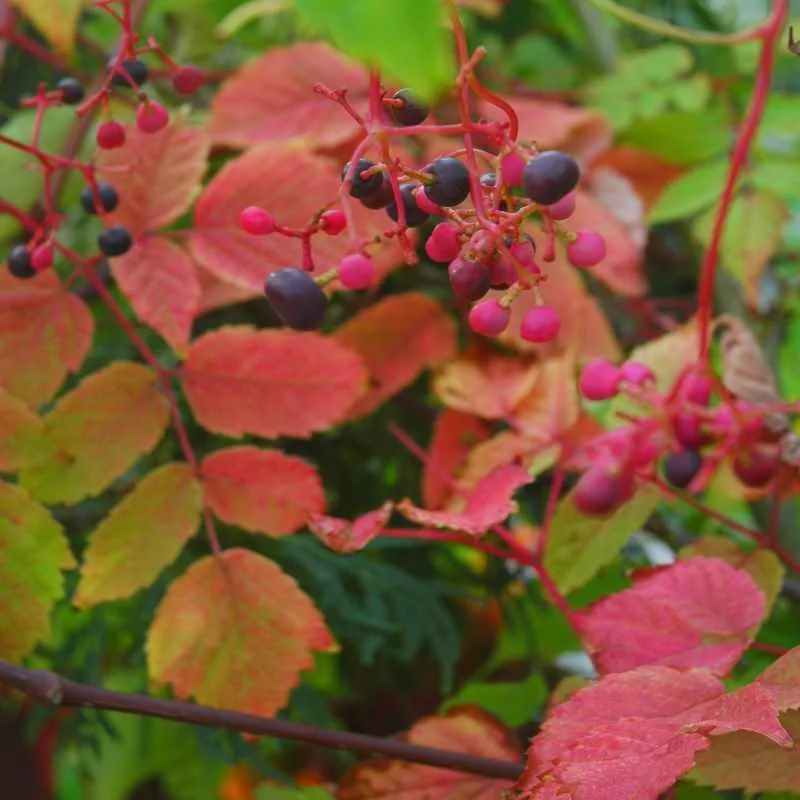
Vigorous deciduous climber with glaucous shoots and leaves, to 60cm long, made up of 7-9 ovate, dark green leaflets, which are glaucous on the reverse. Leaves turn red and yellow/orange in autumn. Small green flowers are borne in late summer, followed by pink-purple berries which ripen to black, 6mm across.
Scientific classification
- Species
- Ampelopsis megalophylla (Ampelopsis megalophylla)
- Genus
- Ampelopsis
- Family
- Vitaceae
- Order
- Vitales
- Class
- Magnoliopsida
- Phylum
- Magnoliophyta
- Fruit are ornamental - not to be eaten. Wear gloves and other protective equipment when handling
- Toxicity
- Climber Wall Shrub
- Plant type
- 8-12 metres
- Height
- 2.5-4 metres
- Spread
- Deciduous
- Foliage
- Climbing
- Habit
- Autumn · Spring · Summer
- Season of interest
- Full sun · Partial shade
- Sunlight
- Information to be completed
- Ideal temperature









Ampelopsis megalophylla pictures
Distribution of Ampelopsis megalophylla
Distribution map
- Native
- Introduced
- Cultivated
Source:WCVP v16 · Royal Botanic Gardens, Kew · CC BY 3.0 · Boundaries:WGSRPD / TDWG
Toxicity
Fruit are ornamental - not to be eaten. Wear gloves and other protective equipment when handling
Ampelopsis megalophylla care guide
- Moderate deep watering during dry periods, free drainage preferred
- Watering
- Full sun · Partial shade
- Sunlight

Watering
Moderate deep watering during dry periods, free drainage preferred
Fertilizing
 Fertilizing
Balanced shrub feed once in spring
Pruning
 Pruning
Routine pruning is unnecessary; shorten overlong shoots to fit the available space. Prune in spring.
Propagation
 Propagation
Propagate by sowing seed in containers in an open frame in autumn, or stratify and sow seed in containers in a cold frame in spring. Root softwood cuttings in summer
Growing
 Growing
Grow in any moist but well-drained, fertile soil in sun or partial shade. Fruiting will be most reliable when grown in a sunny site, especially where root growth can be restricted
Common pests and diseases
Diseases
Generally disease-free
Pests
Generally pest-free
Explore the plant health library →




