
chives 'Black Isle Blush'
Also known as: Information to be completed
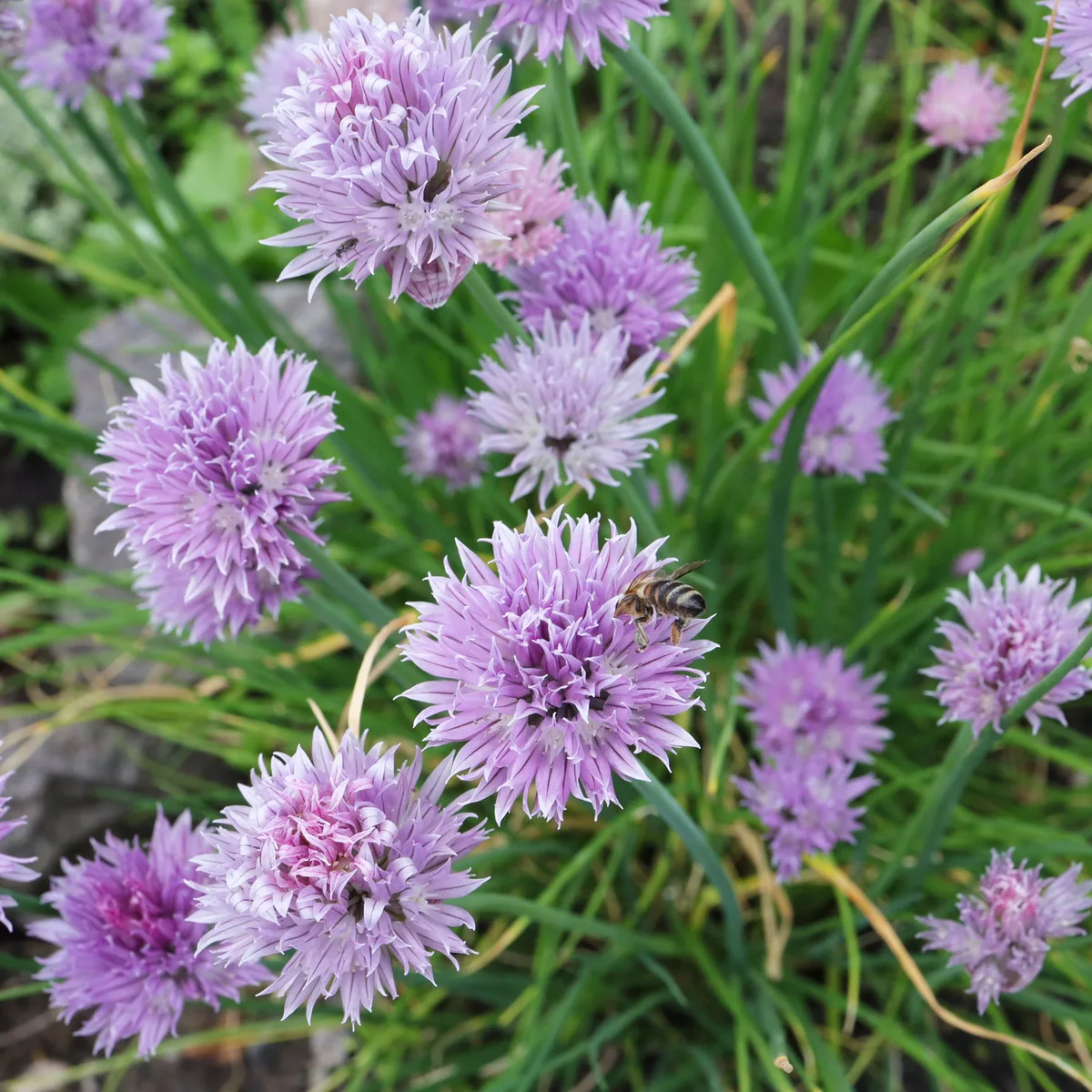
Forms a dense clump of erect, narrowly cylindrical leaves (which are edible) and, in summer, compact heads of small, light mauve-pink flowers with a darker centre
Scientific classification
- Species
- chives 'Black Isle Blush' (Allium schoenoprasum 'Black Isle Blush')
- Genus
- Allium
- Family
- Amaryllidaceae
- Order
- Asparagales
- Class
- Liliopsida
- Phylum
- Magnoliophyta
- Information to be completed
- Toxicity
- Bulbs · Herbs - Culinary
- Plant type
- 0.1-0.5 metres
- Height
- 0.1-0.5 metres
- Spread
- Deciduous
- Foliage
- Clump forming
- Habit
- Spring · Summer · Autumn
- Season of interest
- Full sun · Partial shade
- Sunlight
- Information to be completed
- Ideal temperature









chives 'Black Isle Blush' pictures
Distribution of chives 'Black Isle Blush'
Distribution map
- Native
- Introduced
- Cultivated
Source:WCVP v16 · Royal Botanic Gardens, Kew · CC BY 3.0 · Boundaries:WGSRPD / TDWG
chives 'Black Isle Blush' care guide
- Moderate regular watering, reduce moisture in cold winter months
- Watering
- Full sun · Partial shade
- Sunlight

Watering
Moderate regular watering, reduce moisture in cold winter months
Fertilizing
 Fertilizing
Weak herb balanced feed monthly spring leaf growth period
Pruning
 Pruning
Cut back after flowering or merely remove dead flower heads
Propagation
 Propagation
Propagate by seed, or division at any time
Growing
 Growing
Easy to grow in fertile well-drained soil. Add grit when grown in clay soils to improve drainage. May have the potential to become a nuisance if not managed well. See chive cultivation for further advice
Common pests and diseases
Diseases
Generally disease-free: Onion white rot and onion downy mildew may occur
Pests
Generally pest-free
Explore the plant health library →




