
begonia 'Lois Burks'
Also known as: Information to be completed
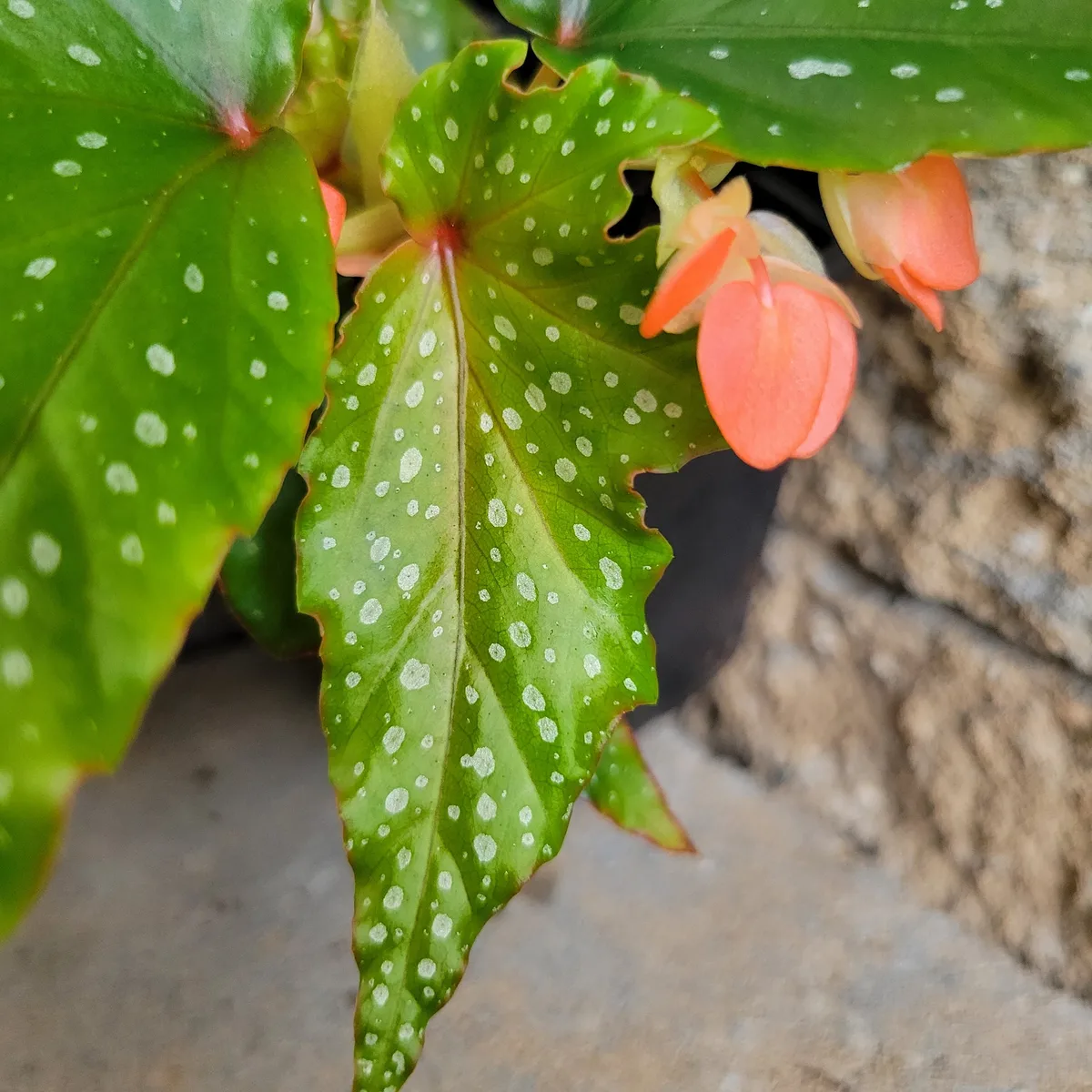
A low-growing, branching perennial, to 50cm tall, with "angel-wing" dark green to bronze leaves speckled with white. Clusters of salmon-red flowers appear sporadically throughout the year
Scientific classification
- Species
- begonia 'Lois Burks' (Begonia 'Lois Burks')
- Genus
- Begonia
- Family
- Begoniaceae
- Order
- Cucurbitales
- Class
- Magnoliopsida
- Phylum
- Magnoliophyta
- Ornamental bulbs - not to be eaten. Wear gloves and other protective equipment when handling
- Toxicity
- Houseplants · Conservatory Greenhouse
- Plant type
- 0.1-0.5 metres
- Height
- 0.5-1 metres
- Spread
- Evergreen
- Foliage
- Bushy
- Habit
- Spring · Summer · Autumn · Winter
- Season of interest
- Partial shade
- Sunlight
- Information to be completed
- Ideal temperature









begonia 'Lois Burks' pictures
Toxicity
Ornamental bulbs - not to be eaten. Wear gloves and other protective equipment when handling
begonia 'Lois Burks' care guide
- Keep compost evenly moist with bright filtered light
- Watering
- Partial shade
- Sunlight

Watering
Keep compost evenly moist with bright filtered light
Fertilizing
 Fertilizing
Weak balanced feed every few weeks in growth season
Pruning
 Pruning
Cut back over long canes to 2 or 3 buds in late spring
Propagation
 Propagation
Propagate by stem cuttings
Growing
 Growing
Under glass grow in light, well-drained loam-based or loam-less potting compost in filtered light with shade from hot sun at an optimum of 19°C. Will not tolerate continuous direct sunlight or waterlogging. Water moderately when in growth and apply a balanced liquid fertiliser at alternative waterings. See begonia cultivation - houseplants for further information
Common pests and diseases
Diseases
May be susceptible to grey moulds, powdery mildews, stem rot and rhizome rot
Pests
May be susceptible to caterpillars, mealy bugs, mites, glasshouse thrips, vine weevil and aphids
Explore the plant health library →




