
Henderson's daphne 'Ernst hauser'
Also known as: Information to be completed
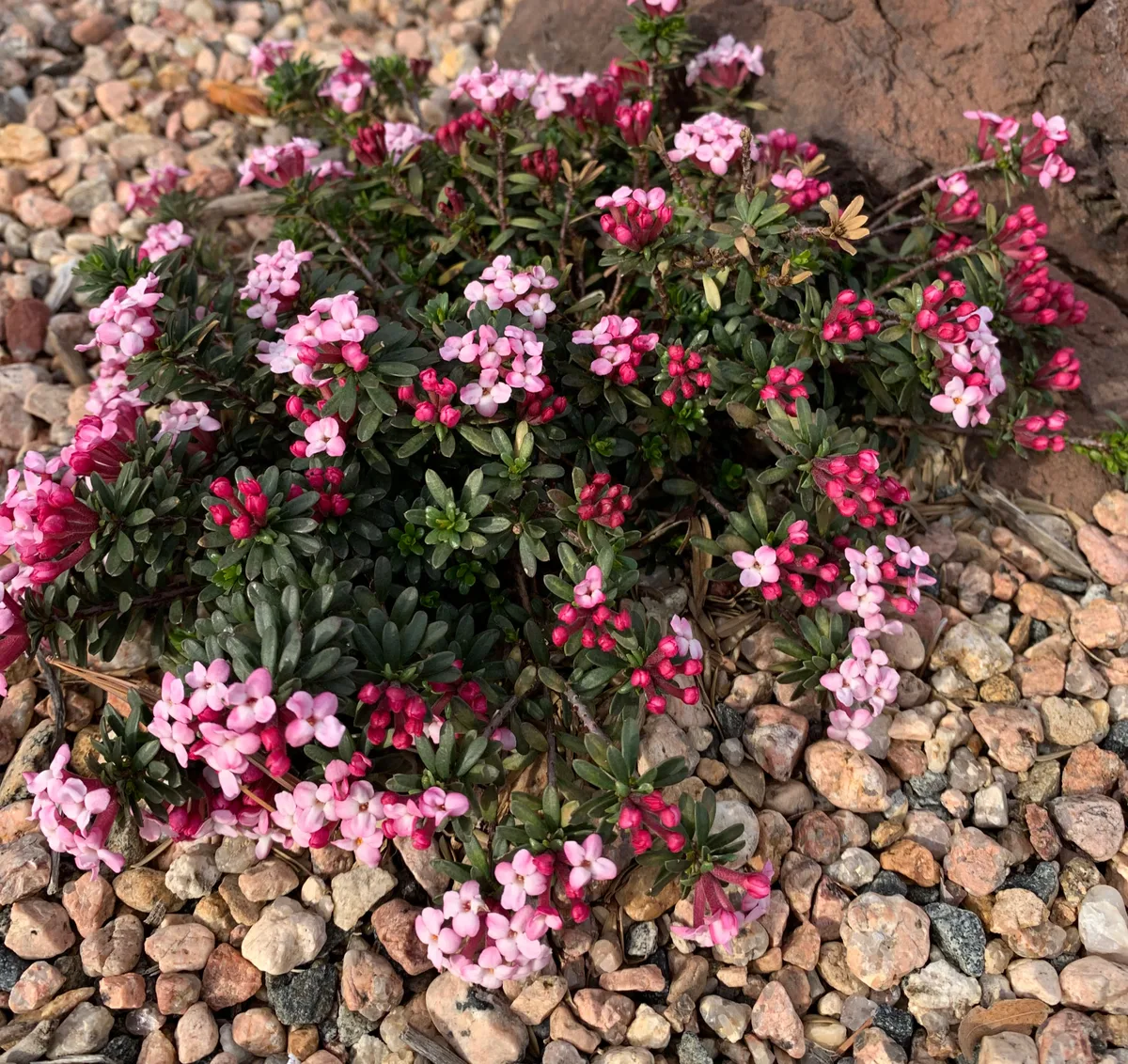
A compact, evergreen, upright shrub to 40cm tall with narrow, dark green, glossy leaves that turn bronze-green in winter. Fragrant, pale pink flowers with a deeper pink centre open from reddish-purple buds in spring
Scientific classification
- Species
- Henderson's daphne 'Ernst hauser' (Daphne × hendersonii 'Ernst Hauser')
- Genus
- Daphne
- Family
- Thymelaeaceae
- Order
- Malvales
- Class
- Magnoliopsida
- Phylum
- Magnoliophyta
- TOXIC if eaten, skin irritant. Wear gloves and other protective equipment when handling]
- Toxicity
- Shrubs
- Plant type
- 0.1-0.5 metres
- Height
- 0.1-0.5 metres
- Spread
- Evergreen
- Foliage
- Bushy
- Habit
- Spring · Summer · Autumn · Winter
- Season of interest
- Full sun · Partial shade
- Sunlight
- Information to be completed
- Ideal temperature









Henderson's daphne 'Ernst hauser' pictures
Distribution of Henderson's daphne 'Ernst hauser'
Distribution map
- Native
- Introduced
- Cultivated
Source:WCVP v16 · Royal Botanic Gardens, Kew · CC BY 3.0 · Boundaries:WGSRPD / TDWG
Toxicity
TOXIC if eaten, skin irritant. Wear gloves and other protective equipment when handling]
Henderson's daphne 'Ernst hauser' care guide
- Keep soil evenly moist but perfectly drained
- Watering
- Full sun · Partial shade
- Sunlight

Watering
Keep soil evenly moist but perfectly drained
Fertilizing
 Fertilizing
Light feed in spring only, avoid heavy fertilizing
Pruning
 Pruning
Little pruning is needed. Remove diseased, damaged, crowded or crossing shoots and unwanted growth. Timing depends on the plant: generally late winter or early spring; plants prone to bleeding and deciduous magnolias need different timing, and deciduous azaleas and lilacs are pruned after flowering.
Propagation
 Propagation
Propagate by semi-ripe cuttings
Growing
 Growing
Grow in fertile, humus rich, moist, but well-drained soils in a sheltered position in full sun or partial shade. Mulch to keep roots cool. Resents transplanting. See daphne cultivation
Common pests and diseases
Diseases
May be susceptible to honey fungus (rarely), phytophthora root rot, fungal leaf spot and virus diseases
Pests
May be susceptible to aphids
Explore the plant health library →




