
fire-king begonia
Also known as: Information to be completed
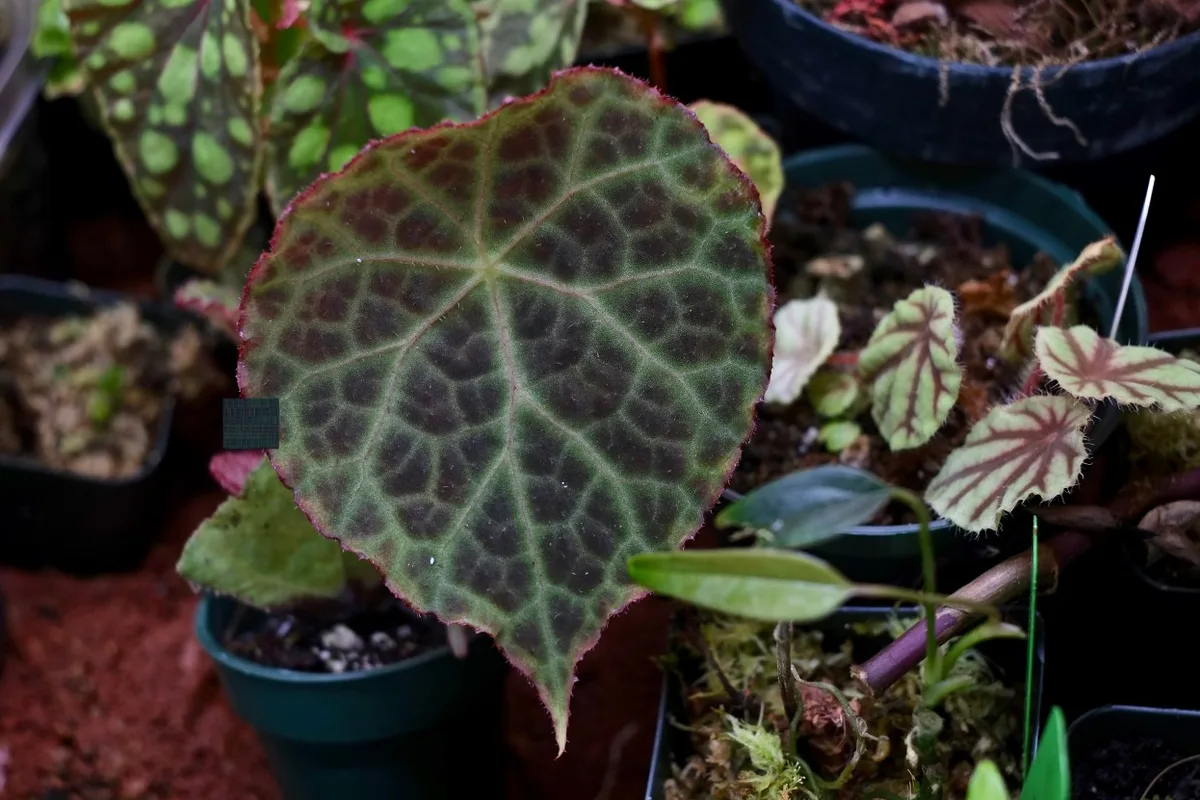
A compact, rhizomatous evergreen perennial, with short creeping stems. Leaves are large and round to ovate, dark green and bronze with pale green veining. Young leaves are often red, and older leaves retain red edges and undersides. Produces sprays of pale pink flowers on arching stems in summer
Scientific classification
- Species
- fire-king begonia (Begonia goegoensis)
- Genus
- Begonia
- Family
- Begoniaceae
- Order
- Cucurbitales
- Class
- Magnoliopsida
- Phylum
- Magnoliophyta
- Ornamental bulbs - not to be eaten. Wear gloves and other protective equipment when handling
- Toxicity
- Conservatory Greenhouse · Houseplants
- Plant type
- 0.1-0.5 metres
- Height
- 0.1-0.5 metres
- Spread
- Evergreen
- Foliage
- Bushy
- Habit
- Spring · Summer · Autumn · Winter
- Season of interest
- Full sun
- Sunlight
- Information to be completed
- Ideal temperature









fire-king begonia pictures
Distribution of fire-king begonia
Distribution map
- Native
- Introduced
- Cultivated
Source:WCVP v16 · Royal Botanic Gardens, Kew · CC BY 3.0 · Boundaries:WGSRPD / TDWG
Toxicity
Ornamental bulbs - not to be eaten. Wear gloves and other protective equipment when handling
fire-king begonia care guide
- Moderate regular watering, allowing brief slight drying between soakings
- Watering
- Full sun
- Sunlight

Watering
Moderate regular watering, allowing brief slight drying between soakings
Fertilizing
 Fertilizing
Balanced perennial feed every four weeks from spring through summer
Pruning
 Pruning
Remove faded flowers and leaves as necessary
Propagation
 Propagation
Propagate by seed, leaf cuttings or root cuttings (sections of rhizome)
Growing
 Growing
Grows best if kept between 19-23°C (66-73°F), in bright light with shade from direct sun, in an open. free-draining potting mix. Enjoys fairly high humidity. In the growing season, water by immersing pots and allowing to drain; avoid waterlogging as this may cause rot
Common pests and diseases
Diseases
May be susceptible to grey moulds, powdery mildews, and stem and rhizome rot
Pests
May be susceptible to caterpillars, mealybugs, mites, thrips, vine weevil and aphids
Explore the plant health library →




