
bird's eye
Also known as: bird's tongue; burnet rose; clockflower; common pimpernel; eyebright; little Joan; poor man's weatherglass; red chickweed; red pimpernel; scarlet pimpernel; shepherd's clock; shepherd's weatherglass; sunflower; wink-a-peep
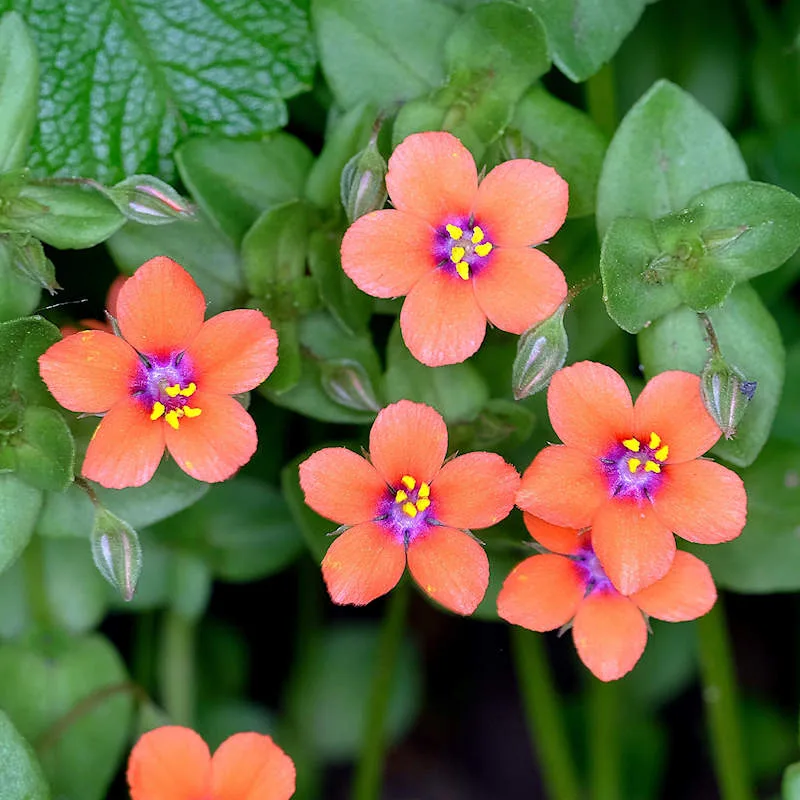
A low-growing, creeping annual with stems to 30cm long and small, solitary, orange to scarlet or occasionally blue flowers, 10-15mm in diameter
Scientific classification
- Species
- bird's eye (Anagallis arvensis)
- Genus
- Anagallis
- Family
- Primulaceae
- Information to be completed
- Toxicity
- Annual Biennial
- Plant type
- 0.1-0.5 metres
- Height
- 0.1-0.5 metres
- Spread
- Deciduous
- Foliage
- Matforming
- Habit
- Spring · Summer · Autumn
- Season of interest
- Full sun
- Sunlight
- Information to be completed
- Ideal temperature









bird's eye pictures
Distribution of bird's eye
Distribution map
Europe
Information to be completed
Culture
Information to be completed
Toxicity
Information to be completed
Quick identification of bird's eye
Information to be completed
bird's eye care guide
- Moderate regular watering, allowing brief slight drying between soakings
- Watering
- Full sun
- Sunlight
- Information to be completed
- Ideal temperature

Watering
Moderate regular watering, allowing brief slight drying between soakings
Fertilizing
 Fertilizing
Balanced perennial feed every four weeks from spring through summer
Pruning
 Pruning
None required
Propagation
 Propagation
Propagate by seed
Growing
 Growing
Grows in any soil but prefers well-drained, light soils in full sun
People also ask
Information to be completed
Common pests and diseases
Diseases
Generally trouble free
Pests
Generally trouble free
Explore the plant health library →




